French National Dishes

Moules marinières

Live mussels steam quickly with shallot, dry white wine, butter, garlic and parsley for a clean, briny liquor without cream.

French National Dishes
Share
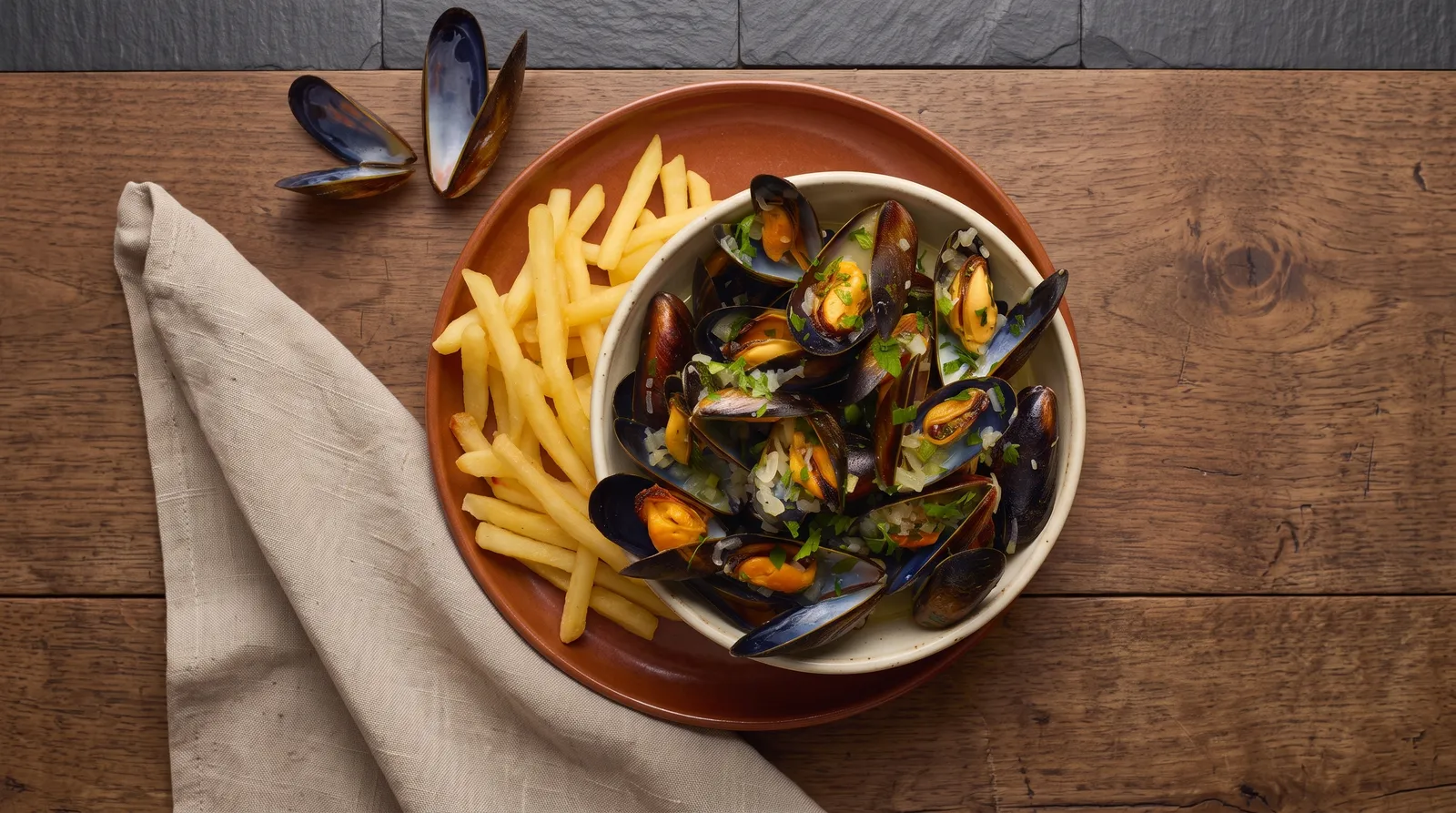
Moules marinières — served on a plate
Prep 30 minutes
Cook 12 minutes
Total 42 minutes
Yield 4 portions
Introduction and overview

Classic moules marinières with white wine and parsley

Moules marinières is the leanest and most direct of the mussel preparations in this group. The flavour comes from the mussels themselves, a little butter, finely chopped shallot, dry white wine, garlic and parsley. There is no cream to soften the liquor and no curry, tomato or cheese to redirect it. Because the ingredient list is short, the timing matters: the pot must be hot, the shells must open quickly, and the mussels should reach the table before they tighten.

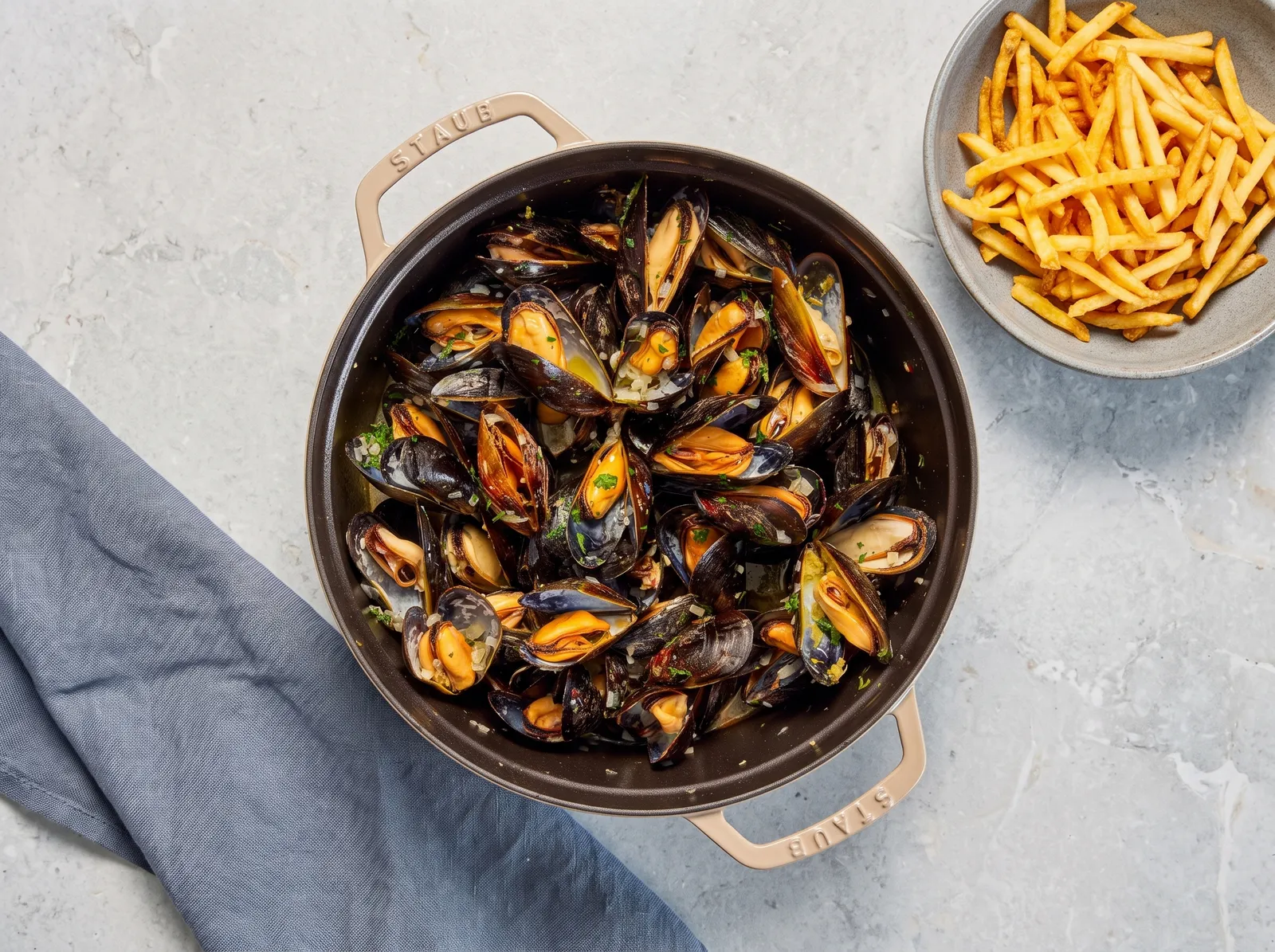
Clean live mussels immediately before cooking rather than leaving them in water. Discard cracked shells and any live shell that stays open when tapped, scrub away grit and pull away the beards under running water. A wide 5–6 litre pot gives two kilograms of mussels enough room to steam rather than stew. Sweat the shallots gently in butter, add the garlic only at the end of that stage, then add wine and mussels together and cover.

The shells should open in about eight minutes over high heat, with one or two careful shakes of the covered pot to redistribute them. Open the lid away from your face because the trapped steam is intense. Discard any mussel that remains closed. Parsley goes in for the final minute, and the liquor is strained only if visible grit remains. Serve immediately with a realistic share of the buttery wine broth; bread or fries may be offered separately but are not part of this recipe's calculation.
Success points

Success points

  • Do not brown the shallots or garlic.
  • Use a pot large enough that steam can circulate around the shells.
  • Stop as soon as the mussels open instead of holding them for a fixed long simmer.
  • Serve at once rather than waiting for side dishes.
Ingredients

Ingredients

Marinière

  • 2000 g live mussels — scrubbed and debearded immediately before cooking
  • 100 g shallots — finely chopped
  • 30 g unsalted butter
  • 250 ml dry white wine — contains sulphites
  • 20 g flat-leaf parsley — finely chopped
  • 10 g garlic — finely chopped
Method

Method

Cooking

  1. Inspect and clean the mussels. Inspect the 2,000 g live mussels, discard cracked shells and any live shell that does not close when tapped, then scrub and debeard under cold running water without soaking. Allow about 15 minutes. The retained mussels are closed or close when tapped, clean and free of beards. Keep cleaned mussels cold until the pot is hot.

  2. Sweat the aromatics. Melt the 30 g butter and sweat the 100 g shallots for three minutes, then add the 10 g garlic for the final 30 seconds without browning. The shallots are soft and translucent and the garlic is fragrant but not browned.

  3. Steam with white wine. Pour in the 250 ml dry white wine, add the mussels, cover and cook over high heat, shaking the pot carefully once or twice. Cook for about 8 minutes. The shells are open and the mussel meat is plump rather than shrunken. Open the lid away from your face; discard every mussel that remains closed.

  4. Finish and serve. Fold in the 20 g parsley, strain the liquor only if grit is visible, divide the mussels and realistic portion of liquor among four bowls and serve at once. Cook for about 1 minute. The parsley is just wilted, the liquor is hot and the mussels have not been held long enough to toughen. Wine alcohol may remain after cooking; handle shells carefully.

Serving and planning

Practical

Serving

Divide the mussels and wine-butter liquor among four warm bowls as soon as the parsley wilts. A bowl should smell of wine, shallot and fresh parsley while the mussel meat remains plump.

Make-ahead

Chop the aromatics earlier if helpful, but keep the live mussels refrigerated and clean them just before cooking. Once the pot is started, plan to serve without delay.

Storage and reheating

Refrigerate any leftovers within two hours at 5 °C or below and use within one day. Reheat once, gently and briefly. Long reheating makes the meat tough and does not improve unopened shells, which must be discarded.

Substitutions

An unsweetened dry alcohol-free white wine-style drink can replace the 250 ml wine for an alcohol-free cooking liquid, but acidity and aroma vary by brand. Avoid sweet products because they change the character of the broth.

Troubleshooting

Closed shells after cooking are not a cue for extra prolonged boiling; discard those mussels and serve the open ones.

Troubleshooting

A muddy liquor usually carries grit from the shells; strain it through a fine sieve before serving without rinsing the cooked mussels.

Troubleshooting

Tough meat means the pot stayed over heat after opening; stop promptly on the next batch.

Nutrition per serving

Nutrition per serving

  • Serving size1 of 4 portions, including about 110 g mussel meat and one quarter of the consumed liquor
  • Calories302 kcal
  • Carbohydrate15 g
  • Protein27 g
  • Fat11 g
  • Fibre1 g
  • Sodium415 mg
Allergens and food safety

Allergens and food safety

Allergens: Mollusc, Milk, Sulphites

Safety: Use live or properly chilled traceable mussels.

Safety: Discard cracked or non-closing raw mussels and discard every shell that remains closed after cooking.

Safety: Never soak live mussels in fresh water.

Safety: Refrigerate shellfish and leftovers promptly and within two hours.

Safety: Wine alcohol may remain after cooking.

FAQ

FAQ

Why is there no cream?

Cream belongs to other mussel preparations. Marinières is built around a quick wine-and-aromatic steam and a light cooking liquor.

Should the liquor always be strained?

Only if grit is visible or felt. Straining is useful insurance, but the mussels should not be rinsed after cooking.

Closing

Closing

  • Result: Live mussels steam quickly with shallot, dry white wine, butter, garlic and parsley for a clean, briny liquor without cream.
  • Decisive technique: Do not brown the shallots or garlic.