French National Dishes

Moules à la normande

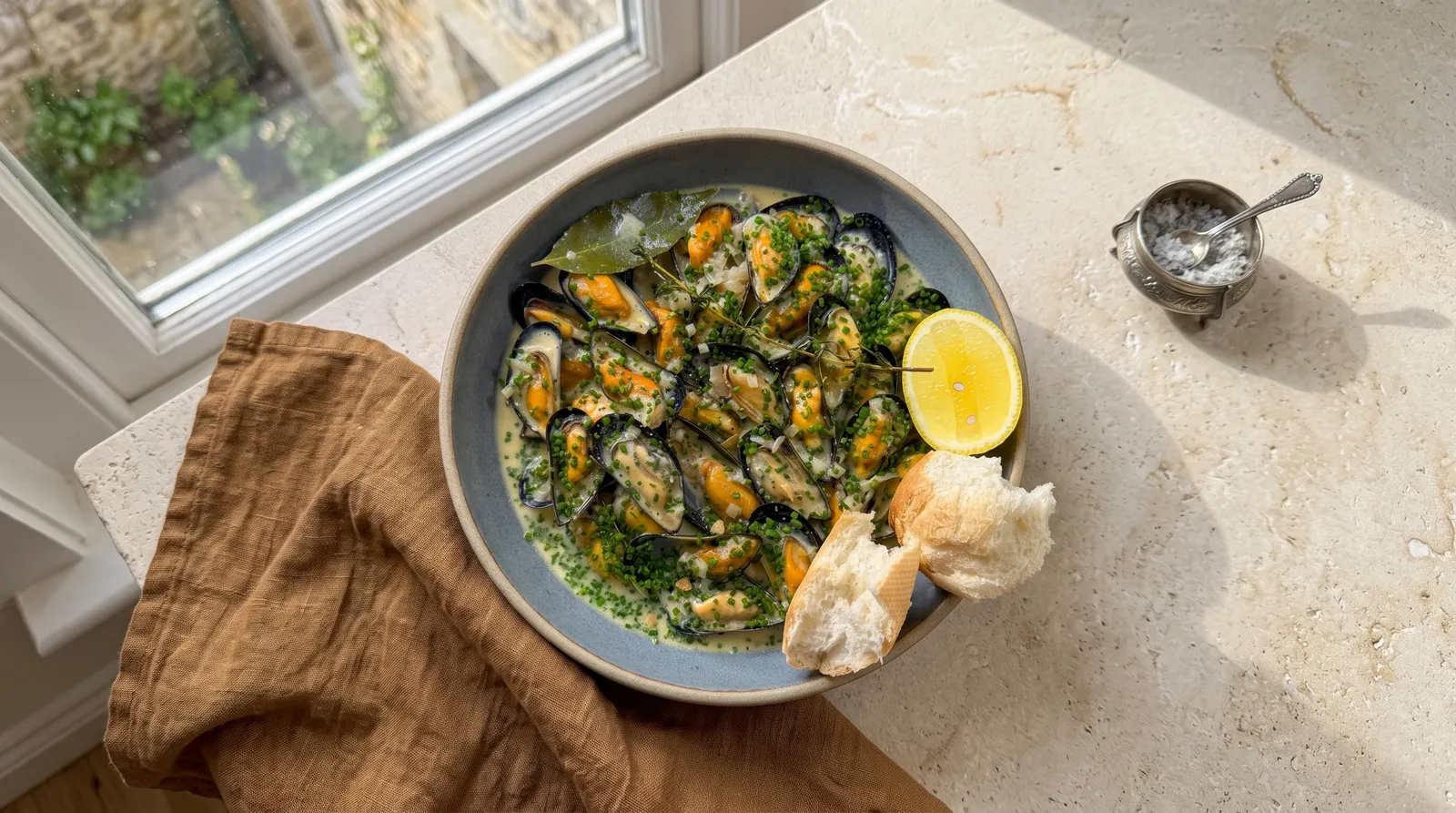
Normandy cider opens the mussels and becomes the base of a reduced cream sauce, finished with shallot, butter and parsley.

French National Dishes
Share
Moules à la normande — served in a bowl
Prep 30 minutes
Cook 25 minutes
Total 55 minutes
Yield 4 portions
Introduction and overview

Moules à la normande with brut cider and cream

The defining liquid in moules à la normande is cider. Where marinières relies on dry white wine, this Normandy preparation uses a dry brut apple cider, then turns the strained cooking liquor into a creamy sauce. Butter and shallot form the aromatic base, while cream is added only after the cider liquor has been reduced. That sequence keeps the dish recognisably Norman rather than a generic bowl of mussels with cream.

Begin with live, chilled mussels and treat the shellfish as the time-sensitive part of the dish. Reject cracked shells and any live mussel that does not close when tapped, then scrub and debeard just before it enters the pot. The wide covered pan allows steam to circulate quickly. Five minutes over high heat is enough for the shells to open; remove the mussels immediately and discard any shell that remains closed rather than extending the cook for the whole pot.

The strained cider liquor is reduced by roughly one third before the cream goes in. This concentrates apple acidity, shellfish juices and shallot while keeping the dairy stage short. A gentle five-minute cream simmer should leave a pourable sauce that lightly coats a spoon. The mussels return with parsley for only two minutes. The finished dish should taste of shellfish, dry cider and cream in that order, without curry, cheese or a heavy spirit note.
Success points

Success points

  • Use brut cider so the sauce stays savoury.
  • Strain the shellfish liquor before reducing it.
  • Reduce the cider liquor before adding the cream.
  • Return the cooked mussels only for the final two minutes.
Ingredients

Ingredients

Mussels

  • 2000 g live mussels — scrubbed and debearded immediately before cooking
  • 80 g shallots — finely chopped
  • 30 g unsalted butter
  • 300 ml brut Normandy cider — contains sulphites
  • 200 g double cream — about 30% fat
  • 15 g flat-leaf parsley — finely chopped
Method

Method

Cooking

  1. Inspect and clean the mussels. Sort the 2,000 g live mussels, reject cracked shells and any live shell that does not close when tapped, then scrub and debeard without soaking. Allow about 15 minutes. The retained mussels are closed or close when tapped, clean and free of beards. Keep the cleaned mussels refrigerated until cooking.

  2. Sweat the shallots. Soften the 80 g shallots in 30 g butter without colouring. The shallots are translucent, softened and still pale.

  3. Steam with cider. Add the mussels and 300 ml brut cider, cover and steam over high heat, shaking once, until the shells open. Cook for about 5 minutes. The mussel shells are open and the meat looks plump and moist. Open the lid away from your face and discard every shell that remains closed.

  4. Reduce the cider liquor. Lift out the mussels, strain the cooking liquor and reduce it uncovered. Cook for about 10 minutes. The strained cider liquor has reduced by roughly one third and no grit remains. Reduction concentrates the cider before dairy is added. Cider alcohol may remain after cooking.

  5. Add the cream. Lower the heat, stir in the 200 g cream and simmer gently until lightly coating. Cook for about 5 minutes. The sauce lightly coats a spoon but remains pourable and smooth. Do not boil hard enough to split the cream.

  6. Finish with parsley. Return the mussels and 15 g parsley for a brief final heat, then divide immediately among four bowls. Cook for about 2 minutes. The mussels are hot throughout without shrinking and the creamy liquor remains glossy. Handle hot shells and steam carefully.

Serving and planning

Practical

Serving

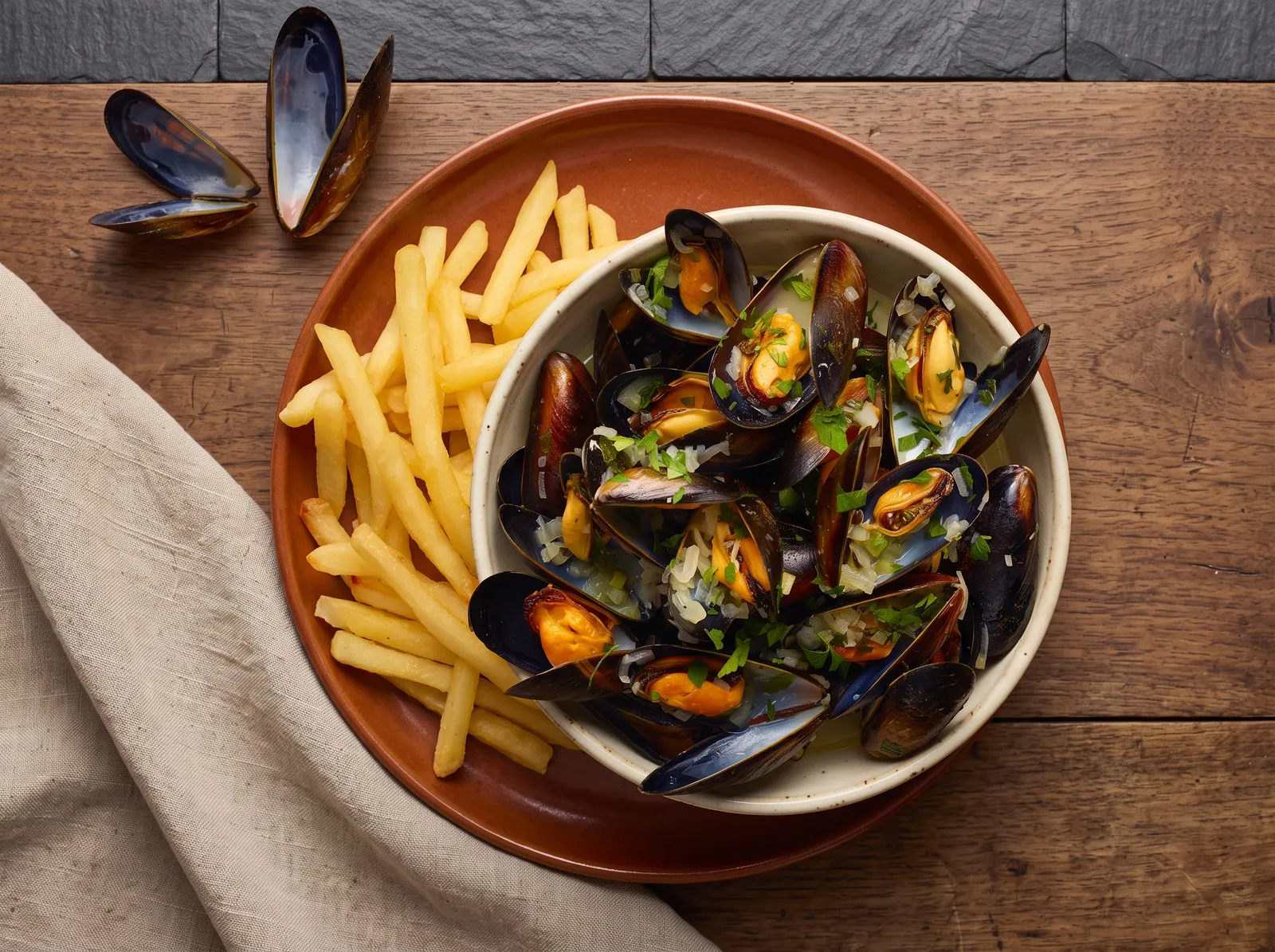
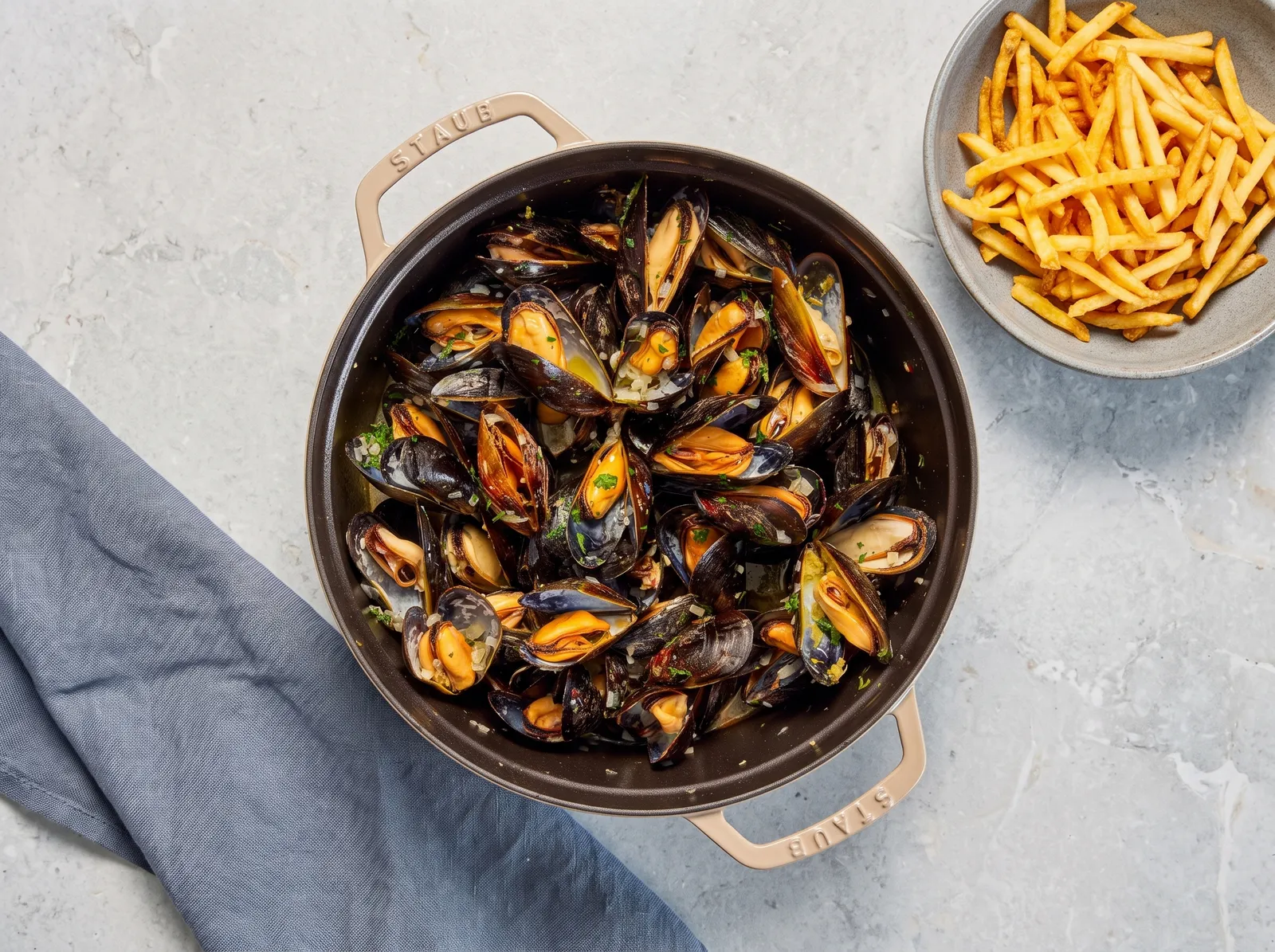
Serve immediately with the creamy cider liquor divided among four bowls. Fries or bread can accompany the meal, but they are not part of the ingredients or nutrition here.

Make-ahead

Prepare the shallot and parsley in advance, and measure the cider and cream. Keep live mussels refrigerated until cleaning and cooking. The actual shellfish cook should happen as close to serving as possible.

Storage and reheating

Refrigerate leftovers within two hours at 5 °C or below and use within one day. Reheat very gently only until steaming; a hard boil can split the cream and make the mussels rubbery.

Substitutions

A dry French-style apple cider can replace Normandy cider when needed, but the geographical specificity is reduced. Calvados is not required for this preparation, and adding it would shift the flavour balance toward spirit rather than cider.

Troubleshooting

Thin sauce means the strained liquor was not reduced enough before cream was added. Remove the mussels and reduce the sauce briefly rather than overcooking them.

Troubleshooting

Split cream points to excessive heat after enrichment; keep the final simmer gentle.

Troubleshooting

Chewy mussels have been steamed or reheated too long; stop as soon as shells open and keep the last reheating to two minutes.

Nutrition per serving

Nutrition per serving

  • Serving size1 of 4 portions, including about 110 g mussel meat and one quarter of the creamy liquor
  • Calories425 kcal
  • Carbohydrate16 g
  • Protein28 g
  • Fat26 g
  • Fibre0.8 g
  • Sodium432 mg
Allergens and food safety

Allergens and food safety

Allergens: Mollusc, Milk, Sulphites

Safety: Buy traceable live or properly chilled mussels.

Safety: Discard cracked or non-closing raw shells and every shell that stays closed after cooking.

Safety: Never soak live mussels in fresh water.

Safety: Keep seafood and cream refrigerated; refrigerate leftovers within two hours.

Safety: Cider alcohol may remain after cooking.

FAQ

FAQ

Why reduce the cider before adding cream?

Reduction concentrates the shellfish and apple flavours while keeping the cream from cooking for too long. It also gives the sauce enough body without flour.

Can unopened mussels be cooked longer?

No. Discard mussels that remain closed after the main cook rather than holding the rest of the pot over heat.

Closing

Closing

  • Result: Normandy cider opens the mussels and becomes the base of a reduced cream sauce, finished with shallot, butter and parsley.
  • Decisive technique: Use brut cider so the sauce stays savoury.