French National Dishes

Macaronade sétoise

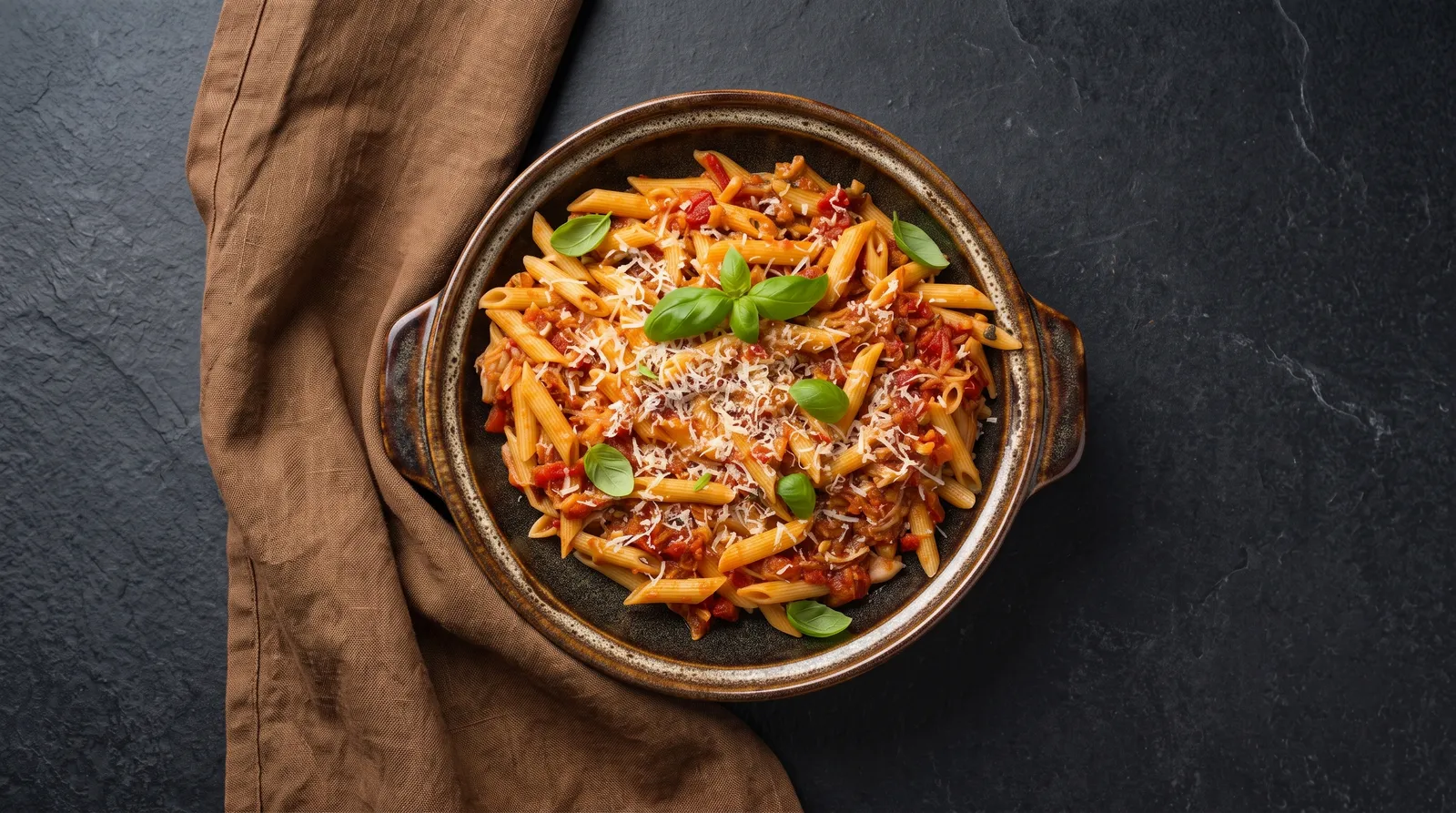
Sète-style large macaroni coated in a long-cooked tomato-red-wine sauce, served with beef brageoles filled with garlic, parsley and cured pork and finished with Parmesan and Pecorino Romano.

French National Dishes
Share
Macaronade sétoise — served on a plate
Prep 35 minutes
Cook 172 minutes
Total 207 minutes
Yield 6 main-course portions, 6 brageoles
Introduction and overview

Macaronade sétoise with beef brageoles

Macaronade sétoise is not baked macaroni and cheese. In Sète, the pasta is served with a deeply cooked tomato sauce and brageoles—thin beef rolls related to southern Italian braciole. Each beef slice is rolled around garlic, parsley and cured pork, secured with twine and braised until tender.

The sauce begins with concentrated tomato paste cooked until brick-red before red wine is added. That step is important: diluting raw paste immediately leaves a brighter, sharper sauce, while frying it first and then braising the rolls for two hours gives the darker red-brown colour associated with the dish. The preparation stays centred on brageoles rather than stacking every possible additional pork and sausage component.

Large ridged pasta is cooked separately to al dente, then coated with the finished sauce. Before service, every piece of twine, bay leaf and clove is removed. Each plate receives one brageole and an equal share of finely grated Parmesan and Pecorino Romano, the hard-cheese pairing documented in Sète-oriented recipes.
Success points

Success points

  • Tie all six brageoles securely and remove every string before serving.
  • Cook the tomato paste until brick-red before adding wine.
  • Keep the pasta separate until the braise is complete, then combine only at service.
Ingredients

Ingredients

Brageoles

  • 600 g beef chuck or paleron — 6 thin slices, each about 100 g and pounded evenly
  • 120 g unsmoked cured pork belly — 6 thin strips
  • 15 g garlic — finely chopped
  • 20 g flat-leaf parsley — finely chopped
  • 10 g fine salt
  • 2 g black pepper

Tomato sauce

  • 40 g olive oil
  • 200 g onion — finely chopped
  • 500 g double-concentrated tomato paste
  • 250 ml red wine
  • 750 ml water
  • 2 g bay leaves — 2 leaves
  • 1 g whole cloves — about 6 cloves

Pasta and cheese

  • 600 g dried rigatoni or large macaroni
  • 60 g Parmesan — finely grated
  • 60 g Pecorino Romano — finely grated
Method

Method

Brageoles and sauce

  1. Filling out the six. Lay out the six beef slices on a raw-meat board, divide the cured pork, garlic and parsley evenly across them, season with part of the measured salt and pepper, roll tightly and tie each roll securely with kitchen twine. Tool: separate raw-meat board and kitchen twine. Time: 25 minutes. Temperature: chilled. Six compact brageoles are evenly filled and securely tied with no loose filling at the seams. Tight, even rolls survive the long braise without opening. Keep raw beef and pork away from ready-to-eat food and wash hands after tying.

  2. Browning the brageoles in. Brown the brageoles in the olive oil on all sides, then transfer them to a clean plate. Tool: wide heavy casserole and tongs. Heat: medium-high heat. Time: 15 minutes. Temperature: stovetop. The brageoles are browned on all sides without burning the garlic at the seams. Browning develops the savoury base of the sauce.

  3. Softening the heat, cook. Lower the heat, cook the onion until softened, then add the tomato paste and stir until it darkens to a brick-red tone. Tool: heavy casserole. Heat: medium heat. Time: 10 minutes. Temperature: stovetop. The tomato paste is darker brick-red and smells roasted rather than raw or metallic. Cooking the concentrated tomato before dilution deepens the sauce and reduces raw acidity.

  4. Adding the red wine. Add the red wine and scrape the casserole base, then simmer until the mixture thickens again before adding the 750 ml water, bay and cloves. Tool: heavy casserole. Heat: medium heat. Time: 10 minutes. Temperature: gentle simmer. The wine has loosened the browned fond and the tomato mixture has thickened again before dilution. Reducing before the long braise keeps the tomato base concentrated; some alcohol may remain.

  5. Braising the brageoles, cover. Return the brageoles, cover partly and braise gently until the beef is fully safe and fork-tender and the sauce turns red-brown. Tool: heavy casserole with lid. Heat: low simmer. Time: 120 minutes. Temperature: gentle simmer. The centre of the beef rolls reaches at least 63 °C and the brageoles are fork-tender while still holding their shape, and the sauce is red-brown and thick enough to coat pasta. The safety threshold confirms doneness, while the long braise develops tenderness and sauce colour. Because these are intact beef slices with cured pork strips rather than ground filling, verify at least 63 °C in the centre, then continue braising for tenderness.

Pasta and service

  1. Cooking the dried rigatoni. Boil the dried rigatoni or large macaroni in ample water until al dente, then drain well. Tool: large pasta pot and colander. Heat: boiling water. Time: 12 minutes. Temperature: boiling. The pasta is al dente with a firm core but no raw flour taste. Cooking pasta separately prevents the long tomato braise from making it mushy.

  2. Finishing every piece of. Remove every piece of kitchen twine from the brageoles, discard bay leaves and cloves, then combine the drained pasta with enough sauce to coat thoroughly. Tool: clean tongs and serving bowl. Heat: low heat. Time: 5 minutes. Temperature: hot. No twine, bay leaf or whole clove remains, and every pasta tube is coated with sauce. Removing ties and whole aromatics before service prevents choking hazards.

  3. Serving one brageole with. Serve one brageole with each portion of sauced pasta and divide the Parmesan and Pecorino Romano evenly over the six plates. Tool: serving platter and grater. Time: 10 minutes. Temperature: hot. Each plate has one intact brageole, sauced pasta and an even share of the two hard cheeses. Dividing the cheese by weight keeps seasoning and nutrition consistent. Warn diners that the dish is very hot and confirm all twine has been removed.

Serving and planning

Practical

Serving and planning

Serve one brageole per person over sauced rigatoni or large macaroni with the measured hard-cheese finish.

Serving and planning

The sauce and brageoles can be made one day ahead and usually reheat well; cook the pasta fresh for the best texture.

Serving and planning

Other large ridged macaroni can replace rigatoni, but do not turn this into a baked cheese casserole or a seafood pasta while keeping the same identity.

Storage

Refrigerate sauce, brageoles and pasta within 2 hours. Use within 3 days. Reheat sauce and brageoles until steaming hot; warm pasta in sauce rather than boiling it again.

Make-ahead

The brageoles and sauce can be cooked one day ahead, cooled rapidly and refrigerated. Reheat gently before cooking the pasta fresh.

Substitutions

Other large ridged macaroni can replace rigatoni while preserving the pasta function.

Substitutions

Do not turn this into a baked cheese casserole or seafood pasta and keep the Sète brageole identity explicit.

Troubleshooting

Troubleshooting

  • IssueRolls open — they were tied loosely; secure each with kitchen twine before browning.
  • IssueSauce stays bright red — the tomato paste and sauce have not cooked long enough; complete the brick-red frying and long braise.
  • IssueBeef safe but chewy — continue gentle braising after the 63 °C safety threshold until fork-tender.
  • IssuePasta goes soft — cook it separately only to al dente and combine at service.
Nutrition per serving

Nutrition per serving

  • Serving size1 of 6 portions: 1 brageole, about 100 g dry-weight pasta equivalent, one-sixth sauce and 20 g mixed hard cheese
  • Calories879 kcal
  • Carbohydrate95.4 g
  • Protein47.3 g
  • Fat35.0 g
  • Fibre7.2 g
  • Sodium1223 mg
Allergens and food safety

Allergens and food safety

Allergens: Gluten; Milk; Sulphites

Safety: Keep raw beef and cured pork separate from ready-to-eat food.

Safety: Cook the intact beef rolls to at least 63 °C in the centre and continue braising for tenderness.

Safety: Remove every piece of twine before serving.

Safety: Red wine contains sulphites and some alcohol may remain after cooking.

Safety: Refrigerate leftovers within 2 hours.

FAQ

FAQ

What is a brageole?

It is a thin beef roll filled here with cured pork, garlic and parsley, tied so it can withstand the long tomato braise.

Why cook the pasta separately?

The sauce needs hours; pasta needs minutes. Cooking them together would make the pasta soft long before the beef became tender.

Closing

Closing

  • Result: Sète-style large macaroni coated in a long-cooked tomato-red-wine sauce, served with beef brageoles filled with garlic, parsley and cured pork and finished with Parmesan and Pecorino Romano.
  • Decisive technique: Tie all six brageoles securely and remove every string before serving.