French National Dishes

Fouace angevine

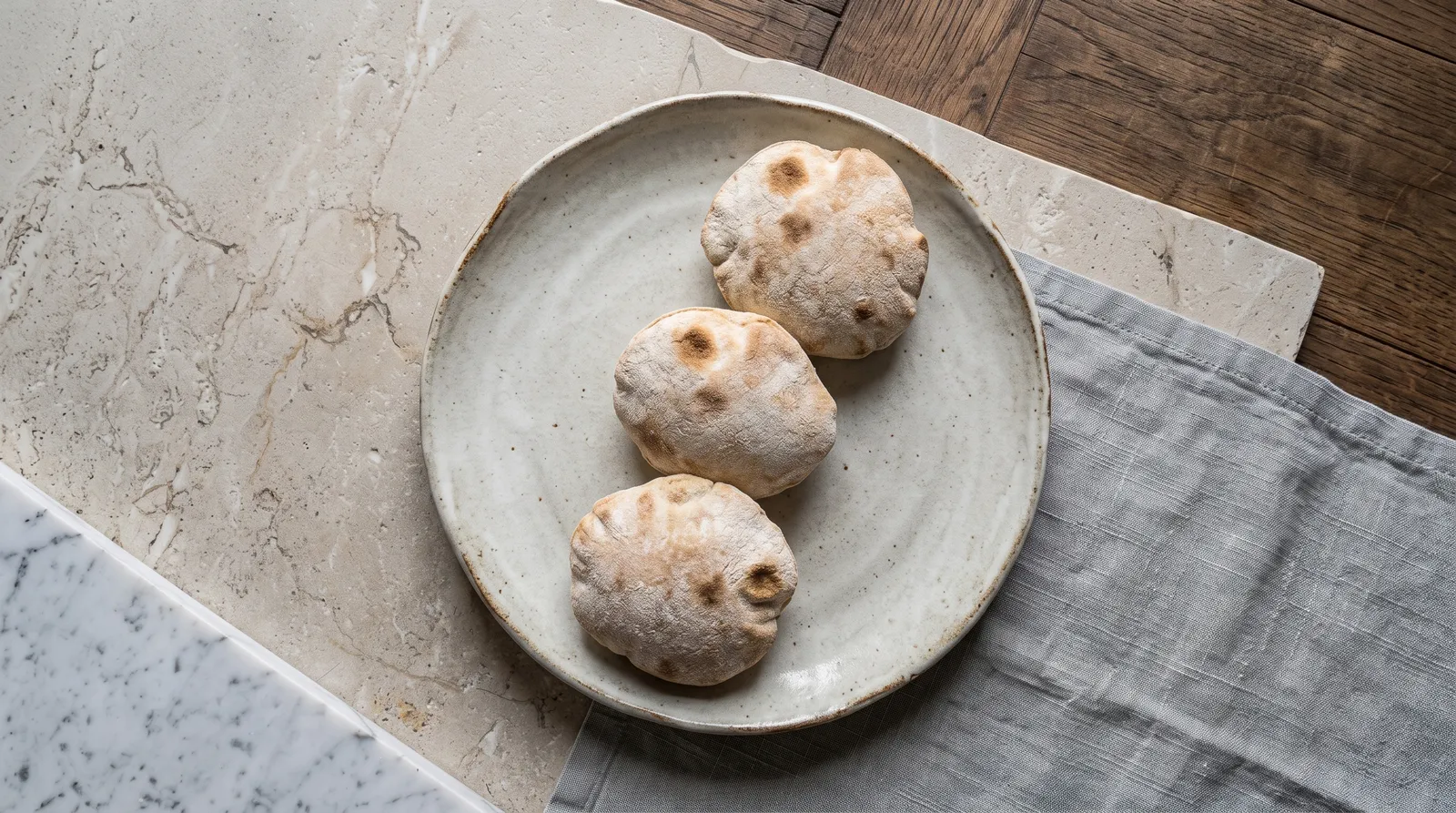
Twelve lean Anjou fouées made from flour, water, yeast and salt, rolled thin and baked on a fully heated steel until each disc balloons into a hollow pocket.

French National Dishes
Share
Fouace angevine — bread shown after baking
Prep 30 minutes
Cook 12 minutes
Total 117 minutes
Yield 12 hollow fouées
Introduction and overview

Fouace angevine (fouée): hollow Anjou bread pockets

In the Saumurois and wider Anjou context, the fouée is a small bread whose identity depends less on enrichment than on heat. A lean dough of flour, water, yeast and salt is rolled into thin discs and sent onto a fiercely hot baking surface. Steam expands before the crust sets, lifting the two faces apart and creating the hollow centre that makes the bread suitable for filling.

That pocket distinguishes this bread from the sweet enriched fouace of Rouergue and from the orange-blossom fougasse of Aigues-Mortes. The domestic method therefore protects the features that matter most: strong dough, moderate hydration, two controlled rests, a disc close to 1 cm thick, and a baking steel that has been thoroughly heated before the first batch enters.

The fouées are intentionally plain in the nutrition calculation. Butter, rillettes, mogettes, mushrooms and goat cheese are useful regional serving ideas, but they are optional and can vary enormously in weight. Keeping them outside the measured formula makes the 12-piece yield and the bread nutrition transparent.
Success points

Success points

  • The high-heat surface must be thoroughly preheated so steam inflates the thin disc rapidly.
  • Keep the discs near 8–10 mm rather than shaping thick rolls.
Ingredients

Ingredients

  • 500 g strong wheat flour
  • 300 ml water — at about 25 °C
  • 7 g instant dried yeast
  • 9 g fine salt
Method

Method

Directions

  1. Mix and knead. Mix the flour, 300 ml water at about 25 °C, yeast and salt, then knead for about 10 minutes. The dough is smooth, elastic and only lightly tacky.

  2. Give the dough its first rise. Cover the bowl and leave the dough to rise for 60 minutes. The dough is visibly aerated and close to doubled in volume.

  3. Heat the baking surface. During the final 45 minutes of the first rise, preheat the oven with a baking steel inside to 260 °C. The steel has had a full 45 minutes at 260 °C before the first fouées are loaded.

  4. Portion the dough. Divide the dough into 12 pieces of about 68 g and shape each into a smooth ball. There are 12 smooth balls of about 68 g each.

  5. Give the balls a short second rest. Cover the shaped balls and leave them for 15 minutes. The balls relax enough to roll without springing back strongly.

  6. Roll to an even thickness. Roll each ball into a round about 8–10 mm thick. Each disc is about 8–10 mm thick with an even centre and no thick rim.

  7. Bake until the pockets inflate. Bake four discs at a time on the hot steel, turning once if the oven browns unevenly, for about 4 minutes per batch and 12 minutes total. Each fouée balloons into a clear hollow pocket and its walls are fully baked, pliable and not floury inside.

Serving, storage and planning

Practical

Serving, storage and planning

Bake in small batches so the steel does not cool dramatically. Have the next four discs ready before opening the oven, and close the door promptly after loading.

Serving, storage and planning

Serve the fouées immediately. Let a pocket sit for a few seconds before cutting a slit along one edge, then point the opening away from the face and hands because hot steam can escape. Fill only after the steam has vented.

Serving, storage and planning

These breads are at their best fresh. If a few remain, cool them, cover them once cold, and reheat briefly in a hot oven until pliable. They can regain warmth, but the dramatic just-baked cavity and tender wall are difficult to match later.

Troubleshooting

Flat discs usually point to insufficient surface heat, an unevenly rolled centre or a puncture that let steam escape. Reheat the steel fully and roll the next disc evenly.

Troubleshooting

A floury or raw interior means the disc was too thick or removed too early. Keep the 8–10 mm target and wait until the walls are fully baked as well as inflated.

Nutrition per serving

Nutrition per serving

  • Serving size1 of 12 fouées
  • Calories153 kcal
  • Carbohydrate32 g
  • Protein4.2 g
  • Fat0.6 g
  • Fibre1.3 g
  • Sodium295 mg
Allergens and food safety

Allergens and food safety

Allergen: Gluten from wheat.

Safety: Use oven gloves around the 260 °C steel or stone.

Safety: Release steam away from the face and hands before opening a just-baked pocket.

FAQ

FAQ

Why not bake them like ordinary rolls?

The hollow pocket depends on a thin disc meeting very high stored heat. A thick roll develops a different crumb and is not the same preparation.

Do the fillings belong inside the recipe?

No. They are serving ideas only here, so each household can choose them without distorting the measured bread yield or nutrition.

Closing

Closing

  • Result — thin, pliable bread rounds with a clearly inflated cavity and no raw floury centre.
  • Decisive technique — give the baking steel a full high-temperature preheat and roll every disc to an even 8–10 mm.