French National Dishes

Crémet d’Anjou

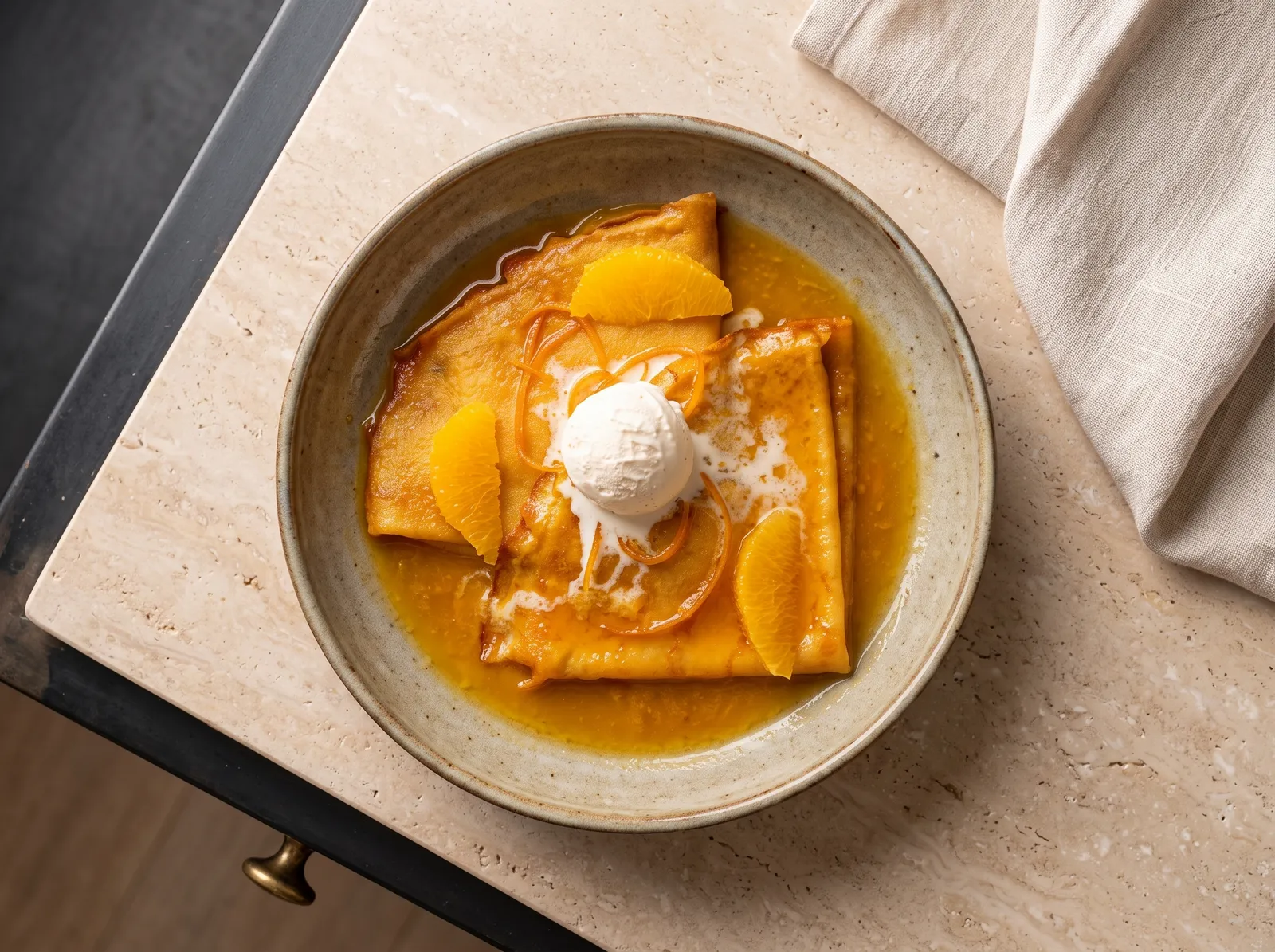
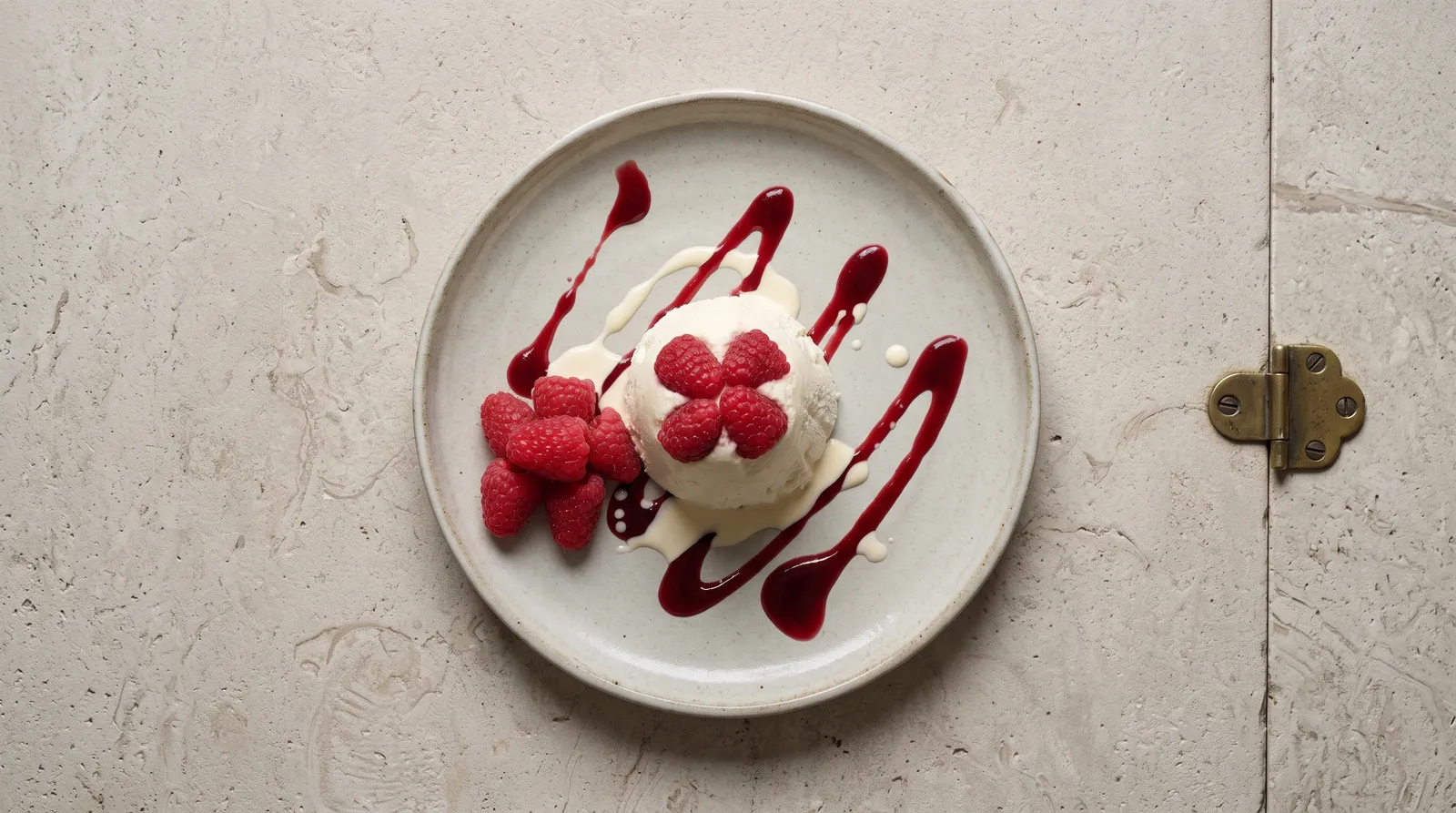
An uncooked Anjou dessert of pasteurised whipped cream and pasteurised egg white, gently folded, drained for three hours under refrigeration and served with measured raspberry coulis.

French National Dishes
Share
Crémet d’Anjou — served on a plate
Prep 25 minutes
Cook 0 minutes
Total 205 minutes
Yield 4 individual crémets
Introduction and overview

Crémet d’Anjou — chilled airy cream with raspberry coulis

Crémet d’Anjou is defined by lightness rather than by a baked or gelled custard. Whipped cream and egg-white foam are folded together, placed in cloth-lined perforated moulds and allowed to drain until the mixture can hold a delicate shape. The mould and cloth therefore do real technical work: a solid ramekin would trap liquid and give a different texture.

Because the mixture is never cooked, ingredient safety is non-negotiable. The egg white must be a commercially pasteurised liquid product, and the full-fat cream must also be pasteurised. Both begin cold, the bowls and beaters are chilled, and the three-hour drain takes place covered at 4 °C or below. Ordinary raw shell egg white is not an acceptable substitute.

Raspberry coulis is kept restrained and measurable rather than used as an undefined garnish. Each crémet receives 45 g, enough to add acidity and fruit without drowning the drained cream. The dessert is intended for same-day eating, with 24 hours as an absolute refrigerated maximum after mixing; there is no reheating or room-temperature holding stage.
Success points

Success points

  • Use only pasteurized liquid egg white and pasteurized cream.
  • Whip cream and egg white separately to their specified peaks.
  • Fold gently and keep the mixture cold.
  • Drain covered for the full 3 hours at 4 °C or below.
Ingredients

Ingredients

Crémet

  • 240 g pasteurized 35% fat whipping cream, refrigerated at 4 °C or below
  • 120 g pasteurized liquid egg white, refrigerated at 4 °C or below
  • 25 g caster sugar
  • 1 g fine salt
  • 2 g alcohol-free vanilla extract or paste

Raspberry coulis

  • 160 g pasteurized raspberry purée, refrigerated
  • 20 g caster sugar
Method

Method

Prepare moulds and coulis

  1. Line the perforated moulds. Rinse four 150 ml perforated crémet moulds or four 150 ml perforated household equivalents with cold water and line each with clean food-safe muslin or fine cheesecloth, leaving enough cloth to fold over the top. Tool or vessel: four perforated 150 ml moulds + muslin. Heat: cold. Temperature: cold. Readiness: The cloth lies smoothly against the perforated moulds with no large folds blocking drainage. Why it matters: A damp cloth releases the delicate crémets more cleanly. Safety: use freshly laundered food-safe cloth.

  2. Make the raspberry coulis. Stir the 160 g pasteurized raspberry purée with 20 g sugar for 2 minutes until the sugar is dissolved; cover and keep cold at 4 °C or below. Tool or vessel: small bowl. Heat: none. Temperature: ≤4 °C. Readiness: The coulis is smooth, glossy and free of undissolved sugar grains. Why it matters: A measured coulis fixes the serving and nutrition basis. Safety: keep at 4 °C or below.

Whip and fold

  1. Whip the pasteurised cream. Chill the mixing bowl and beaters, then whip the 240 g pasteurized cream for 4 minutes to soft-to-medium peaks. Tool or vessel: cold bowl + electric mixer. Heat: none. Temperature: ingredients ≤4 °C at start. Readiness: The cream holds a curved peak that keeps its shape but is not grainy or butter-like. Why it matters: Moderate peaks keep the final mixture airy enough to drain. Safety: use pasteurized cream and keep it cold.

  2. Whip the pasteurised egg white. In a second clean bowl, whip the 120 g pasteurized liquid egg white with 1 g salt for 5 minutes, gradually adding the 25 g sugar, until glossy medium-stiff peaks form; mix in the 2 g alcohol-free vanilla. Tool or vessel: second bowl + electric mixer. Heat: none. Temperature: cold to cool. Readiness: The egg-white foam is glossy and forms a peak that stands with a slight bend at the tip. Why it matters: A stable foam provides the characteristic light structure. Safety: Do not substitute ordinary raw shell egg white.

  3. Fold the two foams together. Fold one-third of the egg-white foam into the whipped cream, then fold in the remainder in two additions for about 3 minutes, using broad bottom-to-top strokes. Tool or vessel: large bowl + silicone spatula. Heat: none. Temperature: cool. Readiness: The mixture is evenly white, visibly aerated and free of large streaks of separate cream or egg foam. Why it matters: Gentle folding preserves air while combining the two foams. Safety: keep the mixture cold; do not leave it at room temperature.

Drain and serve

  1. Drain under refrigeration. Divide the mixture evenly among the four lined moulds, fold the cloth loosely over the tops, set on a rack over a tray, cover and refrigerate for 180 minutes at 4 °C or below. Tool or vessel: moulds + rack + tray + refrigerator. Heat: none. Temperature: ≤4 °C. Readiness: Each crémet holds its moulded shape while roughly 20 g of thin whey-like liquid has drained from the batch. Why it matters: Cold draining firms the foam without cooking it. Safety: Maintain 4 °C or below throughout the full drain.

  2. Unmould and portion the coulis. Unfold the cloth, invert each crémet onto a chilled plate, peel away the cloth and spoon exactly 45 g raspberry coulis alongside. Tool or vessel: chilled plates + spoon. Heat: none. Temperature: cold. Readiness: Each crémet releases intact with a soft, airy shape and the coulis remains separate rather than flooding the moulded cream. Why it matters: Gentle unmoulding preserves the drained structure. Safety: Serve promptly; keep any unserved portions refrigerated.

Serving and practical guidance

Practical

Substitutions

- Crémet moulds: Use individual perforated 150 ml food-safe moulds with similar drainage area. A solid ramekin is not equivalent because the mixture cannot drain.

Troubleshooting

Troubleshooting

  • Problem 1Check the cause and correction. If the crémets slump, the foams were under-whipped or the drain was too short; use the specified peak stages and full 3 hours.
  • Problem 2Check the cause and correction. If the texture is grainy, the cream was over-whipped; stop at soft-to-medium peaks before folding.
Nutrition per serving

Nutrition per serving

  • Serving size1 crémet plus 45 g raspberry coulis
  • Calories284 kcal
  • Carbohydrate17.8 g
  • Protein4.9 g
  • Fat21.9 g
  • Fibre2.6 g
  • Sodium72 mg
Allergens and food safety

Allergens and food safety

Allergen: Egg.

Allergen: Milk.

Safety: This dessert is not cooked: use only commercially pasteurized liquid egg white and pasteurized cream.

Safety: Keep all dairy and egg components at 4 °C or below as much as practical and complete the drain under refrigeration.

Safety: Consume the same day or within a maximum of 24 hours; discard if temperature control has been lost.

Closing

Closing

  • Result: An uncooked Anjou dessert of pasteurised whipped cream and pasteurised egg white, gently folded, drained for three hours under refrigeration and served with measured raspberry coulis.
  • Decisive technique: Use only pasteurized liquid egg white and pasteurized cream.