French National Dishes

Crêpes Suzette

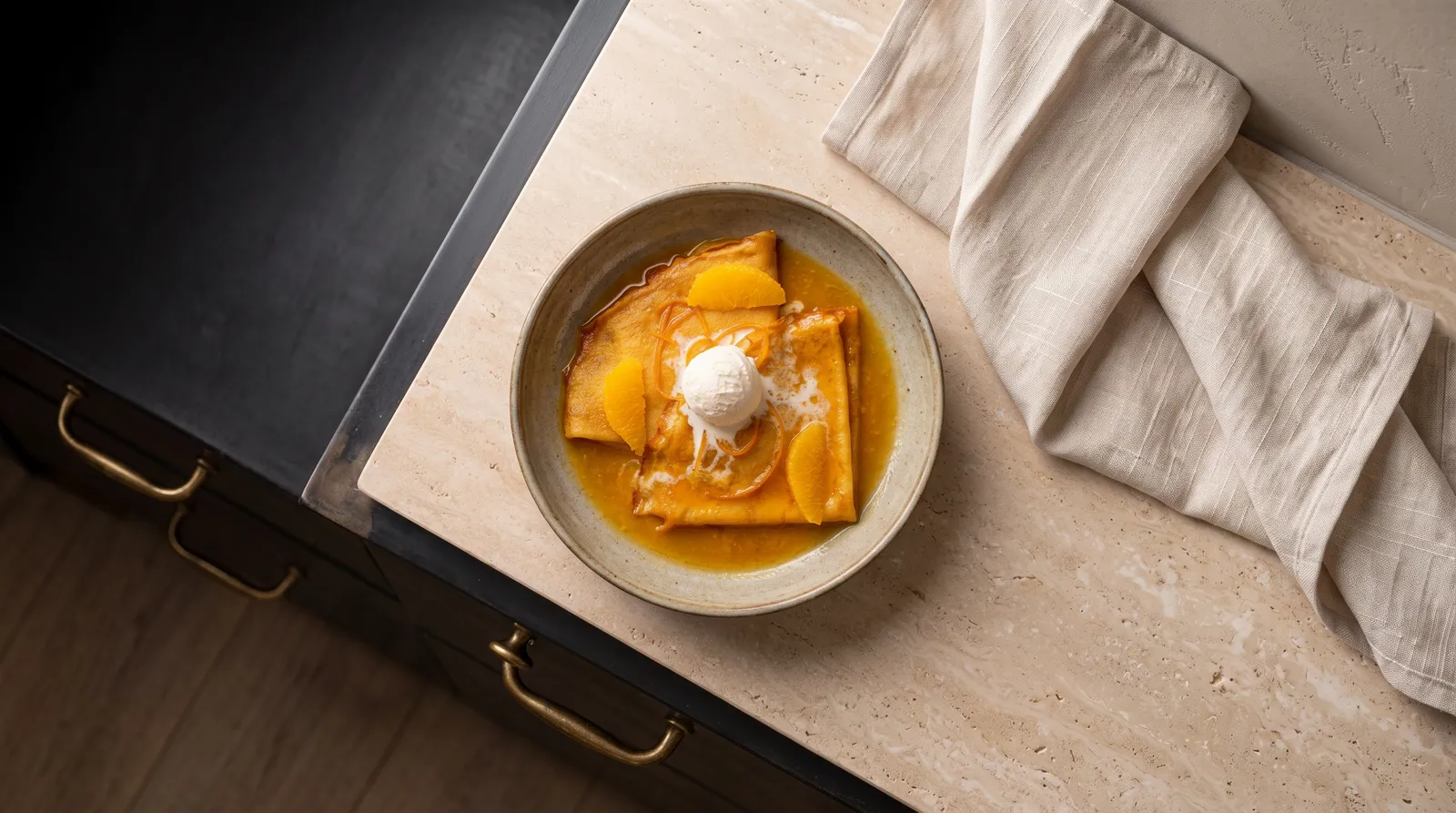
Twelve thin crêpes glazed in reduced orange juice, sugar, butter and measured orange liqueur, simmered safely without ignition and served immediately.

French National Dishes
Share
Crêpes Suzette — served on a plate
Prep 20 minutes
Cook 59 minutes
Total 139 minutes
Yield 12 crêpes, about 20 cm
Introduction and overview

Crêpes Suzette — orange-butter crêpes with liqueur, no flambé

Crêpes Suzette bring together two distinct pieces of work: thin flexible crêpes and a concentrated orange-butter sauce. Orange and lemon zest scent the batter, while the pan sauce uses strained orange juice, sugar, butter and orange liqueur. That orange glaze is what separates Suzette from Breton beurre-sucre crêpes, while the soft texture separates it from crisp crêpes dentelle.

The public household method uses no flambé. The orange juice and sugar first reduce for 10 minutes. The measured liqueur is added only after the pan has been removed from the heat, then the pan returns to a controlled simmer for 15 minutes with no ignition. The butter is whisked in off heat so the sauce turns glossy rather than greasy.

Alcohol should not be treated as if it disappears automatically. A 15-minute stirred or simmered preparation can retain a material fraction, so the dish remains alcohol-containing after cooking. The folded crêpes need only a five-minute final glaze: long soaking would make them heavy and soft, whereas brief reheating gives an even orange sheen while they remain supple.
Success points

Success points

  • Rest the batter cold for 60 minutes.
  • Keep the crêpes thin and supple rather than crisp.
  • Reduce the orange juice before adding liqueur.
  • Measure liqueur away from heat, simmer it without ignition for the full 15 minutes, and mount butter off heat.
  • Glaze only briefly and serve at once.
Ingredients

Ingredients

Crêpes

  • 100 g plain wheat flour
  • 250 ml whole milk, cold
  • 50 g whole egg, about 1 large egg without shell
  • 10 g caster sugar
  • 25 g unsalted butter, melted and cooled
  • 7 g neutral vegetable oil, for batter/pan
  • 1 g fine salt
  • 3 g orange zest, finely grated, no white pith
  • 2 g lemon zest, finely grated, no white pith

Suzette sauce

  • 400 ml fresh orange juice, strained
  • 85 g caster sugar
  • 120 g unsalted butter, cold, cubed
  • 50 ml orange liqueur, 40% ABV, measured away from heat
Method

Method

Batter and rest

  1. Mix the citrus crêpe batter. Whisk the flour, 10 g sugar and 1 g salt; add the egg and about 80 ml milk and whisk for 3 minutes until smooth, then whisk in the remaining milk, 25 g melted butter, 7 g oil and the citrus zest for 3 minutes. Tool or vessel: mixing bowl + whisk. Heat: none. Temperature: cool. Readiness: The batter is fluid, smooth and evenly flecked with fine citrus zest. Why it matters: A smooth thin batter produces delicate crêpes that can absorb glaze without becoming doughy. Safety: Do not taste raw flour or egg batter.

  2. Rest the batter cold. Cover and refrigerate for 60 minutes at 4 °C or below. Tool or vessel: covered bowl + refrigerator. Heat: none. Temperature: ≤4 °C. Readiness: The rested batter remains pourable and cohesive. Why it matters: Resting hydrates flour and relaxes gluten. Safety: keep raw batter cold.

Cook crêpes

  1. Heat the crêpe pan. Heat a 20 cm non-stick crêpe pan for 5 minutes to about 185 °C. Tool or vessel: 20 cm non-stick crêpe pan. Heat: medium-high. Temperature: about 185 °C surface. Readiness: A small test drop sets immediately without scorching. Why it matters: A fully heated pan supports thin, fast crêpes.

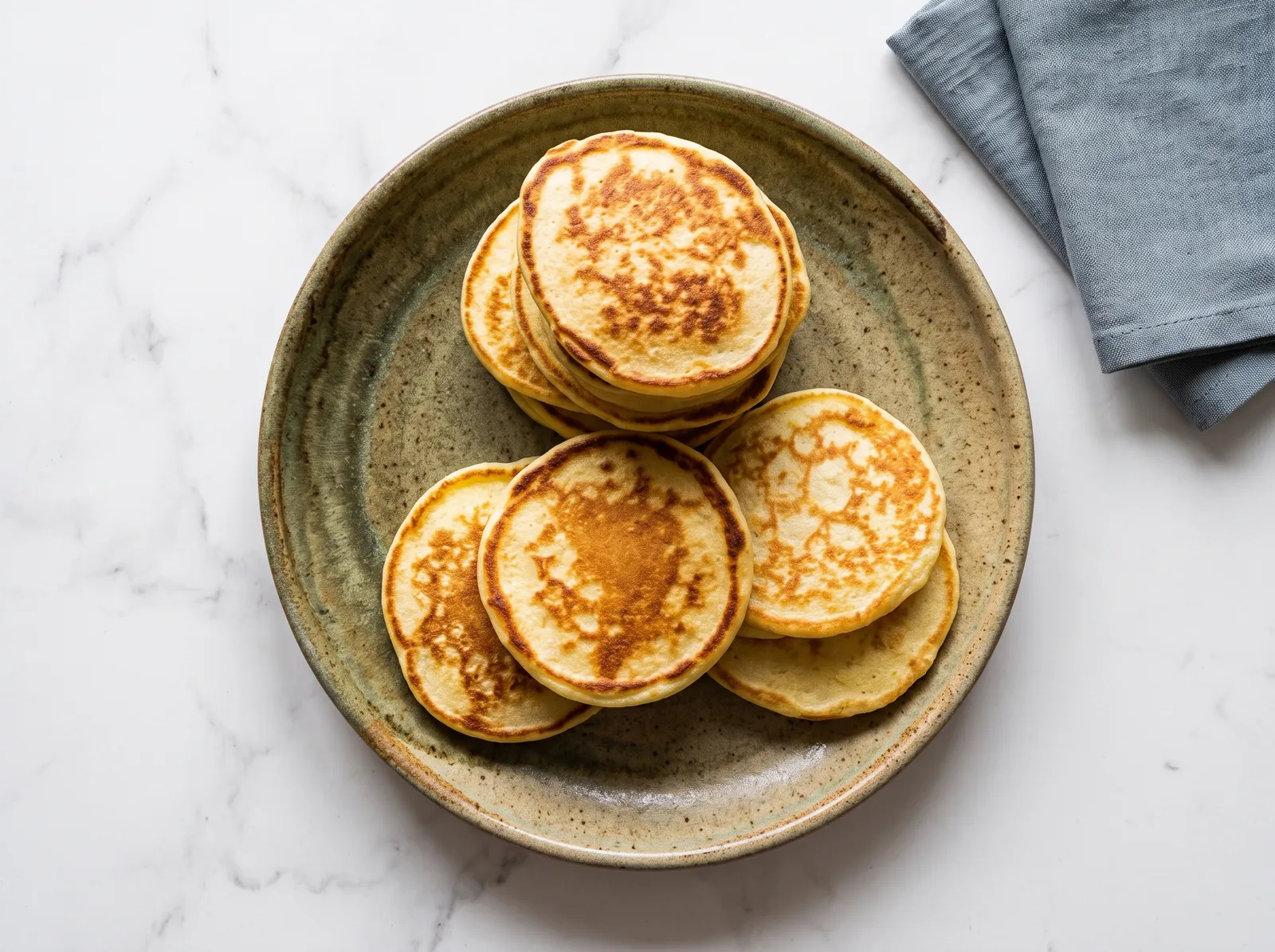
  2. Cook twelve soft crêpes. Cook 12 crêpes one at a time, using about 30 ml batter per crêpe: cook roughly 70 seconds on the first side until no wet batter remains, turn, and cook about 30 seconds on the second side; stack as they are made for about 24 minutes total batch cooking. Tool or vessel: same pan + heatproof spatula. Heat: medium to medium-high. Temperature: about 180–190 °C surface. Readiness: The crêpes are thin, flexible and lightly golden with no wet batter, not dry or crisp. Why it matters: Soft crêpes fold and glaze without cracking.

Orange sauce

  1. Reduce the orange juice. Combine the 400 ml orange juice and 85 g sugar in a wide sauté pan and boil gently for 10 minutes until reduced and lightly syrupy. Tool or vessel: wide sauté pan. Heat: medium simmer. Temperature: about 95–100 °C. Readiness: The liquid is visibly reduced and lightly coats a spoon but remains pourable. Why it matters: Reduction concentrates orange before butter and liqueur are added.

  2. Simmer the liqueur without ignition. Remove the pan from the heat, measure the 50 ml orange liqueur separately and add it to the pan; return to medium-low heat and simmer without ignition for 15 minutes. Tool or vessel: same sauté pan. Heat: medium-low simmer. Temperature: about 90–95 °C. Readiness: The sauce smells integrated rather than sharply alcoholic and has a light syrup consistency. Why it matters: A controlled simmer incorporates the liqueur without household flambéing. Safety: Never ignite the liqueur, never pour from a bottle over a hot pan, and do not claim all alcohol evaporates.

  3. Mount the sauce with butter. Remove from the heat and whisk in the 120 g cold butter in several additions over 5 minutes until the sauce is glossy and emulsified. Tool or vessel: same pan + whisk. Heat: off heat. Temperature: off heat. Readiness: The sauce is glossy, orange-scented and cohesive, with no pool of separated butter. Why it matters: Mounting butter off heat creates the classic rich glaze without boiling it apart.

Glaze and serve

  1. Glaze and serve at once. Fold each crêpe into quarters, arrange them in the warm sauce in two batches if needed, and turn gently for 5 minutes total just until evenly glazed and hot; serve immediately with the measured sauce. Tool or vessel: wide sauté pan + tongs or spatula. Heat: low. Temperature: hot, below vigorous boil. Readiness: The folded crêpes are evenly glossy with orange sauce, hot through and still supple rather than soggy or torn. Why it matters: Brief glazing warms and coats the crêpes without prolonged soaking. Safety: The sauce still contains some alcohol after simmering.

Serving and practical guidance

Practical

Substitutions

- Orange liqueur: Only an explicitly approved orange liqueur of comparable strength may be substituted at the same measured volume. Flavour and alcohol retention change with ABV; an alcohol-free variant would be a different formula and requires separate nutrition.

Troubleshooting

Troubleshooting

  • Problem 1Check the cause and correction. If the sauce is greasy, the butter was boiled or added too fast; remove from heat and whisk in cold butter gradually.
  • Problem 2Check the cause and correction. If the crêpes become soggy, they sat in the sauce too long; glaze briefly and serve immediately.
Nutrition per serving

Nutrition per serving

  • Serving size2 glazed crêpes plus 1/6 of the sauce
  • Calories391 kcal
  • Carbohydrate39.7 g
  • Protein4.8 g
  • Fat23.2 g
  • Fibre0.6 g
  • Sodium99 mg
Allergens and food safety

Allergens and food safety

Allergen: Gluten from wheat.

Allergen: Egg.

Allergen: Milk.

Allergen: Alcohol from orange liqueur.

Allergen: Sulphites may be present in the liqueur depending on product.

Safety: Do not taste raw flour-and-egg batter and keep it at 4 °C or below during the rest.

Safety: Measure the liqueur away from heat; do not flambé or ignite it and never pour directly from the bottle over a hot pan.

Safety: Alcohol remains after cooking; for the 15-minute simmer, nutrition and disclosure use a 40% retention basis.

Closing

Closing

  • Result: Twelve thin crêpes glazed in reduced orange juice, sugar, butter and measured orange liqueur, simmered safely without ignition and served immediately.
  • Decisive technique: Rest the batter cold for 60 minutes.