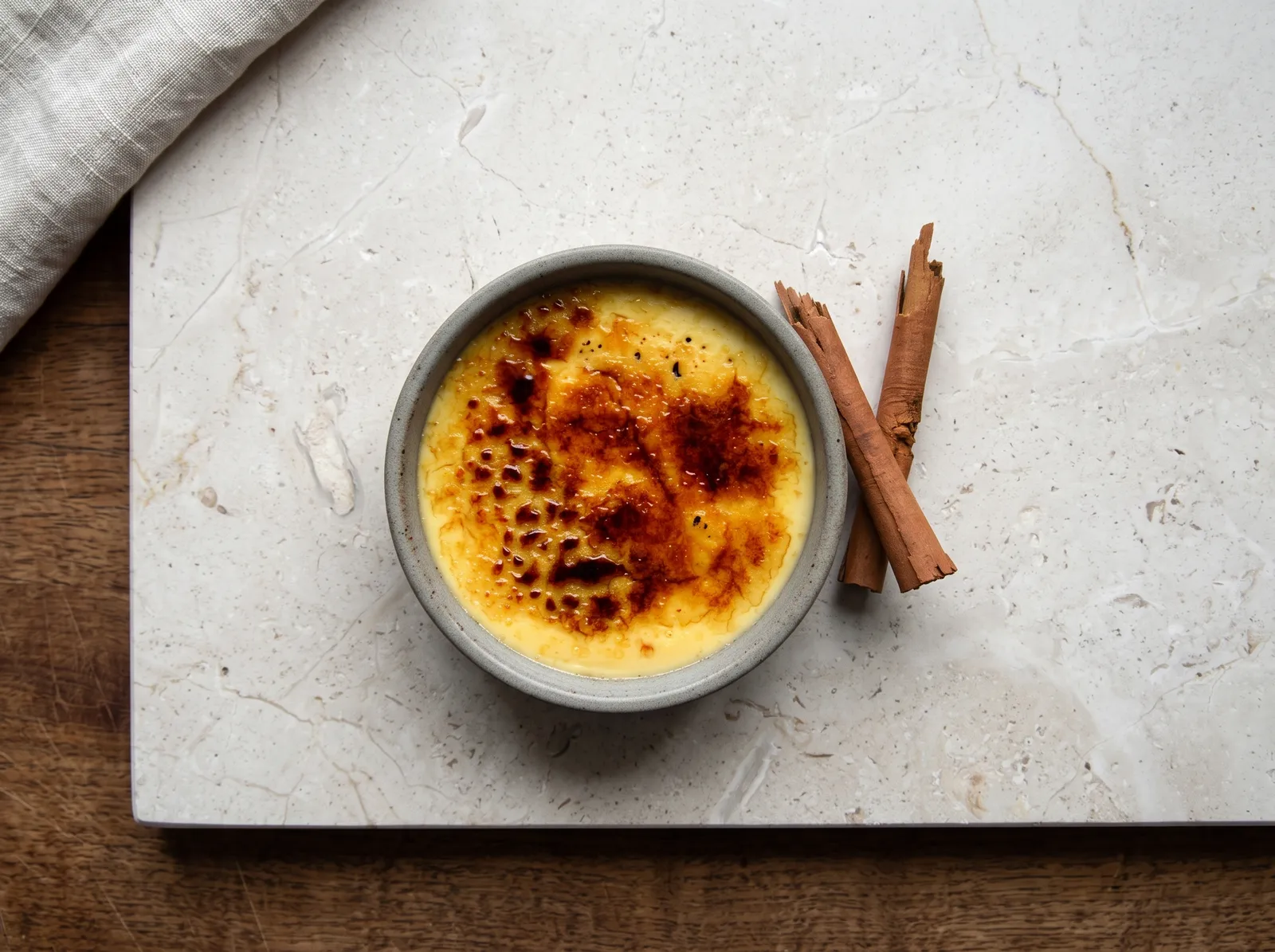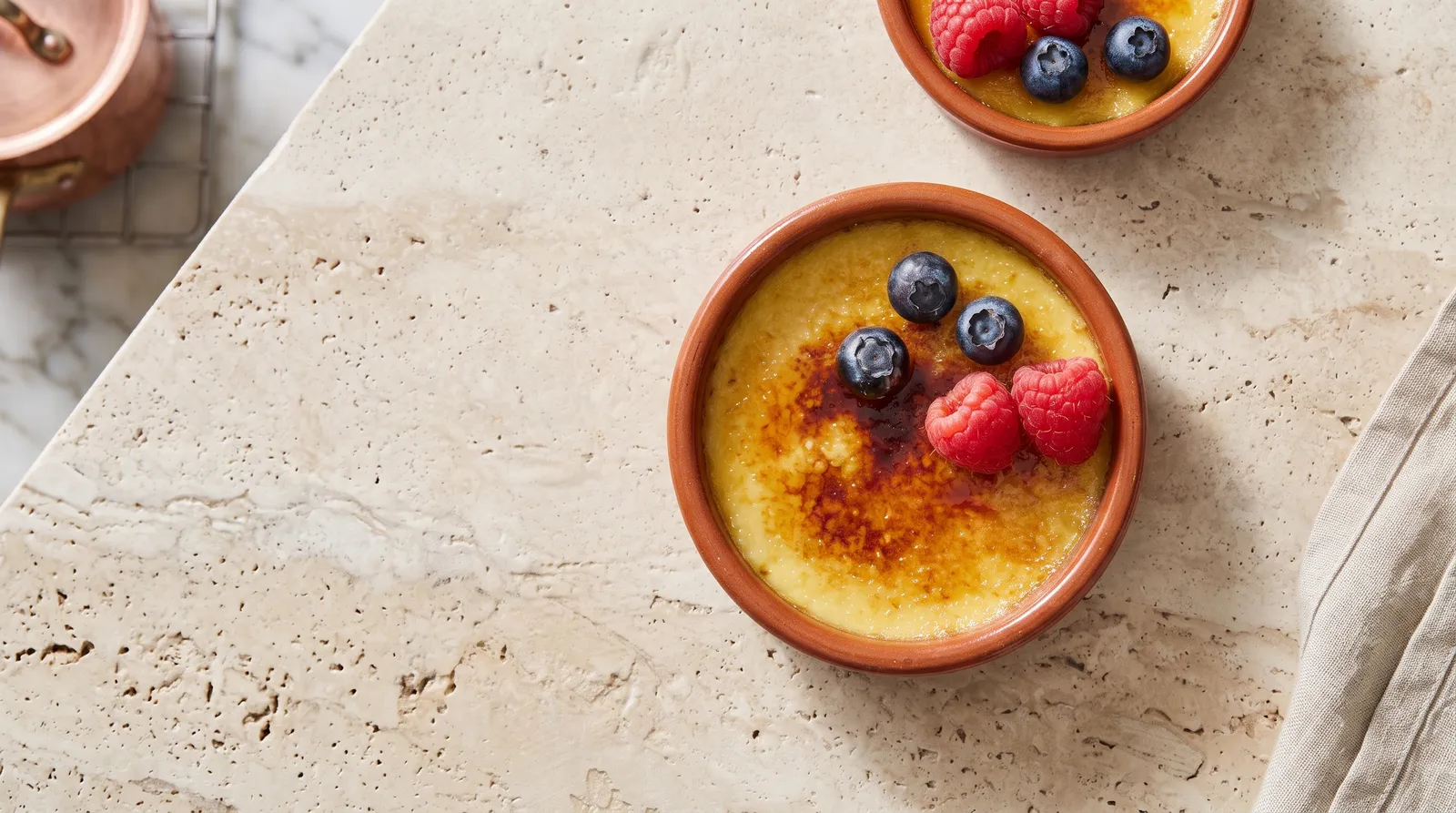
Crème brûlée — baked vanilla cream custard with a brittle caramel top
Crème brûlée is built on a very short ingredient list—cream, egg yolks, sugar and vanilla—so texture depends on temperature control rather than starch. The custard is deliberately shallow: six 9 cm ramekins are filled to about 2 cm, giving a broad surface for caramel while keeping the interior softly set.
The cream is heated to about 82 °C, briefly infused with vanilla, then tempered into the yolks and strained. Baking takes place at 120 °C in a water bath made with roughly 80 °C water reaching halfway up the ramekin sides. The centre is removed at 72 °C, above the 71 °C safety minimum but still soft enough to tremble as one mass instead of curdling.
Cooling and caramelising are separate stages. The ramekins cool uncovered for 30 minutes, then chill for four hours at 4 °C or below. Only just before service does each receive 5 g sugar and a moving torch flame. The target is a thin amber lid that cracks cleanly while the custard underneath remains cold—precisely the contrast that separates crème brûlée from a warm baked custard.