Canard à la rouennaise: a fully cooked Rouen-inspired home adaptation
Rouen’s famous caneton à la rouennaise, also known as canard au sang or pressed duck, is not simply roast duck with a red-wine sauce. Its restaurant identity depends on a specialist slaughter method that retains blood, rare cooking, and a mechanical duck press used to extract blood and juices from the carcass for the sauce. Those operations are defining features of the historic service, and they are not suitable to normalize as household instructions.
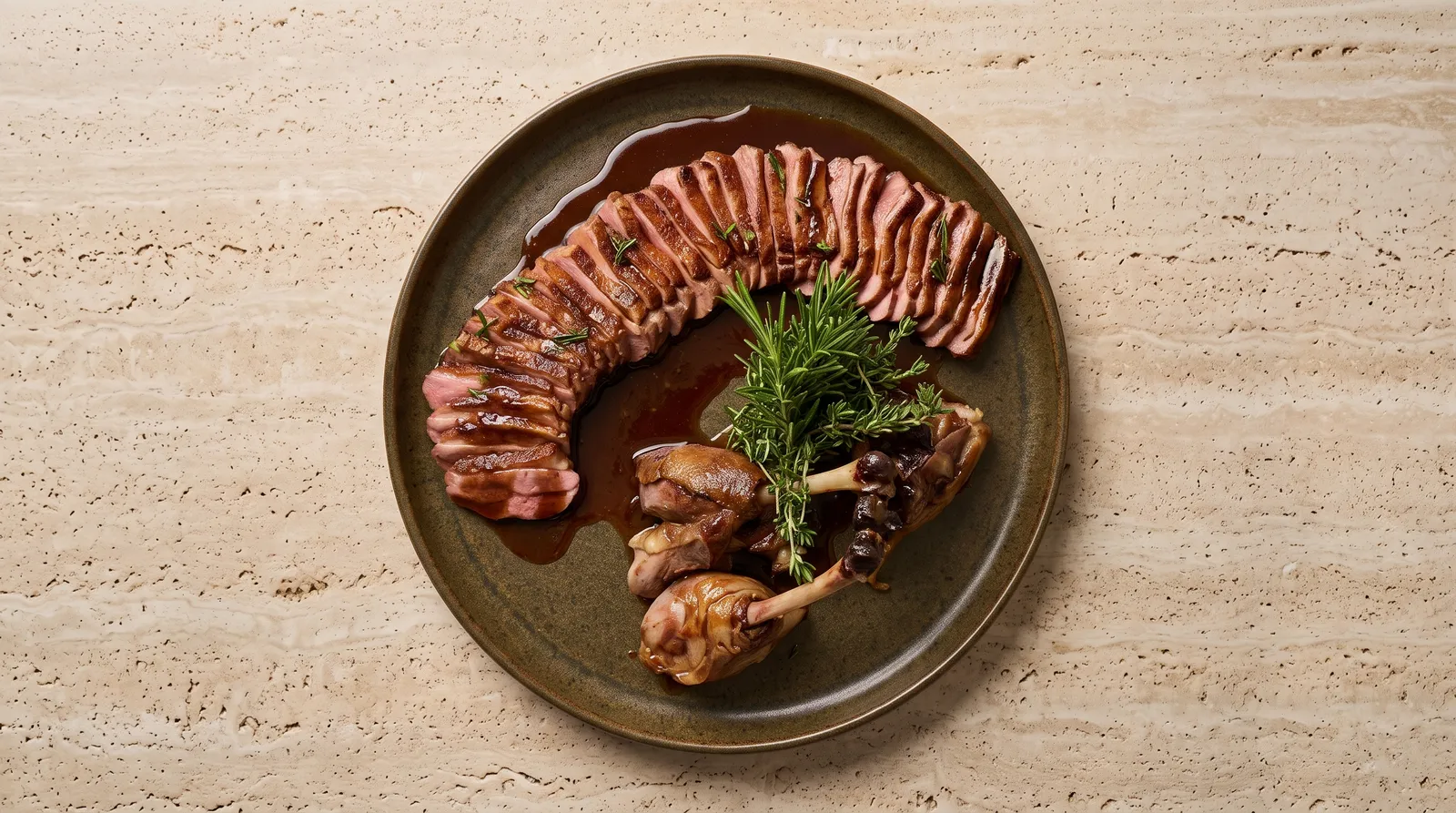
The preparation here is therefore explicit about what it is and what it is not. The duck is roasted fully to 74 °C, rested and carved. Fresh duck liver is also cooked to 74 °C before being blended into a shallot, red-wine, port and stock reduction. Cognac, lemon and butter echo documented sauce elements, but there is no home blood collection, no undercooked poultry and no carcass pressing. The finished plate should be understood as a Rouen-inspired adaptation, not an exact reproduction of canard au sang.
That distinction also changes the sauce mechanics. Blood traditionally provides both flavour and thickening; cooked liver and reduction have to create body instead. Reduce the wine before adding stock, blend the cooked liver thoroughly, and mount with cold butter only after the pan leaves the heat. The result is dark, glossy and rich, with enough lemon acidity to prevent the sauce from becoming heavy.