French National Dishes

Brandade de morue nîmoise

A potato-free Nîmes-style brandade made from cold-desalted salt cod, gently poached and worked gradually with warm olive oil and milk until pale, creamy and spreadable.

French National Dishes
Share
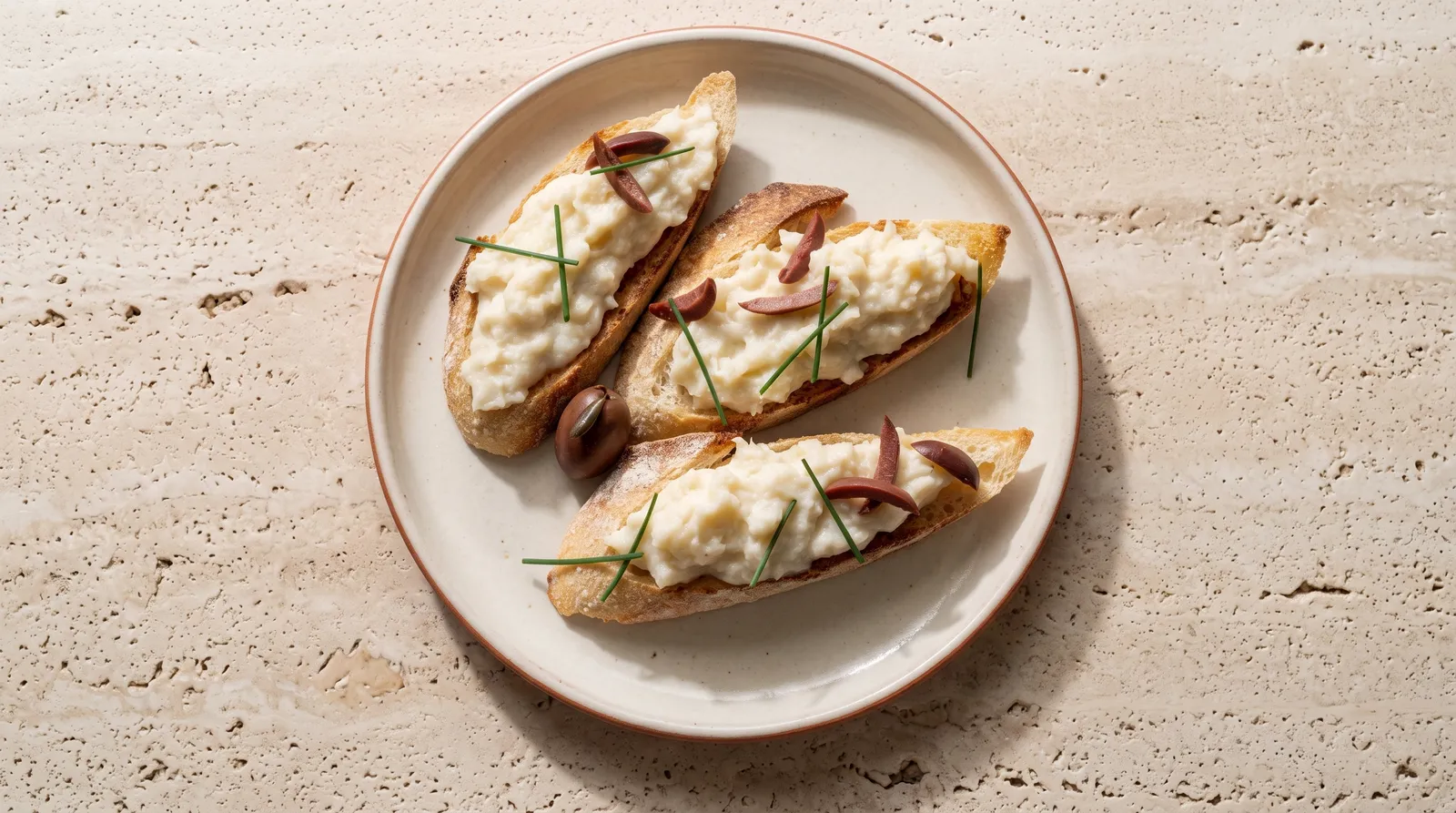
Brandade de morue nîmoise — served on a plate
Prep 35 minutes
Cook 30 minutes
Total 1505 minutes
Yield 6 starter servings
About this dish

Brandade de morue nîmoise — salt cod and olive-oil emulsion

Brandade de morue nîmoise is defined here by salt cod and gradual emulsification, not by mashed potato. Potato-heavy brandade parmentier is common and can be very good, but it changes the structure of the Nîmes-style preparation chosen for this recipe. The cod is soaked for a full 24 hours under refrigeration, then gently poached only until it flakes and reaches 63 °C.

After cooking, remove every piece of skin and bone before working the fish. Warm the milk with garlic and warm the olive oil separately, keeping both below a boil. The emulsion develops through small alternating additions: a little oil, a little milk, vigorous working, then repeat. Dumping the liquids in all at once is the fastest route to a greasy pool rather than a cohesive brandade.

The finished mixture should be pale and creamy enough to spread but firm enough to hold a soft mound on a spoon. Lemon juice and pepper sharpen the richness without adding more salt. If the brandade is made ahead, keep it at 4 °C or below and warm it gently; hard boiling can make the oil separate. The 24-hour desalting period is part of total time, not an invisible pre-step.

Success points

Success points

  • Desalt the cod for the full 24 hours under refrigeration.
  • Poach gently; do not boil the cod hard.
  • Remove every skin and bone fragment before emulsifying.
  • Add warm oil and milk in small alternating amounts instead of pouring them in at once.
Ingredients

Ingredients

  • 800 g salt cod, skin-on or thick pieces before desalting
  • 20000 ml cold water, for desalting in five 4 litre fills
  • 1500 ml fresh water, for poaching
  • 250 ml extra-virgin olive oil
  • 250 ml whole milk
  • 12 g garlic, lightly crushed
  • 3 g fresh thyme
  • 1 bay leaf
  • 15 ml lemon juice
  • 2 g black pepper, finely ground
Method

Method

Desalt and cook the cod

  1. Desalt under refrigeration. Soak the salt cod in 4000 ml cold water in the refrigerator, replacing it with fresh 4000 ml water four times during the 24-hour soak. Hold at 4 °C or below. Time: 24 hours refrigerated soaking. Continue until the cod is flexible and a tiny cooked test flake is pleasantly seasoned rather than aggressively salty. Keep the fish at 4 °C or below throughout soaking.

  2. Poach the cod gently. Poach the desalted cod gently in the 1500 ml fresh water with thyme and bay until it just flakes. Maintain 63 °C. Time: 10 minutes. Continue until the cod flakes into moist large pieces and reaches 63 °C. Cook the fish to 63 °C.

  3. Clean and flake. Drain the cod, remove skin and bones carefully, and flake the flesh. Time: 10 minutes. Continue until the fish is completely free of skin and bones and separated into moist flakes.

Build the emulsion

  1. Warm the liquids. Warm the milk with the garlic and warm the olive oil separately; neither should boil. Time: 5 minutes. Continue until the milk and oil are hot but calm with no boiling or scorching.

  2. Build the emulsion. Work the cod vigorously, alternating small additions of warm olive oil and milk until creamy and cohesive. Time: 15 minutes. Continue until the brandade is pale, creamy and cohesive, with no pool of free oil around the edges.

  3. Season and serve. Finish with lemon juice and black pepper and serve warm. Time: 5 minutes. Continue until the brandade holds a soft mound on a spoon while remaining spreadable.

Practical guidance

Practical

Serving

Serve warm as a starter spread, with toasted bread if desired. Bread is not included in the nutrition estimate.

Make-ahead

The cod can finish desalting shortly before cooking. Prepared brandade can be chilled, but its texture is best when served the same day after gentle warming.

Storage and reheating

Refrigerate at 4 °C or below for up to 2 days. Reheat gently, stirring, until 74 °C; harsh heat can make the emulsion oily.

Valid substitutions

- salt cod: No fresh-cod substitution is claimed to preserve the Nîmes brandade identity. Fresh cod lacks the cured flavour and salt structure that define brandade de morue. - potato: Potato can appear in brandade parmentier. Adding potato changes this potato-free Nîmes-style formula into a different common variation.

Troubleshooting

Troubleshooting

  • Brandade is too saltydesalting was insufficient; extend the cold soak next time with more water changes.
  • Emulsion looks oilyoil was added too quickly or the mixture cooled too far; stop adding oil and work in a little warm milk before continuing slowly.
  • Texture is gluey or heavythe mixture was overworked after becoming cohesive; stop as soon as it holds a soft, spreadable mound.
Nutrition per serving

Nutrition per serving

  • Serving size1 starter portion
  • Calories515 kcal
  • Carbohydrate7 g
  • Protein32 g
  • Fat40 g
  • Fibre0.5 g
  • Sodium1100 mg
Allergens and food safety

Allergens and food safety

Allergens: Fish, Milk.

Desalt salt cod at 4 °C or below.

Poach the cod to 63 °C.

Refrigerate prepared brandade at 4 °C or below and reheat leftovers to 74 °C.

FAQ

FAQ

Why are there no potatoes?

This recipe deliberately follows a salt-cod-and-emulsion Nîmes style. Potato is characteristic of other brandade variations, especially brandade parmentier.

Can I use fresh cod?

Fresh cod lacks the cured flavour and salt structure of morue, so it does not preserve the same dish identity.

Closing

Closing

  • Result: A pale, warm, spreadable salt-cod emulsion with olive-oil richness and no potato filler.
  • Decisive technique: Cold desalting followed by small alternating additions of warm oil and milk is the decisive technique.