
French National Dishes

Bredele

One clearly named member of the Alsatian bredele family: vanilla-scented Butterbredele, chilled for one hour, rolled to 4 mm, cut into small shapes and baked in three fully counted trays.

French National Dishes
Share
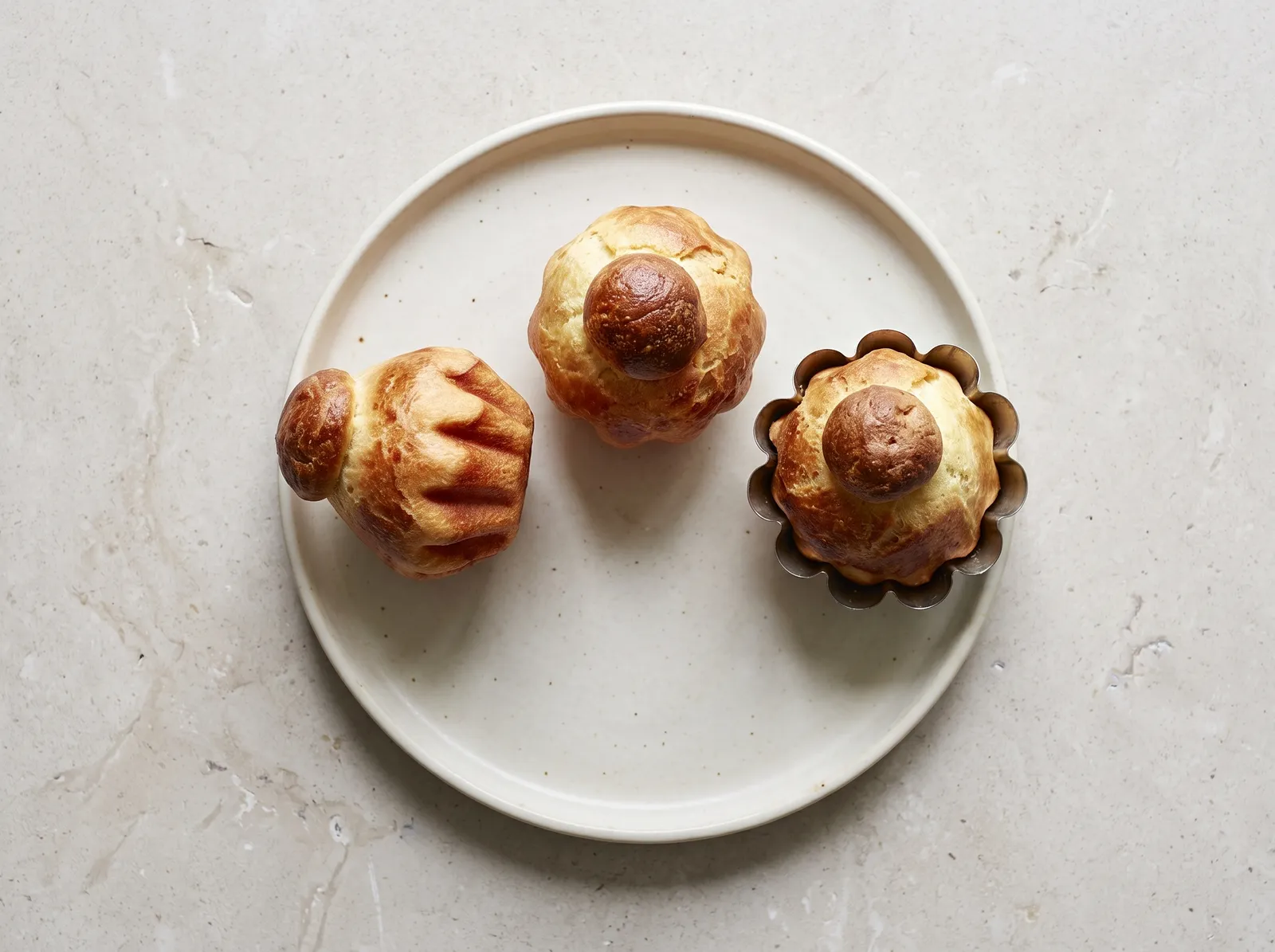
Bredele — several baked pastries on display
Prep 45 minutes
Cook 36 minutes
Total 171 minutes
Yield 48 small Butterbredele
About this dish

Alsatian Butterbredele — butter Christmas biscuits

Bredele is not the name of one universal biscuit dough. In Alsace it describes a broad Christmas-biscuit family that includes butter cut-outs, almond-and-cinnamon biscuits, anise biscuits, spritz and many other forms. To turn that family into one executable recipe, this record chooses Butterbredele: a butter-rich cut-out biscuit with vanilla, a chilled dough and a light egg-yolk glaze.

The dough rests for one full hour in the refrigerator before rolling. That is not dead time. Chilling firms 300 g of butter, reduces sticking and helps small cut shapes keep cleaner edges. Roll the dough to about 4 mm throughout; thickness variation matters more than cutter shape because thin pieces will brown before thick pieces have dried enough to crisp.

A household oven may not take every biscuit at once, so the schedule counts three separate 12-minute tray bakes rather than hiding repeated oven time behind a single number. Each tray is ready when the tops are pale gold with slightly deeper golden edges. Afterward, cool the biscuits for a full 30 minutes before packing. Airtight storage works only after the residual steam has escaped.
Success points

Success points

  • Remember that bredele is a category; this formula is specifically Butterbredele.
  • Chill the dough for the full hour.
  • Roll to about 4 mm so tray timing remains consistent.
  • Count all three 12-minute tray bakes plus complete cooling in the schedule.
Ingredients

Ingredients

  • 500 g wheat flour
  • 300 g unsalted butter, softened
  • 250 g caster sugar
  • 100 g whole egg, about 2 large eggs
  • 10 g vanilla sugar
  • 6 g baking powder
  • 36 g egg yolk, about 2 yolks, for glaze
Method

Method

Make and chill the dough

  1. Combine egg and sugars. Whisk the whole egg, caster sugar and vanilla sugar until evenly combined. Time: 5 minutes. Continue until the sugar is evenly dispersed through the egg with no dry pockets.

  2. Make the butter dough. Rub the softened butter into the flour, then add baking powder and the egg-sugar mixture and bring together into a homogeneous dough. Time: 15 minutes. Continue until the dough is homogeneous and holds together without visible streaks of dry flour.

  3. Chill before rolling. Wrap and chill the dough before rolling. Hold at 4 °C or below. Time: 1 hour refrigerated rest. Continue until the dough is firm enough to roll cleanly without sticking heavily.

Roll, cut and bake

  1. Roll, cut and glaze. Roll the chilled dough to about 4 mm and cut small festive shapes, arranging them on three lined trays; brush lightly with egg yolk. Time: 25 minutes. Continue until the biscuits are close to 4 mm thick with clean cut edges and an even light yolk glaze.

  2. Bake tray one. Bake the first tray until the biscuits colour at the edges. Maintain 180 °C. Time: 12 minutes. Continue until the first tray is pale gold across the tops with slightly deeper golden edges.

  3. Bake tray two. Bake the second tray to the same colour. Maintain 180 °C. Time: 12 minutes. Continue until the second tray is pale gold across the tops with slightly deeper golden edges.

  4. Bake tray three. Bake the third tray to the same colour. Maintain 180 °C. Time: 12 minutes. Continue until the third tray is pale gold across the tops with slightly deeper golden edges.

  5. Cool completely. Cool all biscuits completely on racks before packing. Time: 30 minutes passive cooling. Continue until the biscuits are completely cool and feel crisp at the edges rather than soft from trapped steam.

Practical guidance

Practical

Serving

Serve completely cool as part of an Alsatian-style Christmas biscuit assortment or with coffee or tea.

Make-ahead

The dough can be made one day ahead and kept refrigerated at 4 °C or below; let it soften only enough to roll without cracking.

Storage and reheating

Pack only when completely cool. Store airtight at cool room temperature for about 2 weeks, separating layers with baking paper if needed.

Valid substitutions

- Butterbredele flavouring: Cinnamon or citrus can flavour some household butter biscuits. The formula remains a butter cut-out biscuit only if the dough structure is unchanged; other bredele families require their own recipes.

Troubleshooting

Troubleshooting

  • Dough sticks to the pinit has warmed too much; chill briefly before continuing rather than adding large amounts of flour.
  • Biscuits spread and blurthe butter was too warm or dough too soft; keep the cut dough cool before baking.
  • Some biscuits darken while others stay palethickness is uneven; use the same 4 mm target across the whole tray.
Nutrition per serving

Nutrition per serving

  • Serving size1 small Butterbredele
  • Calories120 kcal
  • Carbohydrate14 g
  • Protein2 g
  • Fat6.5 g
  • Fibre0.4 g
  • Sodium35 mg
Allergens and food safety

Allergens and food safety

Allergens: Wheat/gluten, Milk, Egg.

Keep the egg-containing dough refrigerated at 4 °C or below during its one-hour rest.

Do not eat raw dough because it contains raw flour and egg.

Cool the baked biscuits completely before airtight storage to prevent condensation.

FAQ

FAQ

Are all bredele Butterbredele?

No. Butterbredele are one butter-based cut-out member of a much larger Alsatian Christmas-biscuit family.

Why is the cooling time included?

Packing warm biscuits traps steam and softens them, so the full cooling period is part of the practical schedule.

Closing

Closing

  • Result: Crisp-edged, buttery vanilla biscuits with clean cut shapes and a pale-golden egg-yolk finish.
  • Decisive technique: A one-hour chill, even 4 mm rolling and three fully counted tray bakes are the controls that make the batch consistent.