French Recipes

Tielle sétoise

A round 28 cm covered yeast-dough pie filled with tender octopus in a reduced spicy tomato, wine and saffron sauce, baked until both crusts are fully cooked.

French Recipes
Share
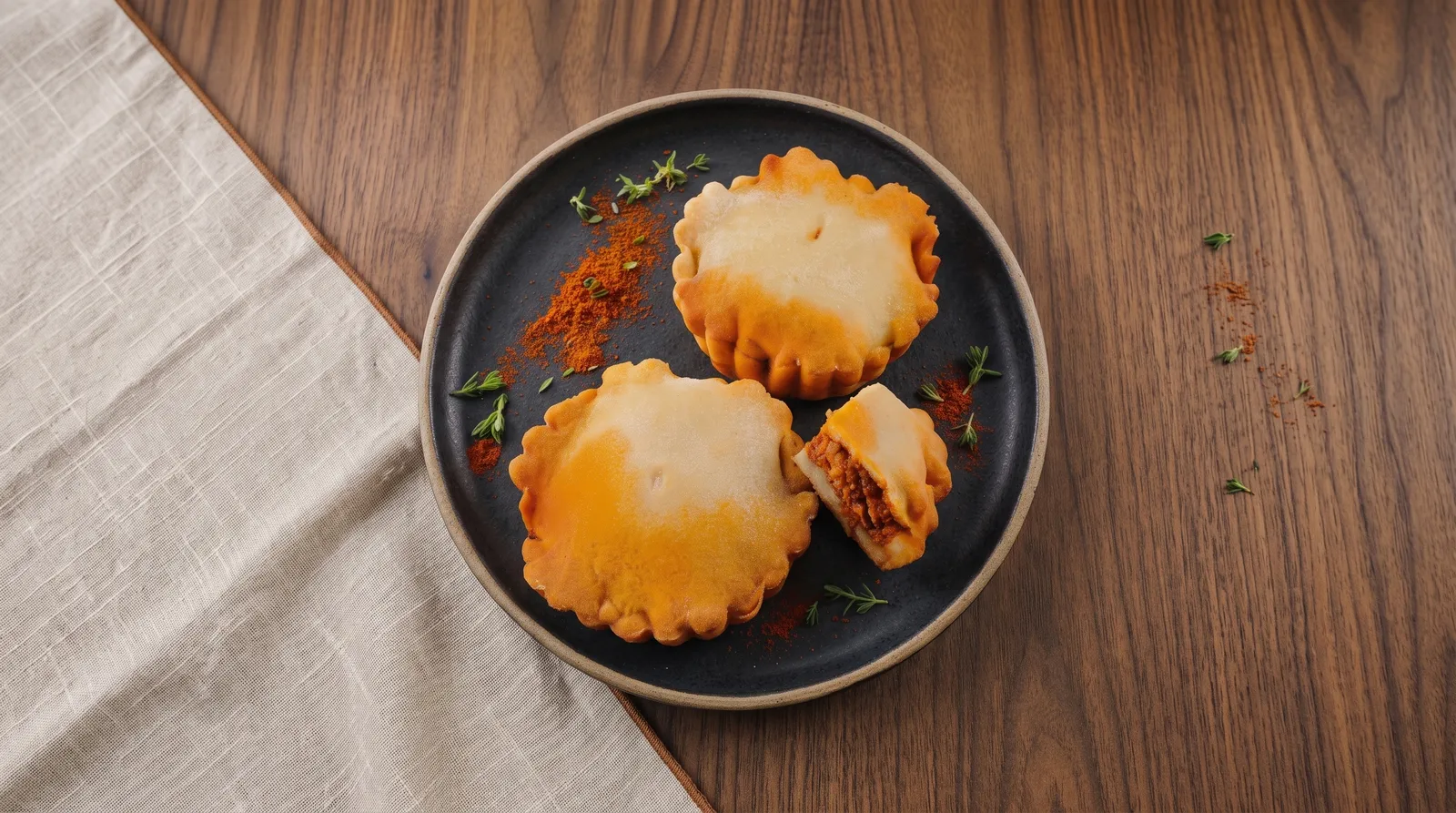
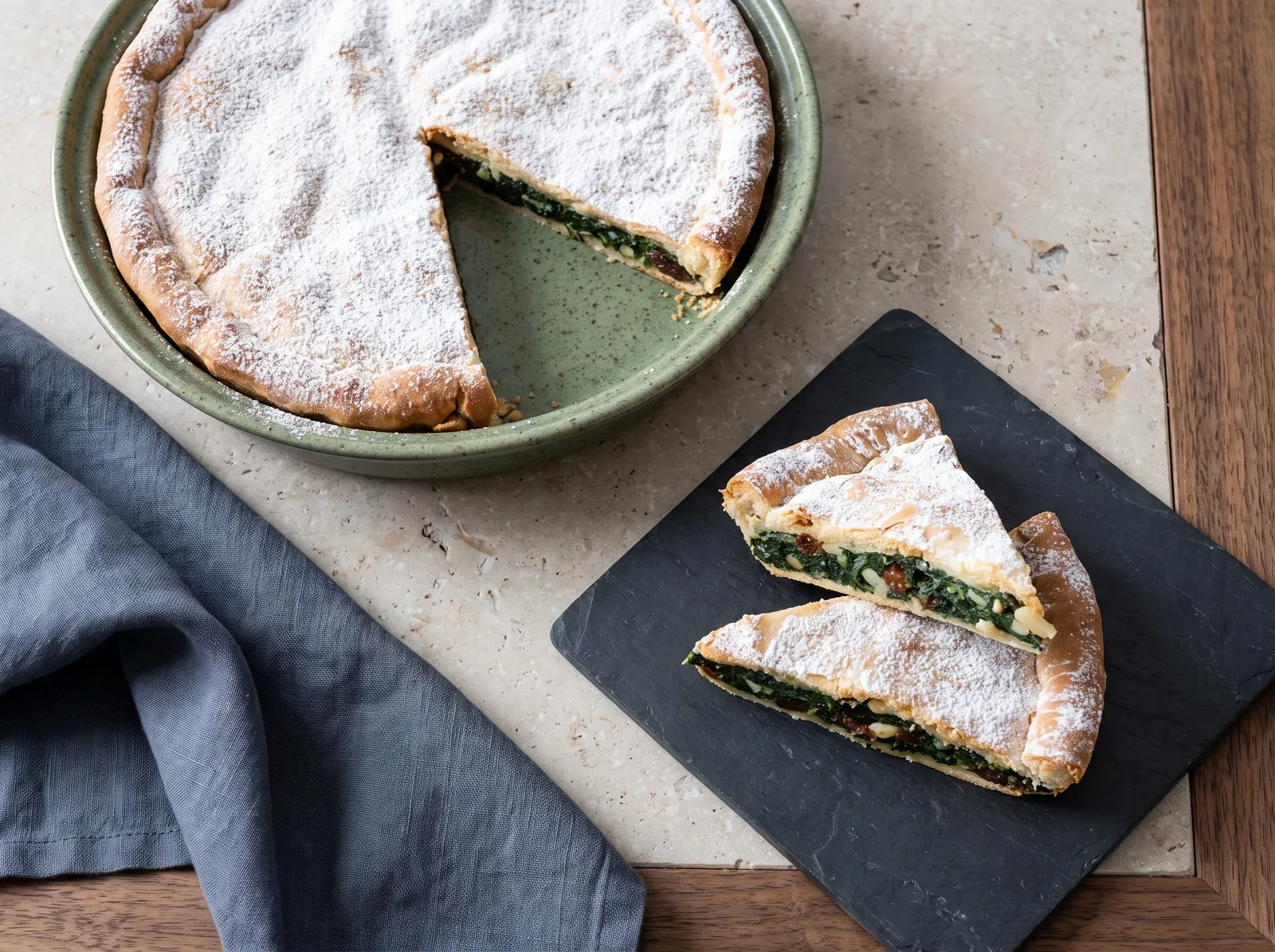
Tielle sétoise — shown with a cut section visible
Prep 60 minutes
Cook 125 minutes
Total 290 minutes
Yield 1 covered 28 cm pie
Introduction and overview

Tielle sétoise — covered octopus and tomato pie from Sète

Tielle sétoise is a covered pie, not an open tomato tart. A supple yeast dough lines a 28 cm round tin and wraps a thick octopus-and-tomato filling, with a smaller dough round sealing the top. The filling needs enough reduction to stay inside the crust rather than soaking it, while the dough must be strong enough to support a moist seafood centre without becoming heavy.

Octopus has two separate endpoints. It must pass the 63 °C seafood safety threshold, but reaching that temperature does not mean the flesh is tender. Gentle simmering continues until a knife enters the thicker tentacle meat with little resistance. The cooked octopus then joins a sauce of onion, garlic, white wine, crushed tomato, tomato paste, chilli, thyme and saffron reduced until it holds a spoon track.

Cooling the filling before assembly is not cosmetic. Hot sauce would soften the yeast dough immediately and hold seafood in an unsafe warm zone while the pie is shaped. Spread the filling shallow and chill it to 4 °C or colder, then enclose it in a 55:45 dough division, vent the top and bake at 190 °C until both the upper crust and the bottom edge are fully cooked.
Success points

Success points

  • Continue the gentle octopus simmer beyond the 63 °C safety threshold until the thicker flesh is tender.
  • Reduce the tomato sauce until a spoon drawn across the pan leaves a track for several seconds.
  • Cool the finished seafood filling to 4 °C or colder before it touches the dough.
  • Seal the covered pie firmly and check the bottom crust as well as the browned top before removing it.
Ingredients

Ingredients

Dough

  • 400 g plain wheat flour
  • 250 ml water — lukewarm
  • 5 g instant dry yeast
  • 20 ml olive oil
  • 7 g fine salt

Octopus filling

  • 1000 g cleaned raw octopus — commercially cleaned, drained Expect roughly 600–650 g cooked edible octopus after simmering and moisture loss.
  • 800 g crushed tomatoes
  • 200 g onions — peeled and finely chopped
  • 15 g garlic — peeled and finely chopped
  • 30 ml olive oil
  • 100 ml dry white wine — Commonly contains sulphites; alcohol may remain.
  • 40 g tomato paste
  • 5 g fine salt
  • 2 g dried thyme
  • 1 bay leaf
  • 1 g chilli flakes
  • 0.2 g saffron threads
Method

Method

Dough

  1. Knead the dough. Mix 400 g flour, 250 ml water, 5 g yeast, 20 ml olive oil and 7 g salt, then knead until smooth and elastic. Timing: 15 minutes. A moderately developed bread dough gives the tielle its characteristic sturdy covered crust. The dough is smooth, elastic and springs back slowly when pressed.

  2. Proof until doubled. Rest the covered dough until risen. Timing: 60 minutes. Heat: warm room temperature. Temperature: about 24–26 °C room. The proof provides enough lift for a bread-like rather than cracker-thin crust. The dough has visibly expanded to about double its original volume.

Octopus and sauce

  1. Cook the octopus until tender. Simmer the 1,000 g cleaned octopus gently until the thickest part reaches 63 °C early in cooking and continued simmering makes the flesh tender, then drain and cut it into bite-size pieces. Timing: 60 minutes. Heat: gentle simmer. Temperature: 63 °C minimum internal temperature during the cook. Octopus needs both a safe seafood temperature and enough gentle cooking to become tender. Use commercially cleaned octopus and keep raw seafood separate from ready-to-eat ingredients. The thickest octopus part has reached 63 °C and, by the end of the simmer, a knife enters the thicker tentacle flesh with little resistance.

  2. Reduce the spicy tomato sauce. Cook 200 g onion and 15 g garlic in 30 ml olive oil until soft, add 100 ml white wine and reduce, then add 800 g tomatoes, 40 g tomato paste, 5 g salt, thyme, bay leaf, chilli and saffron and simmer until thick. Timing: 30 minutes. Heat: medium then medium-low heat. Temperature: simmering. A reduced filling prevents the enclosed dough from becoming wet and gummy. Alcohol should not be assumed to evaporate completely; hot tomato sauce can spit. The sauce is thick enough that a spoon drawn across the pan leaves a track for several seconds and no watery liquid pools around it.

  3. Chill the filling rapidly. Fold the cooked octopus into the reduced sauce, discard the bay leaf, spread the filling in a shallow container and cool rapidly before enclosing it in dough. Timing: 45 minutes. Temperature: 4 °C or colder by the end of cooling. Cold thick filling prevents premature yeast softening and limits time in the temperature danger zone. Move the seafood filling into refrigeration promptly and keep it at 4 °C or colder. The filling is cool throughout and no warmer than 4 °C before it touches the dough.

Assemble and bake

  1. Enclose the filling. Divide the dough 55:45, roll the larger piece to line a lightly oiled 28 cm round tin with an overhang, spread in all the cold filling, cover with the smaller round, seal and crimp the edges, and cut a small central vent. Timing: 30 minutes. The 55:45 division leaves enough dough for the deeper base while maintaining a fully covered top. The bottom dough covers the base and sides without tears, all filling is enclosed, the edge is firmly sealed and a small vent is open in the centre.

  2. Bake the covered pie. Bake until the top and bottom crusts are fully cooked and browned, then remove the pie from the oven. Timing: 35 minutes. Heat: 190 °C conventional oven. Temperature: 190 °C. A complete bake is needed because the moist seafood filling is fully enclosed. Steam escapes through the vent; keep hands clear and use oven gloves. The top is evenly browned, the bottom crust is dry and firm when lifted at the edge, and no raw dough remains around the sealed rim.

Serving

Practical

Serving

Cut into 8 slices after a short settling period. Tielle can be served warm or at cool room temperature, but seafood holding time must remain controlled.

Storage and reheating

Refrigerate leftovers at 4 °C or colder within 2 hours and use within 2 days. Reheat slices at 180 °C until the seafood filling reaches 74 °C; let steam escape for a minute before eating.

Cuttlefish for octopus

Documented Sétois-style variants exist, but the cooking time and texture differ; using it makes a cuttlefish adaptation rather than the octopus formulation here.

Alcohol-free white-wine alternative

Changes acidity and aroma; if used, it should still be reduced before tomatoes are added.

Troubleshooting

Troubleshooting

  • Soggy bottomCause: The tomato filling was too loose or still warm at assembly. Correction: Reduce until the spoon track holds and cool the filling fully to 4 °C or colder before enclosing it.
  • Tough octopusCause: Cooking stopped after the safe temperature was reached but before collagen softened. Correction: Continue the gentle simmer until a knife enters the thick tentacle flesh with little resistance.
Nutrition per serving

Nutrition per serving

  • Serving size1 of 8 slices
  • Calories397 kcal
  • Carbohydrate52.4 g
  • Protein26.2 g
  • Fat7.9 g
  • Fibre4.2 g
  • Sodium904 mg
Allergens and food safety

Allergens and food safety

Allergens: Molluscs, Gluten (wheat), Sulphites.

Use commercially cleaned octopus and keep it refrigerated at 4 °C or colder before cooking.

Cook the thickest octopus part to at least 63 °C and continue as needed for tenderness.

Cool the cooked tomato-octopus filling rapidly to 4 °C or colder before enclosing it in dough.

Refrigerate the baked pie within 2 hours.

Reheat leftovers to 74 °C in the seafood filling.

White wine commonly contains sulphites and alcohol should not be assumed to disappear completely.

Closing

Closing

  • Result: A sealed Sète-style pie with fully baked bread crust around tender octopus in a thick spicy tomato filling.
  • Decisive technique: Cook the octopus safely and tenderly, reduce the sauce until thick, and chill the filling to 4 °C or colder before enclosing it.