French National Dishes

Tourteau fromager

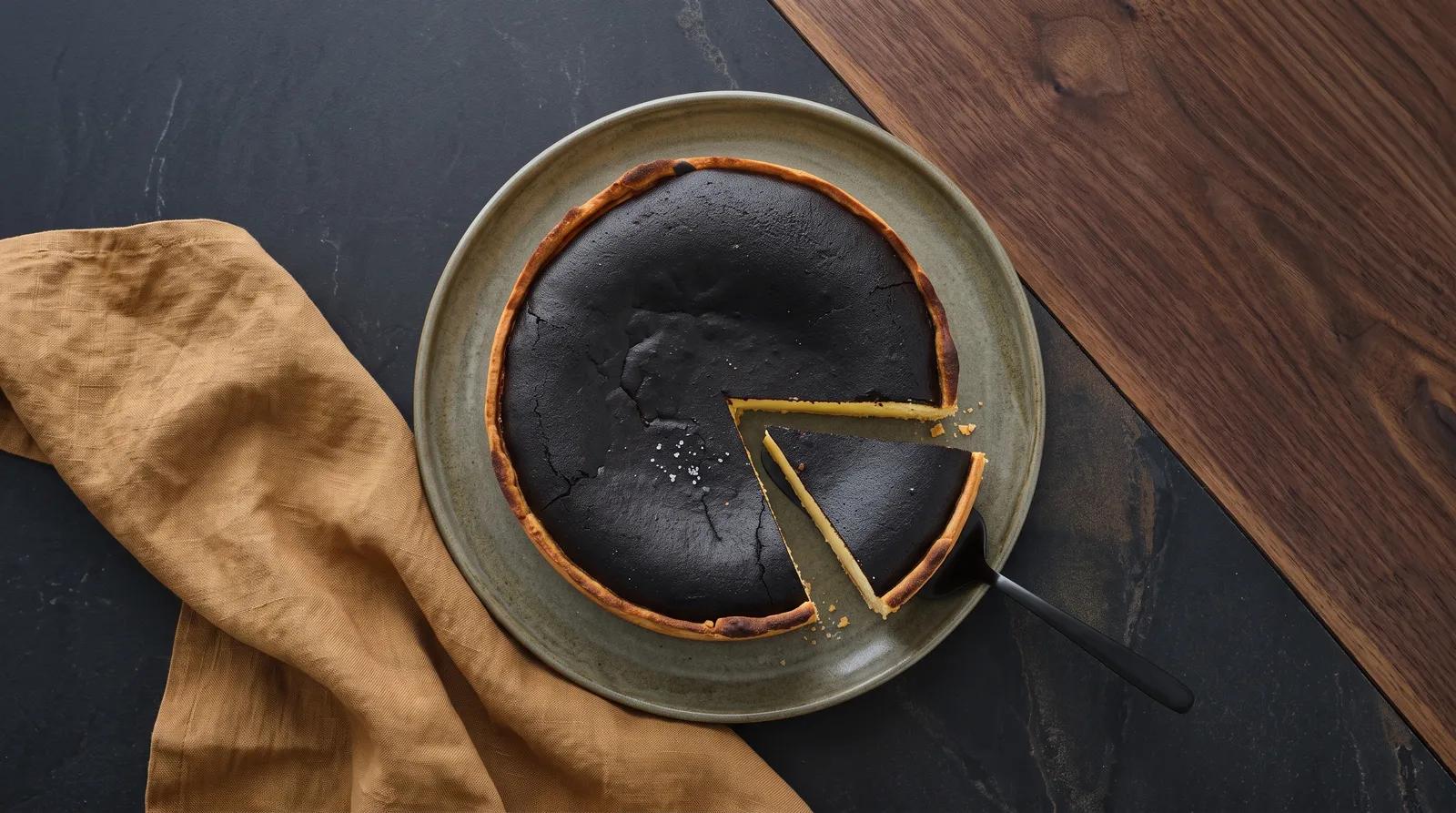
A small Poitevin cheese cake with a thin pastry base, a deliberately blackened rounded crust and a pale, moist goat-cheese interior.

French National Dishes
Share
Tourteau fromager — shown with a cut section visible
Prep 25 minutes
Cook 26 minutes
Total 171 minutes
Yield 1 x 20 cm domed cake, 8 slices
About this dish

Tourteau fromager — Poitevin black-domed goat-cheese cake

Tourteau fromager is recognisable before it is cut: the top rises into a rounded, almost startlingly black shell, while the interior remains pale, soft and lightly aerated. That contrast is the identity of the cake, not a defect to disguise. The recipe therefore uses a short burst of very high heat followed by a lower-temperature finish.

Fresh, well-drained goat cheese is mixed with yolks, flour, milk and sugar, while the whites are whipped separately. The mixture is folded rather than beaten after the whites go in. Excess aeration or rough mixing can make the rise erratic and the structure fragile, so the batter should look light and even rather than foamy.

The first oven stage builds the dark dome; the second sets the centre. The cake is safe and properly set when the interior reaches 71 °C, but it still needs a long undisturbed cool before unmoulding. Cutting too early compresses the tender interior and can encourage the dome to collapse.
Success points

Success points

  • Drain the goat cheese before mixing.
  • Fold the whipped whites in gently and stop once no large white streaks remain.
  • Accept the black dome as the intended finish while still checking the centre temperature.
Ingredients

Ingredients

Cake

  • 220 g plain shortcrust pastry — rolled 2–3 mm thick; all-butter or equivalent
  • 250 g fresh goat cheese — well drained
  • 170 g caster sugar — 120 g for cheese base + 50 g for whites
  • 300 g whole egg, net weight — 6 large eggs, separated
  • 50 ml whole milk
  • 60 g plain wheat flour — sifted
  • 10 ml cognac
  • 5 g unsalted butter — for the mould
Method

Method

Build the cake

  1. Line the mould. Butter a deep 20 cm round ovenproof mould and line the base and lower sides with the thin shortcrust pastry. Allow 8 minutes. The pastry lies flat with no thick folds and reaches evenly around the lower wall.

  2. Mix the cheese base. Whisk the drained goat cheese with 120 g sugar and milk until smooth, then mix in the egg yolks, flour and cognac without prolonged beating. Allow 10 minutes. The cheese mixture is smooth and cohesive with no dry flour pockets.

  3. Fold in the whites. Whip the egg whites to firm peaks, add the remaining 50 g sugar, and fold them into the cheese mixture in three additions. Allow 7 minutes. The folded batter is light and even, with no large streaks of white.

Create the dark dome

  1. Blacken the dome. Bake in the upper part of a fully preheated oven until the dome rises and turns deliberately black. Use oven. Allow 13 minutes. Temperature: 280 °C. The cake has risen into a rounded dome and the entire top is deep black rather than patchily brown. Keep hands and face clear of the intense oven heat.

  2. Finish the bake. Reduce the oven to 200 °C and continue baking until the pale interior is set and reaches 71 °C at the centre. Use oven. Allow 13 minutes. Temperature: 200 °C. The dome remains inflated, the sides are set and the centre no longer looks liquid beneath the dark shell. Verify the centre reaches 71 °C.

  3. Let the cake cool. Cool the cake in the mould before unmoulding and slicing. Allow 120 minutes passive cooling. The cake is fully cool and the dome holds its shape when the mould is moved. Refrigerate if not serving within 2 hours after cooling.

Serving, storage and make-ahead

Practical

Serving, storage and make-ahead

Cool the tourteau in its mould on a rack before turning it out and slicing. It can be baked several hours ahead and covered only after it is fully cool. Refrigerate within 2 hours if it is not being served and use within 3 days. The cake is best served cool or after a short temper toward room temperature; reheating softens the dark shell. Fresh cow’s-milk cheese is a documented regional variation, but it produces a milder cake than the goat-cheese version used here.

Troubleshooting

Troubleshooting

  • Cake collapses badlyThe egg foam was overworked or the cake was moved before the centre set. Fold gently and cool it undisturbed in the mould.
  • Top browns but does not become blackThe oven was not fully preheated or the cake sat too low. Use the specified high initial temperature and upper oven position.
Nutrition per serving

Nutrition per serving

  • Serving size1 of 8 slices
  • Calories390 kcal
  • Carbohydrate36 g
  • Protein12 g
  • Fat22 g
  • Fibre1 g
  • Sodium280 mg
Allergens and food safety

Allergens and food safety

Allergens: egg, milk, gluten.

Bake until the centre reaches 71 °C. Cool before slicing and refrigerate within 2 hours if not served. The very dark crust is a quality feature; safety still depends on the centre temperature.

FAQ

FAQ

Is the black crust burnt?

It is intentionally blackened and is a defining sensory feature, but the pale interior must still be safely set.

Can a flat tart tin be used?

A deep round mould supports the domed profile better; this recipe is written for a 20 cm deep round mould.

Closing

Closing

  • Result — a dark, crisp dome over a pale, moist and gently aerated cheese interior.
  • Decisive technique — use the high-to-low oven profile and cool the cake undisturbed after the centre reaches 71 °C.