French Recipes

Tarte fine aux pommes normande

A deliberately thin all-butter puff-pastry tart with one precise layer of firm apple slices, butter, sugar and a measured Calvados finish.

French Recipes
Share
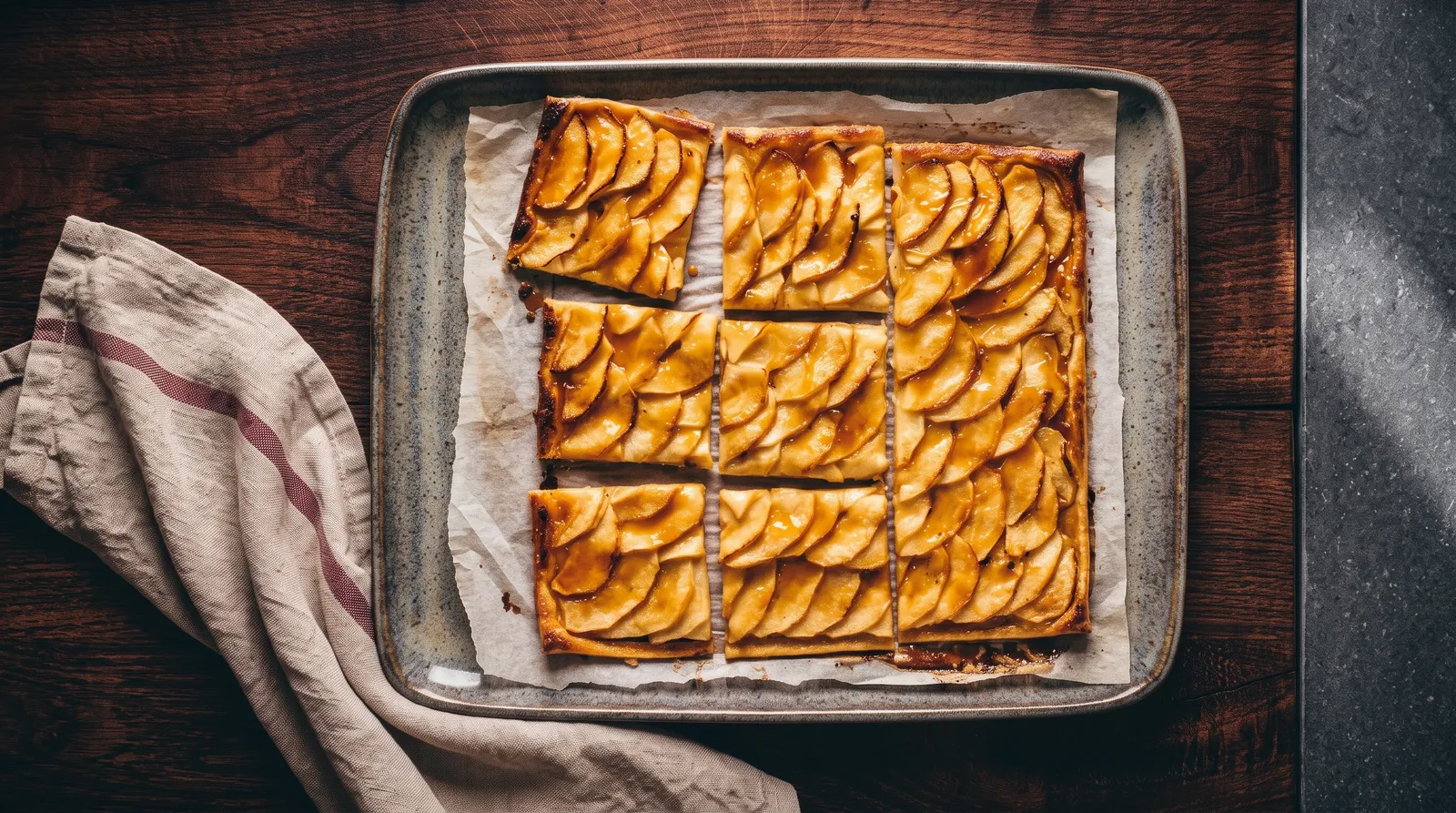
Tarte fine aux pommes normande — shown with a cut section visible
Prep 25 minutes
Cook 30 minutes
Total 70 minutes
Yield 1 rectangular tart, about 30 × 24 cm
Introduction and overview

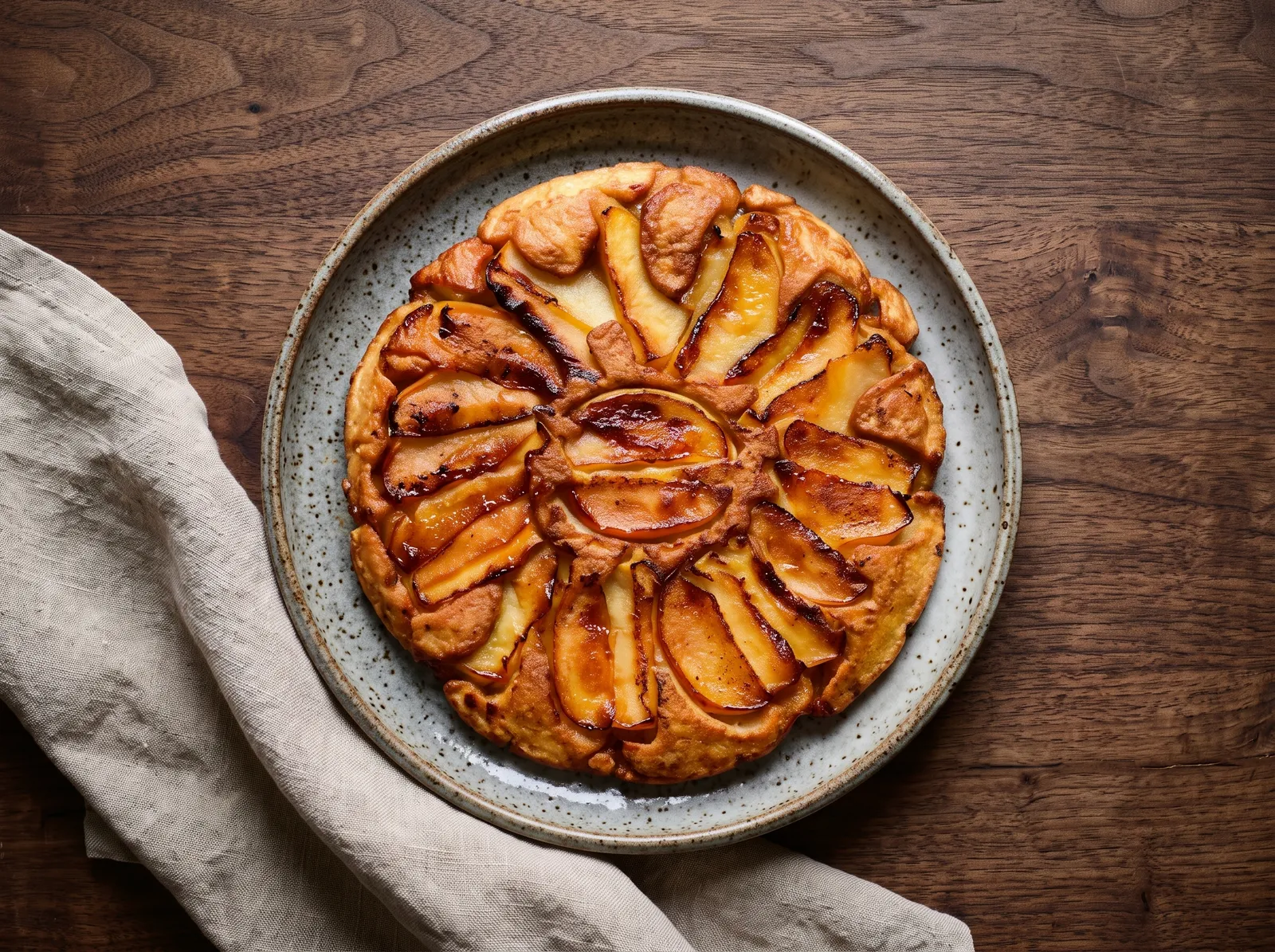
Tarte fine aux pommes normande — thin crisp Norman apple tart

Unlike a deep apple pie, this Norman-style tarte fine is built around restraint. The pastry is rolled to about 3 mm, the apples are sliced to about 2 mm and arranged in one overlapping layer, and there is no custard to cushion the base. That geometry matters: it lets the laminated pastry expand and brown while the fruit softens quickly enough to caramelise at the edges.

Firm, tart apples are the practical choice because they keep a clear slice shape through a hot bake. Butter and caster sugar are measured lightly across the fruit rather than turned into a thick filling. A small amount of Calvados is brushed onto the warm tart after baking, giving a recognisably Norman aromatic note without converting the tart into a soaked dessert. Because it is added after baking, some alcohol remains.

The decisive quality check is underneath. The apples can look attractive before the pastry has properly dried and browned, so lift an edge carefully near the end of baking and check for a crisp, coloured underside. A short 15-minute cooling period lets steam escape and the pastry firm enough for clean portions without sacrificing its fresh-baked texture.
Success points

Success points

  • Keep the puff pastry chilled until assembly and avoid stretching it while rolling.
  • Slice the apples to about 2 mm and keep them in one continuous layer rather than building a mound.
  • Do not remove the tart only because the apples are coloured; the underside of the pastry must also be dry, crisp and browned.
Ingredients

Ingredients

Tart

  • 230 g all-butter puff pastry — chilled; rolled to a 30 × 24 cm rectangle about 3 mm thick Commercial or homemade all-butter puff pastry.
  • 500 g firm tart apples — peeled, cored and sliced 2 mm thick; prepared weight Buy about 650 g whole apples to allow for peel and cores; Boskoop or another firm tart apple is suitable.
  • 25 g unsalted butter — melted
  • 35 g caster sugar
  • 20 ml Calvados — measured for the warm baked tart Alcohol is not fully removed by this post-bake use.
Method

Method

Shape and top

  1. Roll the pastry. Roll the chilled pastry to 30 × 24 cm and about 3 mm thick, transfer it to a lined flat baking sheet and dock the centre lightly, leaving a narrow undocked rim. Timing: 8 minutes. Even thickness supports crisp, even baking. Keep the pastry cold so the butter layers remain distinct. The pastry is an even 3 mm thick and lies flat without stretched corners.

  2. Build the apple layer. Peel and core enough apples to obtain 500 g prepared fruit, then slice them 2 mm thick and overlap the slices tightly in one even layer over the pastry. Timing: 12 minutes. A single thin layer distinguishes tarte fine and cooks at the same pace as the pastry. Use the mandoline guard or a cut-resistant glove; keep fingertips away from the blade. The apples form one continuous, evenly overlapped layer with no tall piles.

  3. Butter and sugar the fruit. Brush the apples with 25 g melted butter and scatter 35 g caster sugar evenly over the surface. Timing: 5 minutes. Even coating promotes controlled caramelisation. The butter and sugar are distributed across the apples without pools at the edges.

Bake and finish

  1. Bake until crisp. Bake on the fully heated oven shelf until the pastry is deeply crisp underneath and the apple edges are caramelised. Timing: 30 minutes. Heat: 200 °C conventional oven. Temperature: 200 °C. The hot oven sets the laminated pastry before apple juice can soften it. Use dry oven gloves around the hot tray. The pastry underside is dry, crisp and browned, and the apple edges are caramelised without burnt sugar.

  2. Finish with Calvados. Brush the warm apples with 20 ml Calvados, then cool the tart on a rack before cutting. Timing: 15 minutes. Keep off the heat. A short cooling period lets steam escape while the pastry stays crisp. The Calvados is added after baking, so some alcohol remains; keep the tart away from children or others avoiding alcohol. The surface is glossy but not wet, and the tart is firm enough to cut cleanly after 15 minutes.

Serving

Practical

Serving

Cut into 6 equal rectangles or wedges and serve warm or at cool room temperature while the pastry is still crisp.

Storage and reheating

Refrigerate leftovers within 2 hours, covered, for up to 2 days. Re-crisp on a baking sheet at 180 °C for about 6–8 minutes; cool briefly before serving. Do not microwave if crisp pastry matters.

Another firm tart apple for Boskoop

Preserves structure if the fruit stays firm when baked; very juicy soft apples can make the pastry damp.

Omit Calvados

Removes the alcoholic Norman accent but does not change the thin apple-tart structure.

Troubleshooting

Troubleshooting

  • Soggy centreCause: Pastry warmed before baking or apples were piled too thickly. Correction: Chill the assembled tart briefly if the pastry softens and maintain one 2 mm apple layer.
  • Burnt apple tips before the pastry is crispCause: Slices are too thin or sugar is uneven. Correction: Keep slices close to 2 mm and distribute sugar evenly.
Nutrition per serving

Nutrition per serving

  • Serving size1 of 6 portions (about one-sixth of the tart)
  • Calories311 kcal
  • Carbohydrate33.8 g
  • Protein3.1 g
  • Fat18.1 g
  • Fibre1.7 g
  • Sodium96 mg
Allergens and food safety

Allergens and food safety

Allergens: Gluten (wheat), Milk.

Refrigerate butter-based pastry and leftovers at 4 °C or colder and do not leave the finished tart at room temperature for more than 2 hours.

Use a mandoline guard or equivalent hand protection.

Calvados is brushed on after baking; alcohol may remain.

Closing

Closing

  • Result: A thin, crisp rectangular apple tart with one caramelised layer and a restrained Calvados aroma.
  • Decisive technique: Keep both pastry and apple layer thin, then bake until the underside is genuinely crisp before the 15-minute cool.