French Recipes

Steak au poivre

Whole pepper-crusted beef fillets cooked to 63 °C, rested, then served with a cognac, cream, stock and Dijon pan sauce.

French Recipes
Share
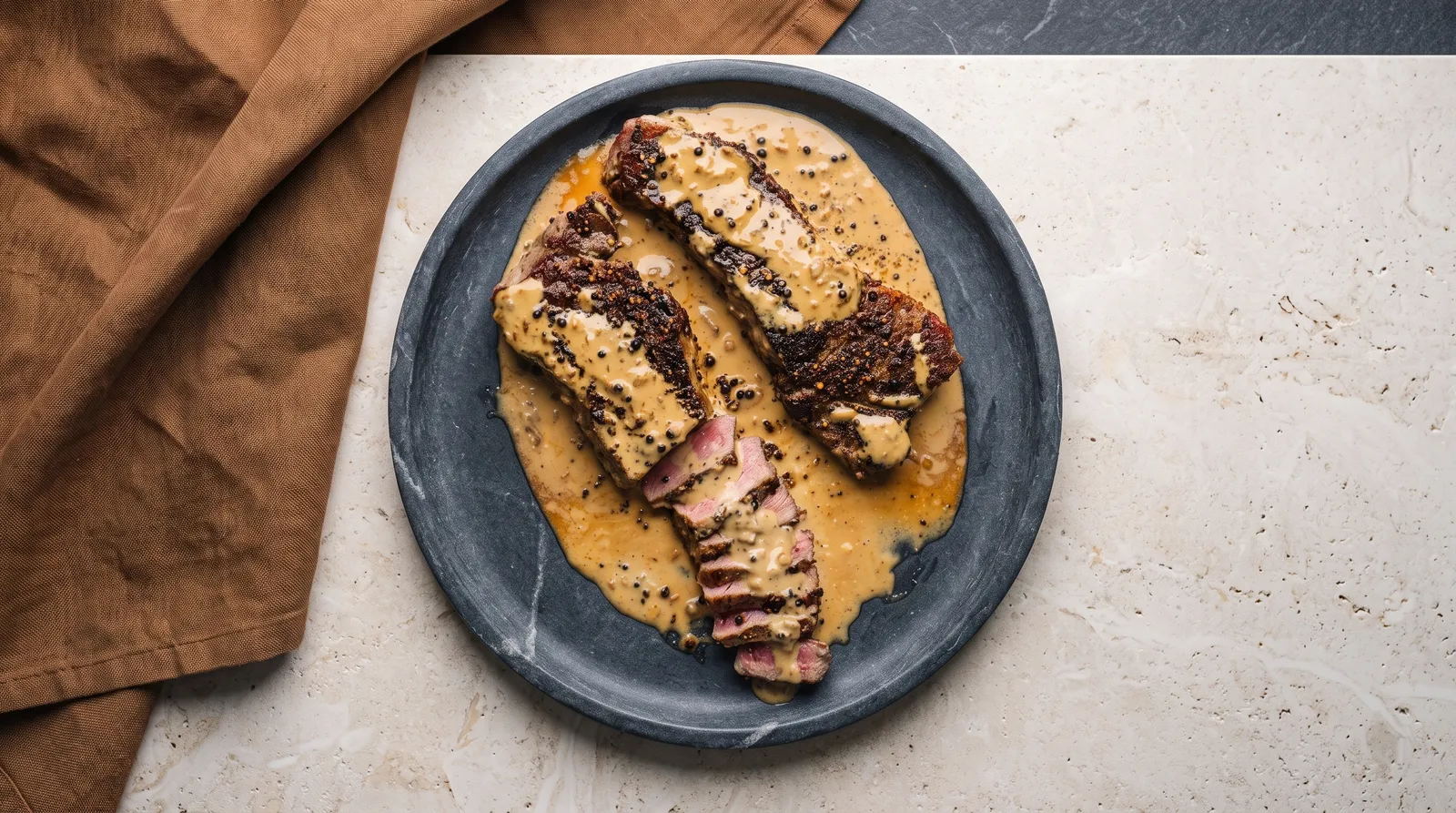
Steak au poivre — arranged on a serving platter
Prep 20 minutes
Cook 18 minutes
Total 41 minutes
Yield 4 whole steaks with about 320 ml pan sauce
Introduction and overview

Steak au poivre — French pepper steak with cognac cream sauce

Steak au poivre is a whole steak with a pepper crust and a pan sauce, not sliced beef hidden under gravy. Thick 180 g fillet steaks are pressed with coarsely cracked black pepper, seared in a hot pan and cooked to a measured minimum centre temperature of 63 °C before a mandatory three-minute rest.

The sauce is built in the same pan so the browned meat and pepper residue are not lost. Cognac goes into the pan away from open flame, followed by stock, cream and a small amount of Dijon mustard. The reductions should concentrate the sauce until it coats a spoon while the cracked pepper remains visible and lively.

Safety and quality have separate cues here. A dark crust says the pan was hot enough, but it does not prove the centre is safe; the thermometer does that. The finished steak remains whole on the plate, with the sauce spooned around and partly over it so the peppered crust still reads as the centre of the dish.
How to balance crust and sauce

How to balance crust and sauce

  • Crack the pepper coarsely rather than grinding it to powder.
  • Measure 63 °C in the thickest part, then rest for 3 minutes.
  • Deglaze with cognac away from open flame.
Ingredients

Ingredients

Steaks

  • 720 g beef fillet steaks — 4 × 180 g, each about 3 cm thick and trimmed
  • 20 g black peppercorns — coarsely cracked
  • 20 g olive oil
  • 20 g unsalted butter
  • 5 g fine salt

Pan sauce

  • 60 ml cognac — alcohol is reduced but not assumed to evaporate completely
  • 120 ml low-sodium beef stock
  • 200 ml double cream — about 35% fat
  • 15 g Dijon mustard
Method

Method

Directions

  1. Build the pepper crust. Pat the steaks thoroughly dry, season with the salt and press the cracked pepper onto both broad faces. The pepper forms a coarse, even crust and the steak surfaces are dry rather than wet.

  2. Sear to temperature. Heat the olive oil and butter in the heavy pan and sear the steaks for about 6 minutes total, turning once or as needed, until the thickest part measures at least 63 °C. A dark brown crust forms without burnt pepper and the centre reaches at least 63 °C.

  3. Rest the steaks. Transfer the steaks to a warm plate and leave them for at least 3 minutes. The steaks retain their juices on the plate rather than releasing a large pool when pressed.

  4. Deglaze with cognac. Move the pan away from any open flame, add the cognac, scrape up the browned residue and return to controlled heat for about 4 minutes. The cognac is reduced to a thin glaze and the sharp raw alcohol aroma has softened.

  5. Reduce the stock. Add the stock and boil steadily for about 4 minutes. The liquid visibly concentrates and lightly coats the base of the pan.

  6. Finish the cream sauce. Lower the heat, add the cream and Dijon mustard and simmer for about 4 minutes. The sauce is glossy and thick enough to coat the back of a spoon while cracked pepper remains visible.

  7. Serve the steaks whole. Add any resting juices to the sauce and spoon it around the whole steaks. Each steak remains whole and the sauce is fluid enough to spoon rather than forming a thick gravy blanket.

Serving

Practical

Serving

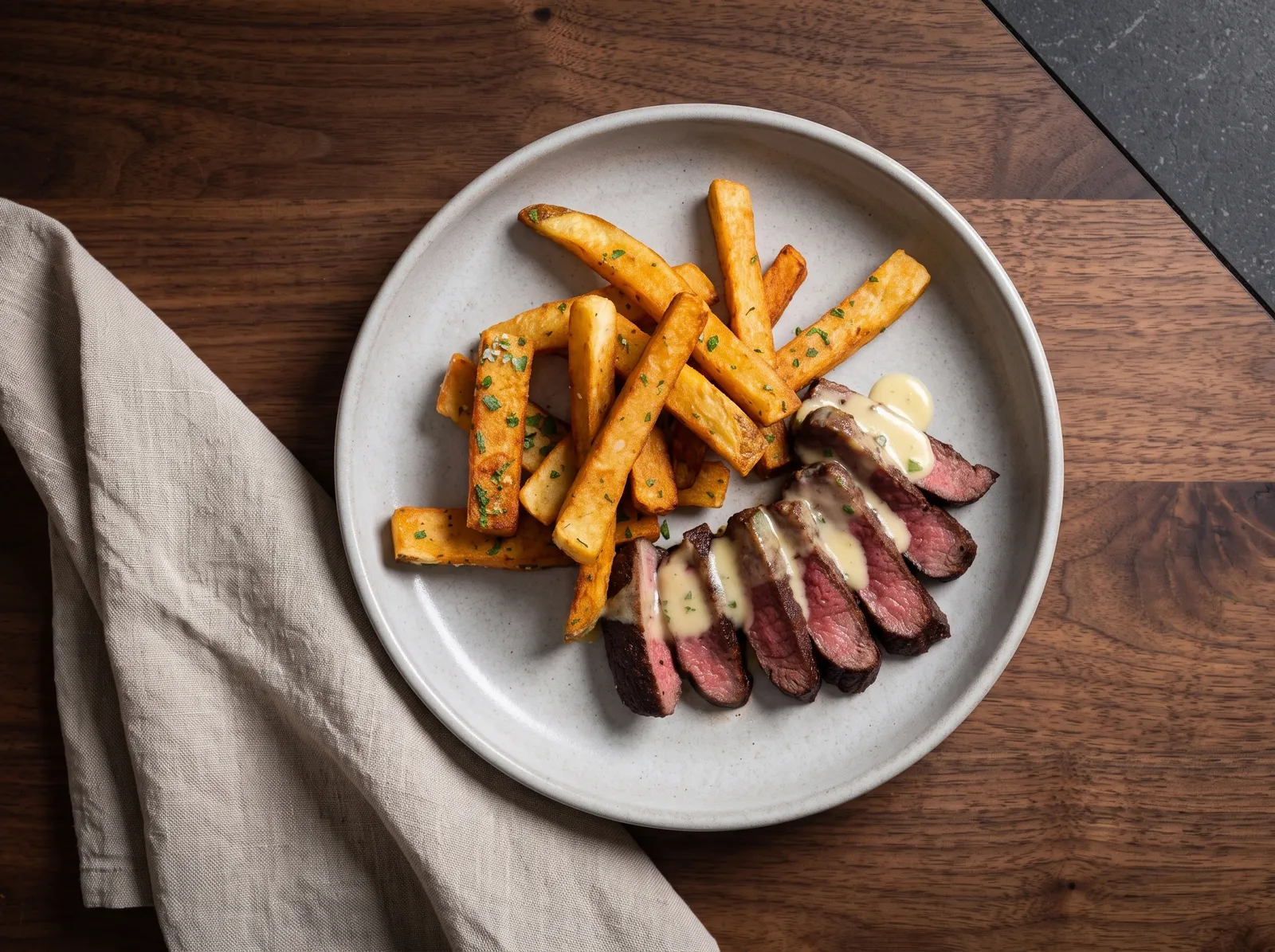
Serve each steak whole with the sauce spooned around and partly over it. Fries, potatoes or green vegetables are suitable accompaniments, but they are not part of the nutrition calculation here.

Make-ahead

Crack the pepper and measure the sauce ingredients ahead. Do not sear the steaks in advance; the crust and temperature control are best handled at service.

Storage and reheating

Refrigerate cooked steak and sauce within 2 hours and use within 3 days. Reheat leftovers to 74 °C; warm the sauce gently because high heat can split the cream.

Substitutions

Sirloin or rib-eye can replace fillet if thickness is kept close to 3 cm, but cooking time and fat content will change. Brandy can replace cognac for technique, but it changes the named spirit and flavour.

Troubleshooting

Troubleshooting

  • Pepper burns before the steak brownsThe pan is too hot or the pepper is ground too fine. Use coarse cracks and control the fat before the pepper blackens.
  • Thin sauceThe stock or cream was not reduced enough. Simmer gently until the sauce coats a spoon rather than thickening it with flour.
Nutrition per serving

Nutrition per serving

  • Serving size1 steak with one quarter of the pan sauce
  • Calories637 kcal
  • Carbohydrate5.1 g
  • Protein41.8 g
  • Fat48.5 g
  • Fibre1.4 g
  • Sodium691 mg
Allergens and food safety

Allergens and food safety

Allergens: Milk, Mustard.

Cook whole steaks to at least 63 °C and rest for at least 3 minutes. Keep raw beef cold and separate from ready-to-eat foods. Add cognac away from flame; alcohol may remain after cooking. Refrigerate leftovers within 2 hours and reheat to 74 °C.

FAQ

FAQ

Must the cognac be flambéed?

No. Deglazing away from open flame is safer and still captures the pan fond.

Can colour show when the steak is safe?

No. Measure the centre with a food thermometer and reach at least 63 °C, then rest for 3 minutes.

Closing

Closing

  • Result: Pepper-crusted whole steaks with a glossy cognac-cream pan sauce.
  • Decisive technique: Use coarse pepper, a thermometer, the three-minute rest and a controlled pan-sauce reduction.