French National Dishes

Steak tartare

Hand-cut raw beef mixed cold with pasteurised yolk and classic bistro condiments, with explicit risk controls and immediate service.

French National Dishes
Share
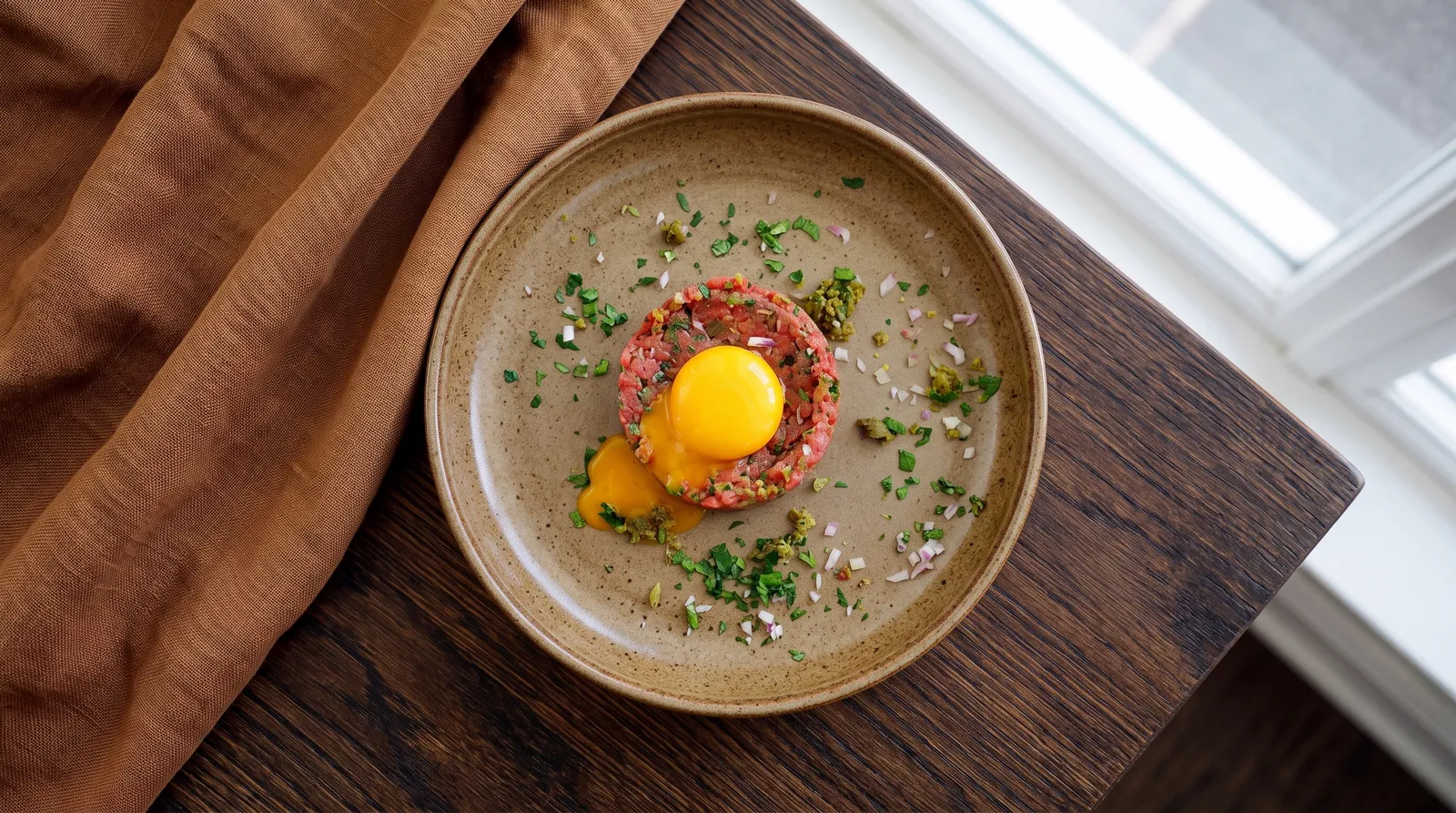
Steak tartare — served on a plate
Prep 25 minutes
Cook 0 minutes
Total 25 minutes
Yield 4 tartare portions of about 250 g including seasoning
Introduction and overview

Steak tartare — French bistro raw beef tartare

Steak tartare is deliberately a raw preparation, and that fact cannot be softened by good seasoning or careful presentation. Very lean beef supplied specifically for raw consumption is paired with pasteurised egg yolk and chilled, dedicated tools. The beef remains at 4 °C or below from preparation to service and is mixed only when diners are ready to eat.

The bistro flavour profile comes from Dijon mustard, capers, cornichons, shallot, parsley, Worcestershire sauce, ketchup and olive oil. Those condiments sharpen and season the raw beef; they do not kill pathogens. The beef is hand-cut into small dice so it retains a clean, distinct texture rather than becoming a warm paste from excessive handling.

Raw beef carries a real foodborne-illness risk even when high-quality meat is used. Pregnant people, adults aged 65 and over, people with weakened immune systems and very young children should avoid it. A fully cooked 71 °C chopped-beef alternative is provided separately for anyone who does not want a raw dish; it is not presented as equivalent to steak tartare.
Cold-chain controls that matter

Cold-chain controls that matter

  • Buy beef specifically intended by the supplier for raw consumption; ordinary steak is not made safe by chopping or seasoning.
  • Keep every component at 4 °C or below until service.
  • Mix only once diners are ready and serve immediately.
Ingredients

Ingredients

Tartare

  • 600 g beef fillet or very lean rump — trimmed and supplied specifically for raw consumption; keep at 4 °C or below
  • 80 g pasteurised egg yolk — net weight
  • 40 g Dijon mustard
  • 40 g capers — drained and chopped
  • 80 g cornichons — drained and finely diced
  • 60 g shallot — finely minced
  • 20 g flat-leaf parsley — finely chopped
  • 20 g Worcestershire sauce — chosen product contains anchovy and sulphites
  • 40 g ketchup
  • 40 g olive oil
  • 4 g fine salt
  • 2 g black pepper
Method

Method

Directions

  1. Set up a cold clean station. Chill the plates, sanitise the work surface and dedicated tools, wash hands and keep the beef at 4 °C or below. The plates and tools are clean and the beef remains firm and refrigerator-cold.

  2. Hand-cut the beef. Trim the beef and hand-cut it into 4–5 mm dice, returning it to refrigeration if there is any pause. The beef is cut into distinct 4–5 mm pieces with no warm, smeared paste.

  3. Mix the seasoning. In a chilled bowl combine the pasteurised yolk, Dijon, capers, cornichons, shallot, parsley, Worcestershire, ketchup, olive oil, salt and pepper. The seasoning is evenly emulsified and the chopped garnishes are distributed throughout.

  4. Combine at the last moment. Add the cold beef and fold only until coated. The beef pieces remain distinct and glossy rather than becoming mashed or sticky.

  5. Shape and serve immediately. Shape four portions on the chilled plates and serve at once. Each portion holds a neat mound while the beef is still refrigerator-cold.

Serving

Practical

Serving

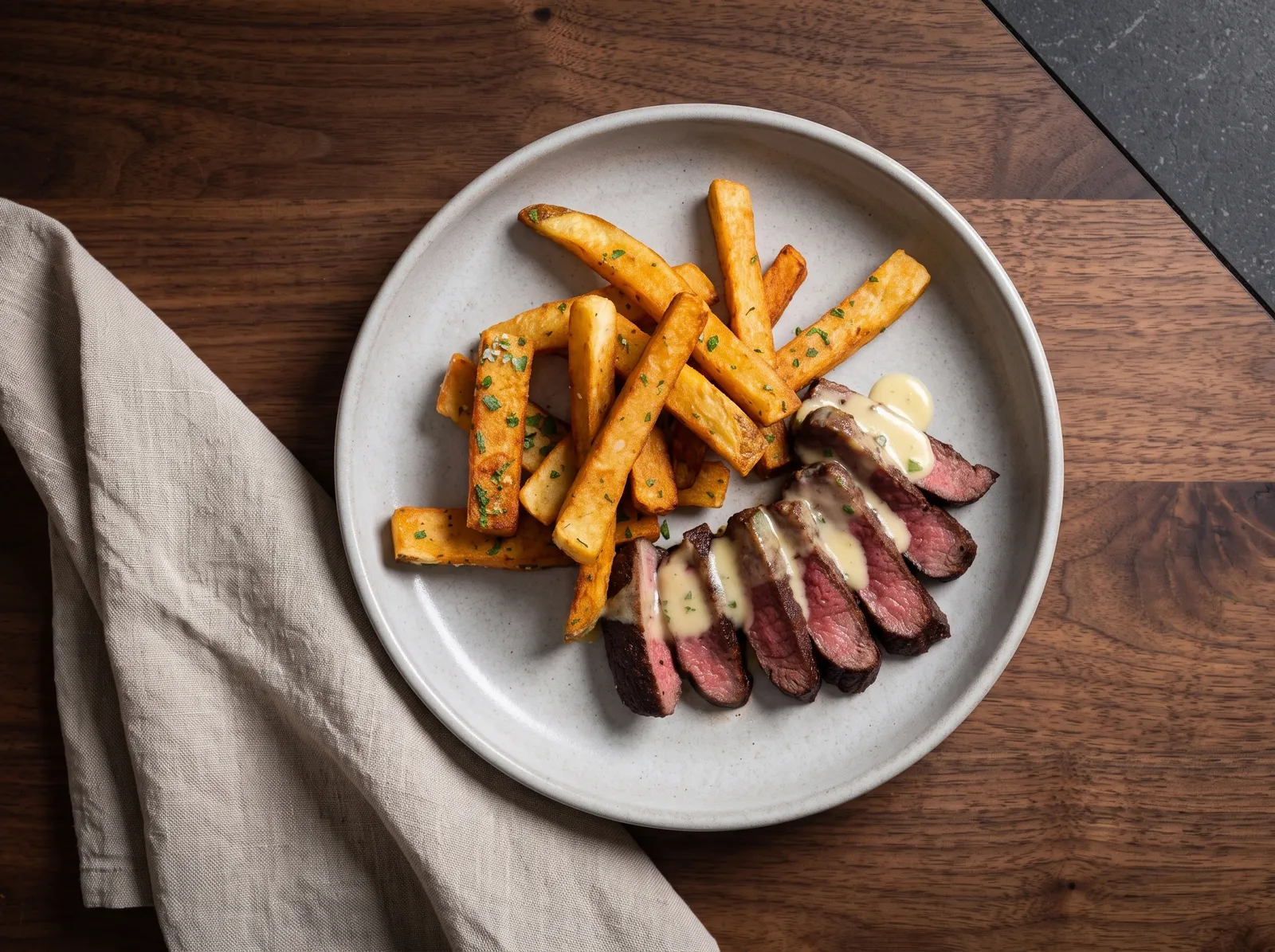
Serve immediately, very cold. Fries may be a common accompaniment, but they are intentionally excluded so the raw preparation and its nutrition remain clear.

Make-ahead

Chop the drained capers, cornichons, shallot and parsley in advance and refrigerate them separately. Do not pre-mix the beef with seasoning or egg.

Storage and reheating

Do not store mixed tartare. Discard leftovers. Raw beef and pasteurised yolk should remain refrigerated before preparation and be used within the supplier’s stated use-by period.

Substitutions

Cooked alternative: use the same 600 g beef as freshly minced or finely chopped beef, shape portions and cook to 71 °C throughout. Serve with the condiments separately and omit the raw presentation; this is a cooked beef alternative, not steak tartare. Omitting Worcestershire removes the fish component and changes the classic savoury seasoning balance.

Troubleshooting

Troubleshooting

  • Warm, smeared textureThe beef or tools warmed during chopping. Re-chill the unmixed beef immediately and do not continue if cold control has been lost.
  • Watery plateThe capers or cornichons were not drained or the tartare stood after mixing. Drain condiments well and serve the mixture immediately.
Nutrition per serving

Nutrition per serving

  • Serving size1 tartare portion, one quarter of the batch
  • Calories432 kcal
  • Carbohydrate9.1 g
  • Protein37.7 g
  • Fat27.9 g
  • Fibre1.7 g
  • Sodium1148 mg
Allergens and food safety

Allergens and food safety

Allergens: Egg, Mustard, Fish (anchovy in Worcestershire sauce), Sulphites (Worcestershire sauce).

Raw beef can contain pathogens; mustard, salt, acid and alcohol-free condiments do not make it safe. Use commercially handled beef supplied specifically for raw consumption and keep it at 4 °C or below. Use pasteurised egg yolk and dedicated clean tools. Pregnant people, adults 65 and older, people with weakened immune systems and very young children should avoid raw or undercooked meat. Do not store mixed tartare; discard leftovers. For a cooked alternative, cook minced/chopped beef to 71 °C.

FAQ

FAQ

Does mustard or acid make raw beef safe?

No. Seasonings change flavour but do not reliably eliminate foodborne pathogens.

Can leftover tartare be refrigerated?

No. Mixed tartare is for immediate service; discard leftovers.

Closing

Closing

  • Result: Cold, hand-cut tartare with distinct beef dice and sharp, balanced condiments.
  • Decisive technique: Maintain 4 °C or below, use pasteurised yolk and mix only immediately before service.