French Recipes

Socca

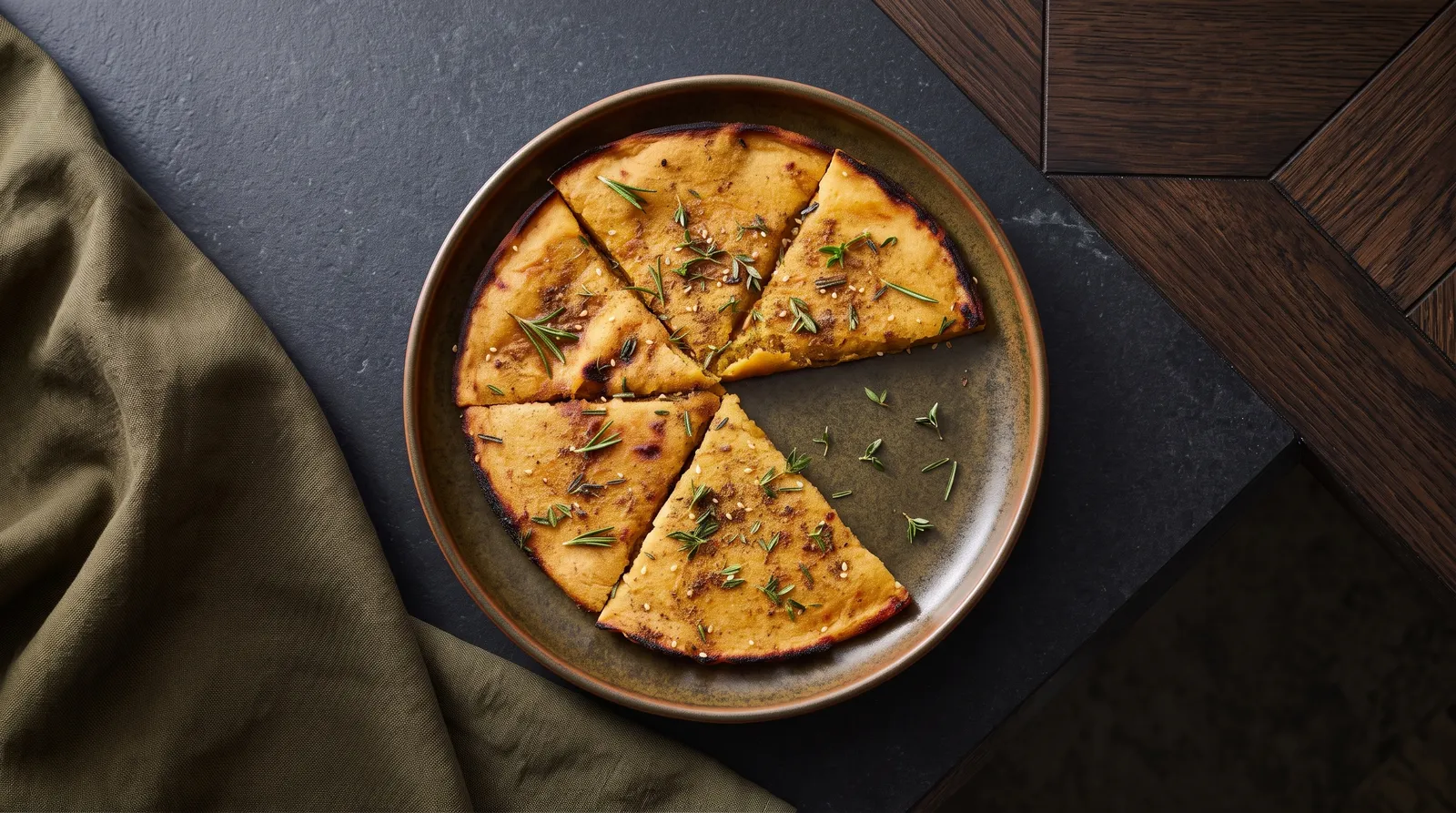
A very thin chickpea-flour batter rested for two hours, spread in a fiercely heated 40 cm pan and baked until blistered and crisp-edged.

French Recipes
Share
Socca — shown in a pan
Prep 15 minutes
Cook 25 minutes
Total 160 minutes
Yield 2 thin 40 cm soccas, cut into 12 wedges
Introduction and overview

Niçoise socca

Socca is one of Nice’s defining chickpea preparations: a broad, very thin sheet cooked at fierce heat and eaten in rough wedges. Its identity is not improved by making it thick like a cake or stacking it like breakfast pancakes. The batter is spare—chickpea flour, water, olive oil, salt and black pepper—so thickness, rest time and pan heat do most of the work.

A two-hour rest hydrates the chickpea flour and makes the fluid batter slightly more cohesive without turning it into a dough. The 40 cm pan then needs a full 15-minute preheat at 275 °C before the first measured layer is poured. Each socca should be about 3 mm thick; that thin layer is what allows the surface to blister while the edge crisps.

Because two soccas are cooked in succession, the cooking time includes both five-minute bakes as well as the pan preheat. The pan and oven or grill are extremely hot, so handle the vessel with dry heatproof protection and keep the path from oven to work surface clear. All measured olive oil is counted as retained in the finished food.
Success points

Success points

  • Whisk until no dry chickpea-flour pockets remain.
  • Rest the fluid batter for the full two hours.
  • Heat the 40 cm pan thoroughly before pouring any batter.
  • Keep the layer around 3 mm so the centre sets before the top over-browns.
Ingredients

Ingredients

  • 250 g chickpea flour
  • 500 ml cold water
  • 60 g extra-virgin olive oil, 35 g in the batter and 25 g divided between the two bakes; all counted as retained
  • 5 g fine salt
  • 2 g black pepper, coarsely ground, for serving
Method

Method

Mix and rest

  1. Whisk the batter. Whisk the chickpea flour into the 500 ml cold water until smooth, then whisk in 35 g olive oil and the 5 g salt; pass through a fine sieve if any lumps remain. Use mixing bowl, whisk, fine sieve. Allow 10 minutes. The batter is fluid, smooth and free of visible dry flour or lumps. A smooth thin batter spreads rapidly in the hot pan. Wipe spilled batter promptly so the floor and worktop do not become slippery.

  2. Rest the batter. Cover and rest the batter at room temperature so the chickpea flour hydrates fully. Use covered bowl. Allow 120 minutes passive rest. The batter remains fluid but looks slightly more cohesive after the two-hour rest. The documented rest hydrates the chickpea flour before the very short bake. If the room is unusually hot, rest in a cooler area rather than near the oven.

Bake two soccas

  1. Preheat the pan fiercely. Set a 40 cm heavy metal socca pan or oven-safe round tray under a very hot 275 °C oven/grill environment and heat it empty before adding oil. Use 40 cm heavy metal pan, oven gloves. Allow 15 minutes. The pan is thoroughly heat-saturated before the first measured layer of batter is poured. A fiercely hot surface is essential for blistering and crisp edges. The pan and handles are extremely hot; use dry heavy oven gloves and clear the work area.

  2. Bake two thin layers. For each bake, add half of the remaining 25 g olive oil to the hot pan, pour in half the batter and tilt immediately to a layer about 3 mm thick. Bake, then repeat with the remaining batter and oil. Use hot 40 cm pan, ladle, oven gloves. Keep to 275 °C oven/grill. Allow 10 minutes total (two bakes of 5 minutes). Each socca is set through the centre, blistered on top and crisp around browned edges. Two thin batches reproduce the defining thin profile better than one thick layer in a domestic pan. Keep hands and face away from the hot oil and rising steam; never set the hot pan on an unprotected surface.

Serving

Practical

Serving

Cut the two soccas into 12 rough wedges and serve two wedges per person while hot, with black pepper already included in the measured batter seasoning.

Make-ahead

The batter can rest for the required two hours before cooking. Do not pre-bake the socca far ahead: its defining crisp edge softens as it sits.

Storage and reheating

Socca is best immediately after baking. If necessary, refrigerate cooled leftovers within 2 hours for up to 2 days and reheat on a hot tray until the surface is hot and the edges crisp again. Freezing is possible but noticeably reduces the fresh blistered texture.

Substitutions

Do not replace chickpea flour with wheat flour; it changes the dish completely. A smaller pan may be used only if the batter is divided to preserve the same thin layer, so the total number of bakes and cooking time would need adjustment.

Nutrition per serving

Nutrition per serving

  • Serving size2 wedges (one sixth of the batch)
  • Calories250 kcal
  • Carbohydrate24 g
  • Protein9 g
  • Fat13 g
  • Fibre5 g
  • Sodium345 mg
Allergens and food safety

Allergens and food safety

Allergen: No regulated major allergen is intentionally included; check chickpea-flour cross-contact statements if relevant.

Use caution with the extremely hot pan, oil and grill setting.

Chickpea batter contains no raw animal ingredient, but keep equipment clean and refrigerate leftovers promptly.

FAQ

FAQ

Is socca the same as a thick chickpea pancake?

No. Niçoise socca is spread very thinly and cooked at fierce heat so the top blisters and the edges become crisp.

Why rest the batter for two hours?

The rest hydrates the chickpea flour and gives a smoother, more cohesive batter without adding another binder.

Closing

Closing

  • Result: A very thin chickpea-flour batter rested for two hours, spread in a fiercely heated 40 cm pan and baked until blistered and crisp-edged.
  • Decisive technique: Whisk until no dry chickpea-flour pockets remain.