French Recipes

Salade périgourdine

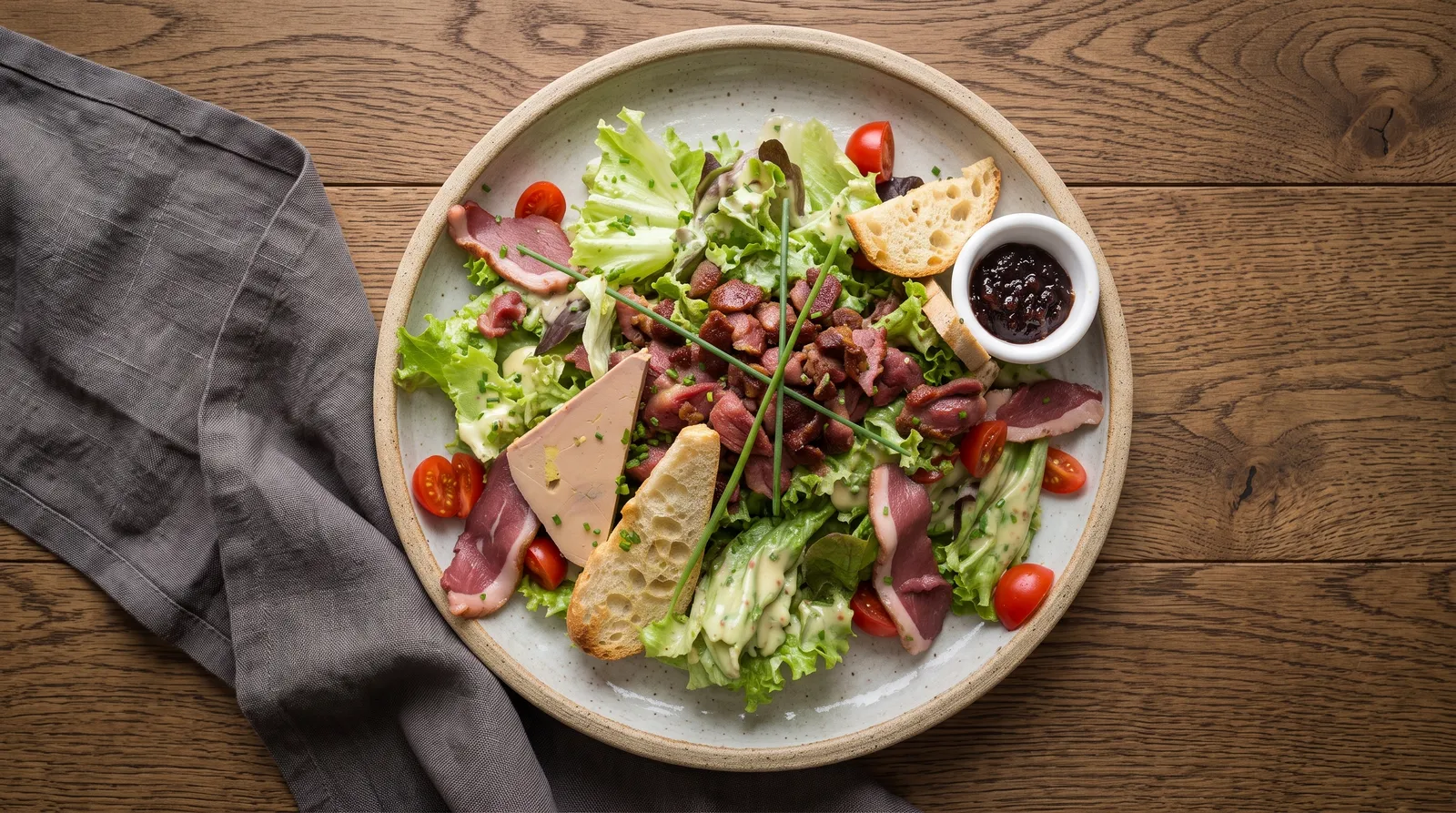
Crisp leaves with walnut vinaigrette are topped with warm confit duck gizzards, garlic croutons, walnuts and one measured chilled slice of ready-to-eat foie gras.

French Recipes
Share
Salade périgourdine — served on a plate
Prep time 20 minutes
Cook time 10 minutes
Total time 30 minutes
Yield 4 composed salads
Introduction and overview

Salade périgourdine — warm duck gizzards, walnuts and foie gras

Salade périgourdine is a regional composed salad rather than an instruction to pile every expensive duck product onto one plate. The combination here is deliberately coherent: crisp leaves, warm confit duck gizzards, walnut kernels, garlic croutons and a single measured slice of ready-to-eat duck foie gras for each serving. Walnut oil and mustard form the vinaigrette. That keeps the Périgord markers clear while leaving smoked duck breast, potatoes, strawberries and pan-fried fresh foie gras as variations rather than mandatory extras.

The gizzards are commercially cooked confit, so the pan step is reheating, not raw-meat cookery. They warm in 10 g of reserved duck fat until supple and lightly browned. The other 10 g of measured fat is used for the bread, which turns it into crisp garlic croutons without allowing an undefined amount of confit fat to disappear into the nutrition. The walnut vinaigrette is made separately and kept away from the greens until the hot components are ready.

Temperature contrast is part of the success of the plate. The salad leaves and foie gras stay chilled, while the gizzards and croutons arrive warm. After the leaves are dressed and portioned, the hot elements are distributed over the top and one 20 g foie-gras slice is added to each plate without heating it. Assemble only at service: a dressed salad stored with warm duck loses both crispness and food-safety margin. Refrigerate perishable leftovers within two hours and reheat only the components that benefit from it.
Success points

Success points

  • Measure the confit fat used instead of counting all fat packed with the gizzards.
  • Warm the gizzards without over-crisping them.
  • Keep foie gras and greens chilled until final assembly.
Ingredients

Ingredients

Salad and duck

  • 180 g crisp salad leaves, washed, thoroughly dried and chilled
  • 240 g commercially cooked duck confit gizzards, drained but with 20 g confit fat reserved
  • 20 g duck confit fat, reserved from the gizzards and measured
  • 80 g ready-to-eat duck foie gras mi-cuit, chilled; cut into 4 slices
  • 50 g walnut kernels, preferably Noix du Périgord where available
  • 100 g country bread, cut into 2 cm cubes
  • 5 g garlic, halved

Walnut vinaigrette

  • 30 ml walnut oil
  • 15 ml red wine vinegar
  • 10 g Dijon mustard
  • 20 g shallot, finely chopped
  • 1 g fine salt
  • 1 g black pepper, freshly ground
Method

Method

Make the vinaigrette

  1. Whisk the walnut vinaigrette. Whisk the walnut oil, red wine vinegar, Dijon mustard, shallot, salt and pepper until cohesive. The vinaigrette should be glossy and lightly emulsified with the shallot evenly suspended.

Reheat duck and toast bread

  1. Warm the confit gizzards. Heat the cooked confit gizzards with 10 g of the measured duck fat over medium heat for 5 minutes. The gizzards should be hot through, supple and lightly browned at the edges rather than crisp-dry.

  2. Toast the garlic croutons. Use the remaining 10 g duck fat to toast the bread with the garlic for 5 minutes, tossing frequently. The croutons should be crisp and evenly golden with a light garlic aroma, not saturated with fat.

Compose the salad

  1. Dress the leaves only at service. Toss the chilled dry leaves with all the vinaigrette and divide them among four plates. The leaves should be lightly coated and still crisp, with no pool of vinaigrette beneath them.

  2. Finish with duck, walnuts and foie gras. Divide the warm gizzards, croutons and walnuts evenly over the four plates, then add one 20 g chilled foie-gras slice to each. Each plate should show a clear contrast between cool crisp leaves, warm gizzards and croutons, walnuts and one intact chilled foie-gras slice.

Serving

Practical

Serving

Serve immediately so the gizzards and croutons are warm while the foie gras remains cool and firm.

Serving

Keep one measured foie-gras slice on each plate rather than melting it into the dressing.

Storage and reheating

Do not store the salad already dressed if texture matters; refrigerate components separately within 2 hours.

Storage and reheating

Reheat only the gizzards and croutons; keep foie gras and leaves cold and use fresh greens for leftovers.

Make-ahead and substitutions

Whisk the vinaigrette and wash/dry the greens several hours ahead and refrigerate separately.

Make-ahead and substitutions

Cut bread and portion the chilled foie gras ahead, but reheat gizzards and toast croutons just before serving.

Substitution

Ready-to-eat smoked duck breast may replace the foie gras in equal plate portions. Effect: The salad remains duck-and-walnut based but becomes leaner and loses the foie-gras richness; sodium may increase.

Troubleshooting

Troubleshooting

  • Leaves wilt rapidlyWarm gizzards were piled directly into the bowl or vinaigrette was added too early. Dress at the last moment and add warm components only after plating.
  • Croutons taste greasyMore than the measured confit fat was left in the pan. Measure 20 g total retained duck fat and divide it between gizzards and bread.
Nutrition per serving

Nutrition per serving

  • Serving size1 composed salad with about 60 g gizzards and 20 g foie gras
  • Calories450 kcal
  • Carbohydrate20 g
  • Protein18 g
  • Fat34 g
  • Fibre3 g
  • Sodium720 mg
Allergens and food safety

Allergens and food safety

Allergens: Walnuts, Mustard, Gluten, Sulphites.

Use commercially cooked confit gizzards and ready-to-eat foie gras; keep both refrigerated until preparation.

Reheat gizzards until hot through while keeping salad leaves and foie gras cold.

Refrigerate all perishable leftovers within 2 hours and do not repeatedly warm and cool the composed salad.

Handling warning: Hot duck fat can spit. Walnuts are a tree-nut allergen; check prepared foie gras and confit labels for sulphites or other declared allergens.

FAQ

FAQ

Does salade périgourdine always contain every duck product?

No. Regional examples vary. Gizzards, walnut elements and one or more duck specialities recur, but the plate does not need foie gras, smoked magret and every other garnish at once.

Can I reheat the whole salad?

No. Reheat the gizzards and, if useful, the croutons separately. Keep the leaves and ready-to-eat foie gras cold and assemble again with fresh greens.

Closing

Closing

  • Result: Warm confit gizzards, crisp croutons and walnuts sit over cool dressed leaves with one intact chilled foie-gras slice per plate.
  • Decisive technique: Measure the duck fat and preserve the warm-cold contrast by assembling only at the moment of service.