French National Dishes

Sandre au beurre blanc

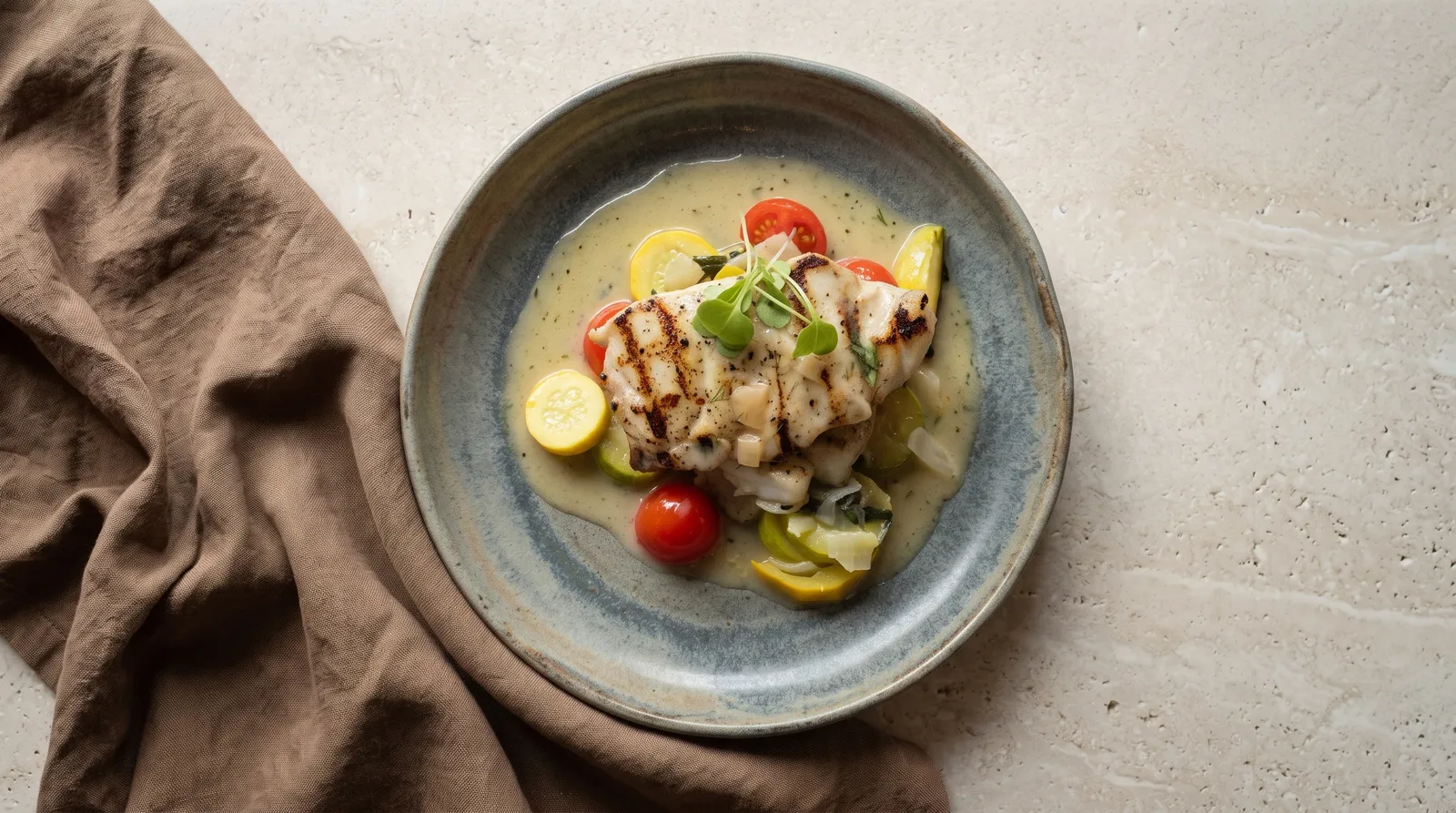
Crisp-skinned pike-perch served with a shallot, white-wine and vinegar reduction mounted with cold butter.

French National Dishes
Share
Sandre au beurre blanc — served on a plate
Prep 20 minutes
Cook 26 minutes
Total 46 minutes
Yield 4 plated fish portions with about 300 ml beurre blanc
Introduction and overview

Sandre au beurre blanc, Nantais-style pike-perch with butter sauce

Sandre au beurre blanc brings together two Loire-facing traditions: freshwater pike-perch and the sharp, butter-rich sauce associated with the Nantes area. The fish is kept simple so the sauce remains legible. Four boneless portions are pan-cooked until the skin is crisp and the flesh reaches 63 °C, then served with a beurre blanc built from shallot, dry white wine, wine vinegar and cold butter.

The sauce depends on reduction before enrichment. Wine, vinegar and shallot are simmered until only about 30 ml of syrupy liquid remains; that concentrated acid base is what allows a large amount of cold butter to be whisked in without turning the dish into a cream sauce. Add the butter gradually over very low heat, moving the pan off the heat whenever necessary. A glossy, opaque sauce with no free butter on the surface is the useful endpoint.

Cook the fish only after the beurre blanc is close to ready because this emulsion is at its best straight away. Pat the sandre dry, check carefully for pin bones, and start skin-side down so the skin can crisp while the flesh stays moist. The complete sauce is allocated across the four portions, so it is intentionally generous; serve immediately rather than holding the emulsion over strong heat.
Success points

Success points

  • Reduce the wine-vinegar base far enough before adding any butter.
  • Use cold butter and whisk it in gradually over very low heat.
  • Move the sauce off the heat if it begins to look oily.
  • Keep the fish cold until cooking and verify 63 °C in the thickest part.
Ingredients

Ingredients

Fish

  • 800 g skin-on sandre (pike-perch) fillet, pin-boned and trimmed to four 170 g portions; about 680 g usable fish
  • 10 g neutral oil
  • 10 g unsalted butter, for the fish
  • 4 g fine salt
  • 1 g white pepper, finely ground

Beurre blanc

  • 60 g shallots, very finely minced
  • 100 ml dry Muscadet or other dry Loire white wine
  • 40 ml white wine vinegar
  • 180 g unsalted butter, very cold, cut into small cubes
Method

Method

Make the beurre blanc

  1. Reduce the acid base. Combine shallots, wine and vinegar in a small stainless-steel saucepan and simmer until only about 30 ml liquid remains around the softened shallots. Use small stainless-steel saucepan. Keep to medium-low simmer. Allow 10 minutes. The reduction is syrupy enough to leave a moist trail when a spatula is drawn across the pan, with about 30 ml liquid remaining. A concentrated acidic base supports a stable butter emulsion. Wine and vinegar reduction produces hot steam; keep the face away from the pan.

  2. Mount the butter. Lower the heat, then whisk in the 180 g cold butter a few cubes at a time, moving the pan off direct heat whenever the sauce threatens to boil. Use saucepan and whisk. Keep to very low heat and off heat as needed. Allow 8 minutes. The sauce is glossy, opaque and lightly thickened, with no free butter pooling on the surface. Keeping the emulsion below a fierce simmer reduces splitting. Do not boil the finished emulsion; keep it warm only briefly.

Cook the fish

  1. Pan-cook the sandre. Season the four fish portions with salt and white pepper. Heat the oil and 10 g butter in a 30 cm frying pan, cook skin-side down until crisp, turn once and finish gently. Use 30 cm frying pan, fish spatula, thermometer. Keep to medium-high then medium heat. Allow 8 minutes. The skin is crisp, the flesh flakes in moist layers and the thickest part reaches 63 °C. Starting skin-side down gives the thin fillet support and helps it release cleanly. Keep the raw fish cold, check for pin bones and measure 63 °C in the thickest part.

Serving

Practical

Serving

Plate each sandre portion immediately and spoon one quarter of the beurre blanc around or over the fish. The sauce should still be glossy and warm, not boiling.

Make-ahead

The shallot can be finely chopped in advance, but the finished beurre blanc is not a good make-ahead sauce. The reduction may be prepared shortly before service; mount the butter and cook the fish close to eating time.

Storage and reheating

Cool any leftover fish promptly and refrigerate within 2 hours for up to 2 days. Beurre blanc may separate on chilling and reheating; warm leftovers gently and do not expect the original emulsion. If reheating the fish, bring it to 74 °C while avoiding prolonged high heat that dries the flesh.

Substitutions

A neutral firm white fish can reproduce the cooking method but no longer makes sandre au beurre blanc. If the wine is changed, preserve a dry, acidic profile; sweeter wine shifts the balance of the sauce.

Nutrition per serving

Nutrition per serving

  • Serving size1 fish portion plus one quarter of the sauce
  • Calories515 kcal
  • Carbohydrate5 g
  • Protein32 g
  • Fat40 g
  • Fibre1 g
  • Sodium450 mg
Allergens and food safety

Allergens and food safety

Allergen: fish

Allergen: milk

Allergen: sulphites (wine and wine vinegar, depending on label)

Keep sandre refrigerated and check carefully for pin bones.

Cook fish to 63 °C in the thickest part.

Refrigerate leftovers within 2 hours and reheat cooked fish to 74 °C when reheating.

The wine reduction does not guarantee complete alcohol removal.

FAQ

FAQ

Can beurre blanc be boiled after the butter is added?

No. Fierce heat encourages the emulsion to split. Keep the sauce very warm rather than boiling once the cold butter is being incorporated.

Why is there no cream?

The sauce is a classic butter emulsion based on a wine-vinegar reduction. Cream is not required for the preparation used here.

Closing

Closing

  • Result: Crisp-skinned pike-perch served with a shallot, white-wine and vinegar reduction mounted with cold butter.
  • Decisive technique: Reduce the wine-vinegar base far enough before adding any butter.