French Recipes

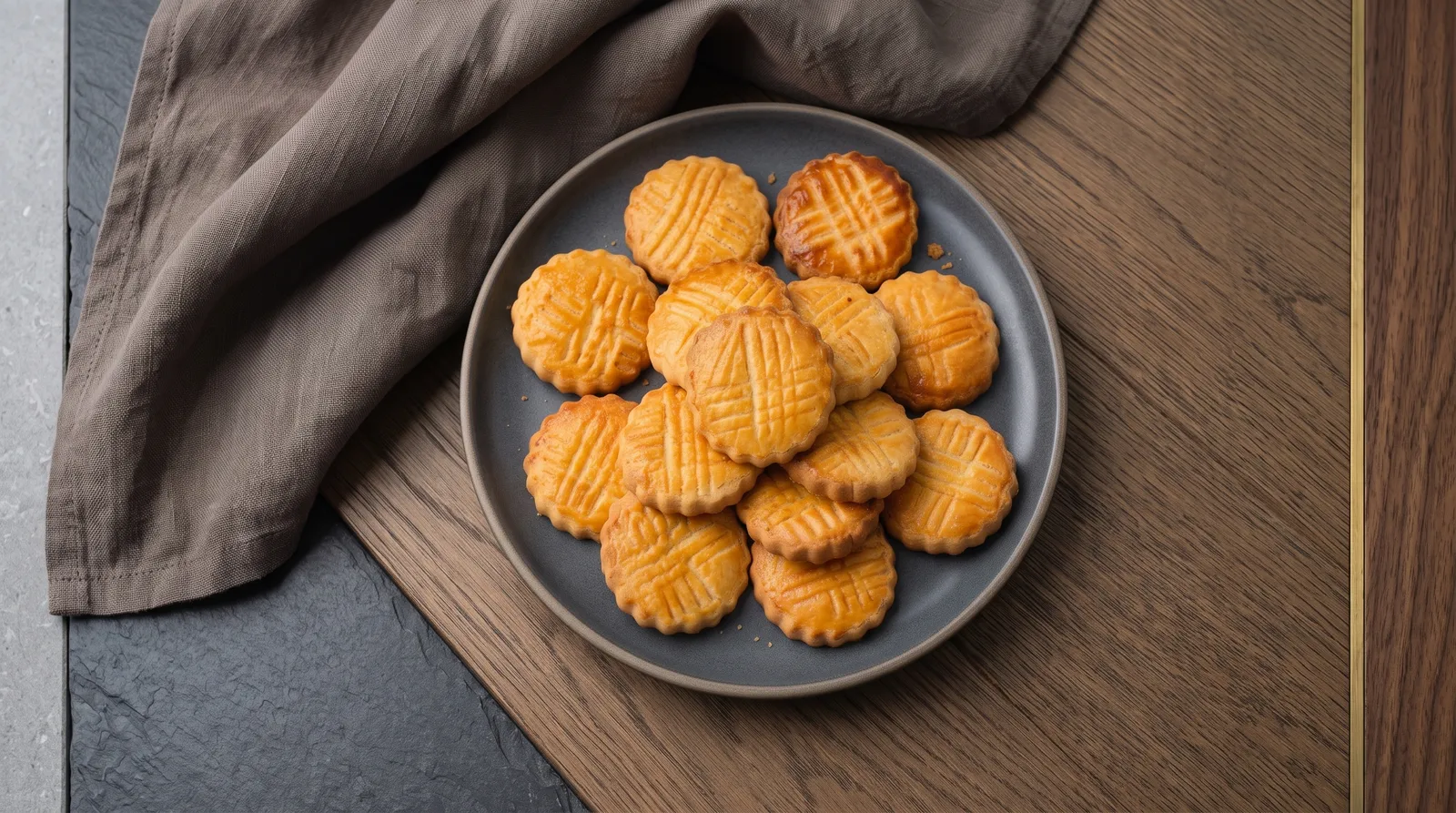
Sablés bretons

Semi-salted butter, egg yolk and sugar make crumbly Breton biscuits rolled to 5 mm, chilled, cut and baked free-standing until the edges turn golden.

French Recipes
Share
Sablés bretons — served on a plate
Prep time 20 minutes
Cook time 18 minutes
Total time 88 minutes
Yield 30 biscuits, about 12 g each
Introduction and overview

Sablés bretons — thin Breton salted-butter biscuits

Sablés bretons are butter-forward biscuits whose name points to their sandy, crumbly texture. Semi-salted butter is the defining fat here: its salt is part of the flavour balance, so no extra salt is added. Egg yolk and caster sugar provide richness and a clean snap-tender structure, while a modest amount of baking powder keeps the biscuits from becoming dense. The dough is handled briefly and gently because excessive mixing develops gluten and works against the short texture that makes a sablé distinctive.

This preparation is deliberately thinner than a palet breton. The dough is rolled to 5 mm and the rounds bake free-standing on a lined tray. Palets bretons are typically much thicker and often need rings or moulds to contain their rise; treating the two as interchangeable would erase a useful difference between the records. After rolling, the sheet chills for 30 minutes so the butter firms and the cutters make sharp edges. Equal thickness matters more than decorative shaping because it gives all 30 biscuits the same baking time.

A fan oven at 165 °C colours the edges while the centres remain pale gold. The biscuits are fragile when first removed, so they should cool on the tray briefly and then finish cooling before being moved or packed. No butter-loss deduction is taken in the nutrition calculation: all butter in the dough is counted as eaten. Store the completely cooled biscuits dry and airtight; refrigeration is unnecessary and can soften their crisp-crumbly surface through condensation.
Success points

Success points

  • Use semi-salted butter and do not add separate salt.
  • Roll to a true 5 mm before chilling and cutting.
  • Bake the rounds free-standing and spaced rather than in rings.
Ingredients

Ingredients

Dough

  • 100 g semi-salted butter, softened but not melted
  • 60 g egg yolk, about 3 yolks
  • 100 g caster sugar
  • 175 g plain wheat flour
  • 5 g baking powder
Method

Method

Mix and chill

  1. Whisk the yolks and sugar. Whisk the yolks with the caster sugar for about 4 minutes. The mixture should be paler, thicker and fall from the whisk in a ribbon that briefly sits on the surface.

  2. Finish the dough gently. Mix in the flour and baking powder, then add the soft semi-salted butter and work only until homogeneous, about 6 minutes. The dough should be smooth enough to roll but still soft and buttery, with no dry flour pockets.

  3. Roll and chill the sheet. Roll the dough between two sheets of baking paper to an even 5 mm thickness, then refrigerate for 30 minutes. The sheet should feel firm and lift cleanly from the paper without smearing.

Cut, bake and cool

  1. Cut the sablés. Cut 30 rounds with a 5 cm cutter and arrange them well apart on lined trays. The rounds should have sharp edges and the same 5 mm thickness across the batch.

  2. Bake to golden edges. Bake at 165 °C fan for about 18 minutes. The edges should be golden while the centres remain a shade lighter and dry to the touch.

  3. Cool before handling fully. Leave the sablés on the tray for 5 minutes, then transfer them to a rack for another 15 minutes. The biscuits should become crisp-tender and firm enough to lift without breaking.

Serving

Practical

Serving

Serve fully cooled. Their small size suits coffee, tea or a plated dessert garnish.

Storage and reheating

Keep airtight at cool room temperature for up to 5 days. Freezing baked biscuits is possible for about 1 month, but they are best freshly thawed at room temperature; reheating is unnecessary.

Make-ahead and substitutions

The rolled chilled dough can be held overnight. Cut rounds can be frozen on a tray and baked from frozen with a small extension to baking time only if the centre still shows the same readiness cue.

Substitution

Unsalted butter plus 1.5 g fine salt may replace 100 g semi-salted butter. Effect: The biscuit remains structurally similar, but the characteristic Breton salted-butter balance depends on accurate salt weighing.

Troubleshooting

Troubleshooting

  • Biscuits spread too farThe dough was warm or the butter partly melted. Chill the rolled sheet until firm and cut directly before baking.
  • Texture is hard rather than crumblyThe flour was worked too long. Stop mixing as soon as the dough is homogeneous.
Nutrition per serving

Nutrition per serving

  • Serving size1 biscuit, about 12 g
  • Calories65 kcal
  • Carbohydrate8.5 g
  • Protein1.1 g
  • Fat3.2 g
  • Fibre0.3 g
  • Sodium55 mg
Allergens and food safety

Allergens and food safety

Allergens: Gluten, Egg, Milk.

Use clean handling for egg yolks and bake the dough fully.

Cool before airtight storage so trapped steam does not soften the biscuits.

Handling warning: Freshly baked biscuits are fragile; move them only after the bases have set for several minutes.

FAQ

FAQ

How are these different from palets bretons?

These sablés are rolled to 5 mm and baked as free-standing rounds. Palets are generally much thicker and need a mould or ring to hold their shape.

Why use semi-salted butter?

It supplies both the butterfat and the characteristic salt balance, so adding a separate measured salt is unnecessary.

Closing

Closing

  • Result: The biscuits are thin, rich and crumbly, with golden edges and a clean semi-salted-butter finish.
  • Decisive technique: Minimal mixing, a 30-minute chill and an even 5 mm sheet are the controls that protect the sablé texture.