Saint-Honoré — puff pastry, choux and vanilla Chiboust
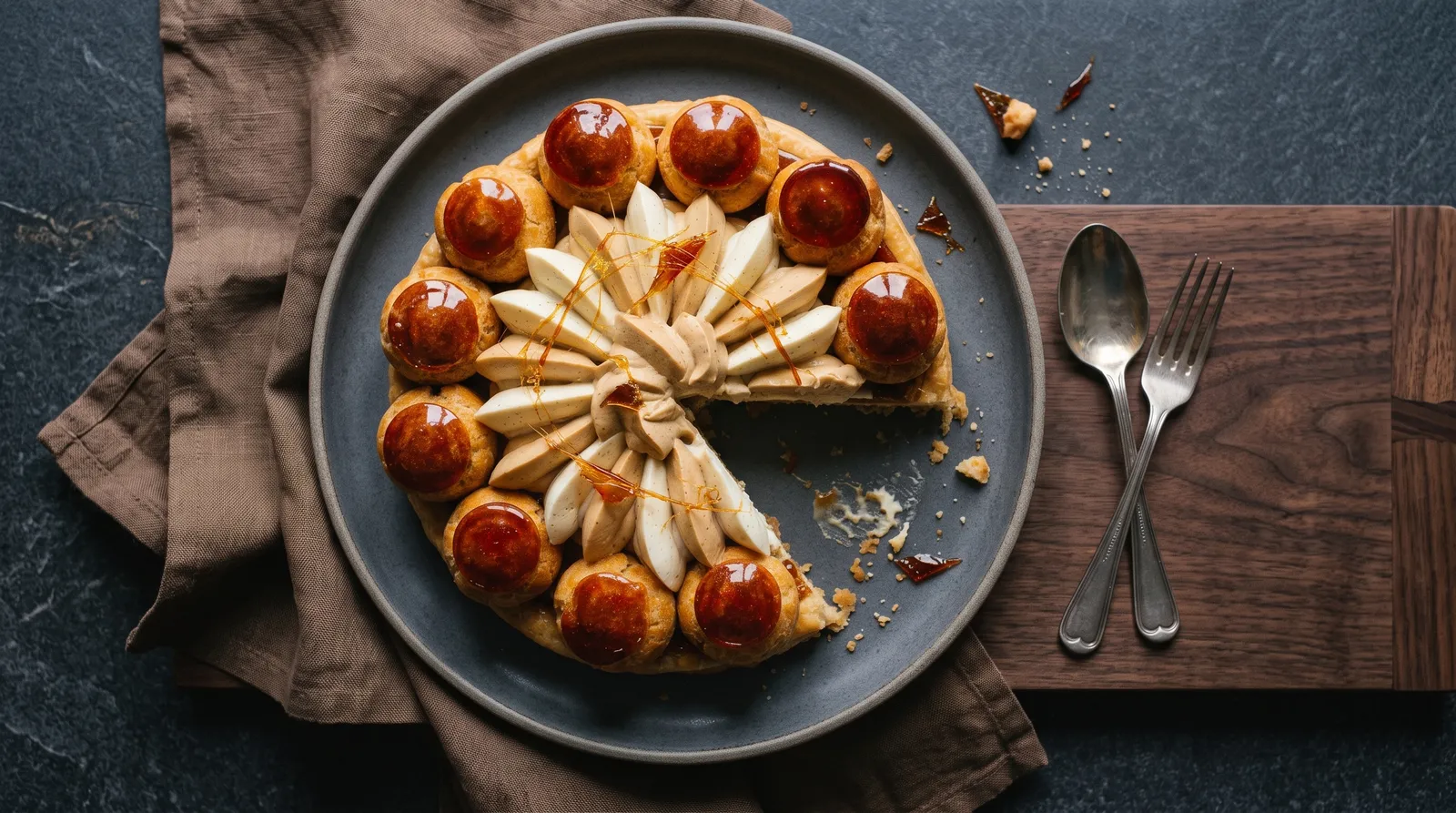
Saint-Honoré is a construction of pastry techniques rather than a cream cake decorated with profiteroles. A thin puff-pastry disc forms the base, a ring of choux is piped onto it, and separate small choux buns are baked, filled and attached around the edge with caramel. The centre is filled with vanilla Chiboust, a pastry cream lightened with Italian meringue and stabilised with gelatine. Each component has a specific job: the puff pastry gives a crisp floor, the choux creates height, the caramel adds brittle contrast and the Chiboust supplies the soft interior.
Timing matters because several components must be fully cool before assembly. The puff base chills before baking; the small choux must dry in the oven and then cool for 45 minutes; the Chiboust needs a further 30-minute cooling interval after the hot pastry cream and Italian meringue are combined. These waits are not decorative schedule padding. Filling warm choux traps steam and softens the shell, while adding a cream that has not cooled sufficiently makes the final pastry unstable. The assembled Saint-Honoré then chills for two hours before slicing.
The most dangerous stage is caramel. Sugar syrup cooked to 175 °C can cling to skin and cause severe burns, so use a stable pan, keep water away from the finished caramel and never touch or taste it while hot. The custard reaches 82 °C, and the Italian-meringue syrup reaches 118 °C before it is poured into pasteurised egg white. Once assembled, the pastry is refrigerated because the milk-and-egg cream is highly perishable. The result should still show distinct textures: crisp pastry, dry choux shells, brittle caramel and a light but sliceable cream.