French Recipes

Rousquilles

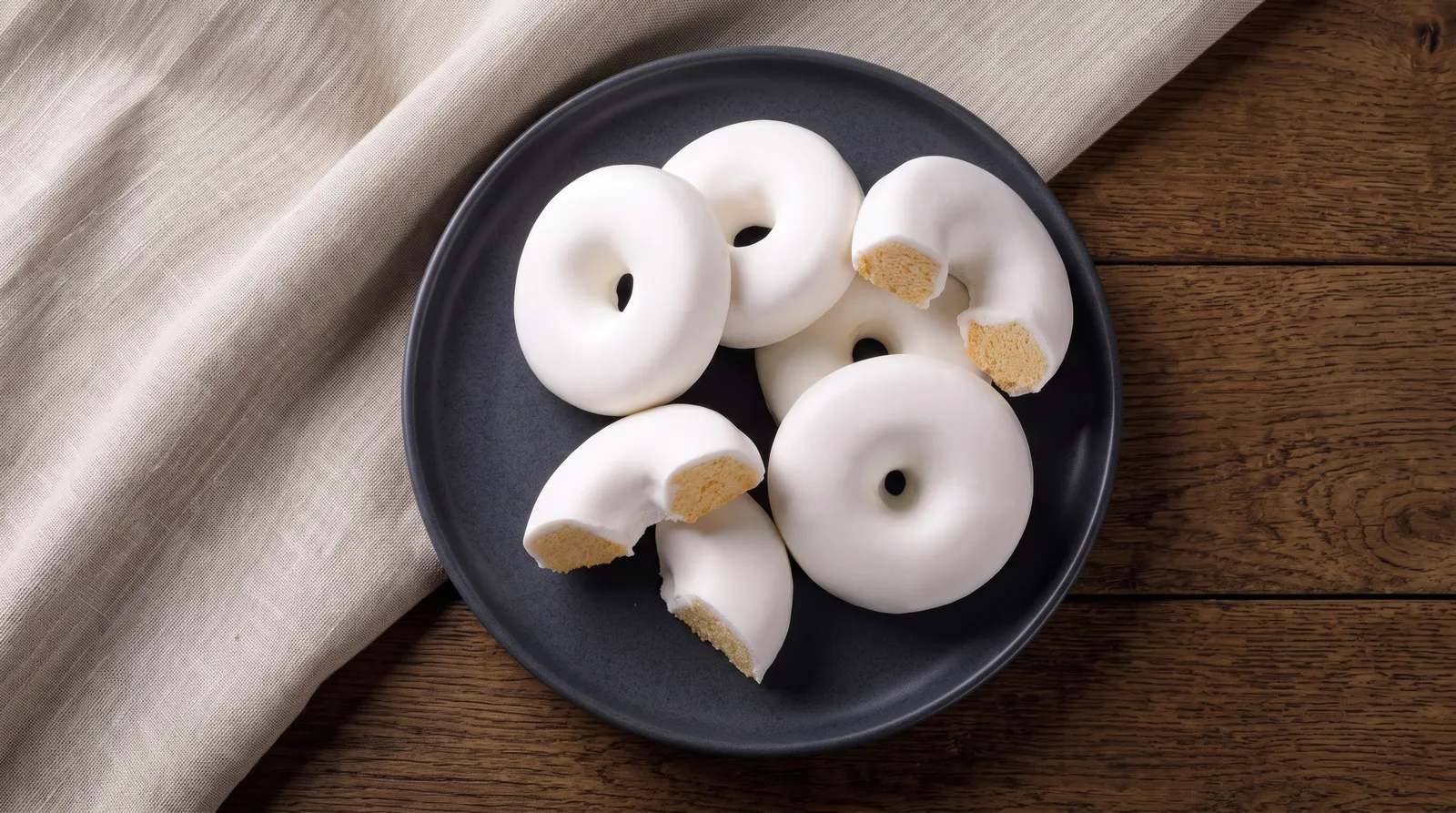
Tender ring-shaped biscuits scented with green anise and lemon are baked pale, cooled completely and coated in an opaque white cooked-sugar glaze.

French Recipes
Share
Rousquilles — served on a plate
Prep time 55 minutes
Cook time 25 minutes
Total time 350 minutes
Yield 20 glazed ring biscuits, about 46 g each
Introduction and overview

Rousquilles — Catalan anise and lemon ring biscuits

Rousquilles are Catalan ring biscuits associated with the Pyrénées-Orientales, recognisable by their soft, tender crumb, anise-and-citrus perfume and opaque white coating. They are not doughnuts and they are not intended to become hard commercial-style iced rings. The dough combines flour, icing sugar, butter, egg yolk, honey and milk, with lightly crushed green anise and lemon zest. Rolled to about 1 cm and cut with a wide outer cutter plus a small centre hole, the rings keep enough thickness to stay tender after baking.

Resting is a major part of the schedule. The mixed dough chills for two hours before shaping, which firms the butter and relaxes the flour so the rings cut cleanly without needing extra flour worked into the dough. They bake at 160 °C only until the crumb is set and still pale. A deep golden colour would push them towards a drier biscuit. After baking, the rings cool completely before glazing; warm biscuits would thin the coating and encourage it to run into puddles.

The white finish is made with a cooked sugar syrup brought to 118 °C and whisked into pasteurised egg white, with lemon juice to sharpen the sweetness. Hot syrup is the principal hazard: it clings to skin and can cause severe burns, so a stable saucepan and clear work area are essential. Once coated, the biscuits need a full two hours at room temperature for the glaze to dry opaque. That passive drying time belongs to the recipe just as much as the oven time.
Success points

Success points

  • Stop mixing as soon as the dough is cohesive; elasticity makes the biscuits tougher.
  • Keep ring dimensions consistent: 10 mm thick, about 7 cm across with a 2 cm opening.
  • Glaze only completely cool biscuits and take the syrup precisely to 118 °C.
Ingredients

Ingredients

Biscuit dough

  • 300 g plain wheat flour
  • 5 g baking powder
  • 85 g icing sugar
  • 2 g fine salt
  • 85 g unsalted butter, soft but not melted
  • 60 g pasteurised egg yolk, about 3 yolks
  • 30 g honey
  • 30 ml whole milk
  • 4 g green anise seeds, lightly crushed
  • 5 g finely grated lemon zest

White glaze

  • 340 g icing sugar
  • 140 ml water
  • 60 g pasteurised egg white, about 2 whites
  • 15 ml fresh lemon juice
Method

Method

Mix and chill the dough

  1. Make the sandy base. Whisk the flour, baking powder, icing sugar and salt together, then work in the soft butter with fingertips or a paddle for about 6 minutes. The mixture should look evenly sandy with no large butter lumps.

  2. Bring the dough together. Add the yolk, honey, milk, lightly crushed anise and lemon zest and mix for about 5 minutes, stopping as soon as the dough is cohesive. The dough should hold together cleanly without becoming stretchy or glossy.

  3. Chill the dough thoroughly. Flatten the dough into a thick disc, wrap it and refrigerate for 120 minutes. The dough should feel firm enough to roll cleanly without sticking.

Shape and bake

  1. Cut uniform rings. Roll the dough to 10 mm thick and cut 20 rings using a 7 cm outer cutter and a 2 cm centre cutter. Arrange them on lined trays. The rings should be even in thickness with neatly sealed edges and no cracks through the band.

  2. Bake to a pale set crumb. Bake at 160 °C for 15 minutes. The biscuits should be set and pale cream with only the faintest colour at the lower edge.

  3. Cool before glazing. Transfer the rings carefully to a rack and cool for 30 minutes. The biscuits should feel firm enough to lift without bending and show no surface warmth.

Cook and dry the glaze

  1. Cook the sugar syrup. Bring the icing sugar and water to a steady boil and cook for about 10 minutes until the thermometer reads 118 °C. The syrup should be clear, bubbling steadily and exactly at the soft-ball temperature.

  2. Whip the white glaze. Whisk the pasteurised whites with the lemon juice until foamy, then stream in the hot syrup and continue whisking. The glaze should become dense, white and glossy and fall from the whisk in a thick ribbon.

  3. Coat and dry the rousquilles. Dip or brush each cold ring so the top and outer surface carry an even white coat, then leave them on the rack for 120 minutes. The coating should dry matte-white and feel dry to a light fingertip touch without pooling underneath.

Serving

Practical

Serving

Serve once the glaze is fully dry; one biscuit is a natural coffee or tea portion.

Storage and reheating

Store fully dried rousquilles airtight at cool room temperature for up to 4 days. Do not refrigerate unless the room is unusually hot and humid, because condensation softens the glaze. No reheating is needed.

Make-ahead and substitutions

The dough can be chilled overnight. Baked unglazed rings can be held airtight for 1 day before glazing.

Substitution

Replace green anise seeds with 2 g natural anise extract. Effect: The aromatic profile stays anise-led, but the dough loses the small seed flecks.

Troubleshooting

Troubleshooting

  • Rings spread or distortThe dough was too warm when cut. Return the rolled dough to the refrigerator until firm, then cut cleanly.
  • Glaze stays translucentThe syrup was undercooked or the coating was too thin. Verify 118 °C and apply a full, even coat to a completely cool biscuit.
Nutrition per serving

Nutrition per serving

  • Serving size1 glazed biscuit, about 46 g
  • Calories190 kcal
  • Carbohydrate35 g
  • Protein3 g
  • Fat5 g
  • Fibre0.6 g
  • Sodium105 mg
Allergens and food safety

Allergens and food safety

Allergens: Gluten, Egg, Milk.

Use pasteurised egg products for both dough handling and the glaze.

The syrup reaches 118 °C and is a serious burn hazard.

Keep glazed biscuits dry and protected from contamination while the coating sets.

Handling warning: Cooked sugar syrup at 118 °C can cause deep burns. Fragile rings should be moved only after cooling.

FAQ

FAQ

Why are the biscuits baked only to a pale colour?

Their target texture is tender rather than crisp. A pale set crumb keeps the ring soft enough beneath the dried glaze.

Can I glaze them while warm?

No. Warm biscuits make the coating thinner and less opaque. Cool them completely before dipping or brushing on the glaze.

Closing

Closing

  • Result: The rings remain tender beneath a dry, opaque white glaze with clear anise and lemon aroma.
  • Decisive technique: Chill the dough thoroughly, keep the bake pale and dry the cooked-sugar glaze for the full two hours.