Quatre-quarts breton — Breton equal-weight salted-butter cake
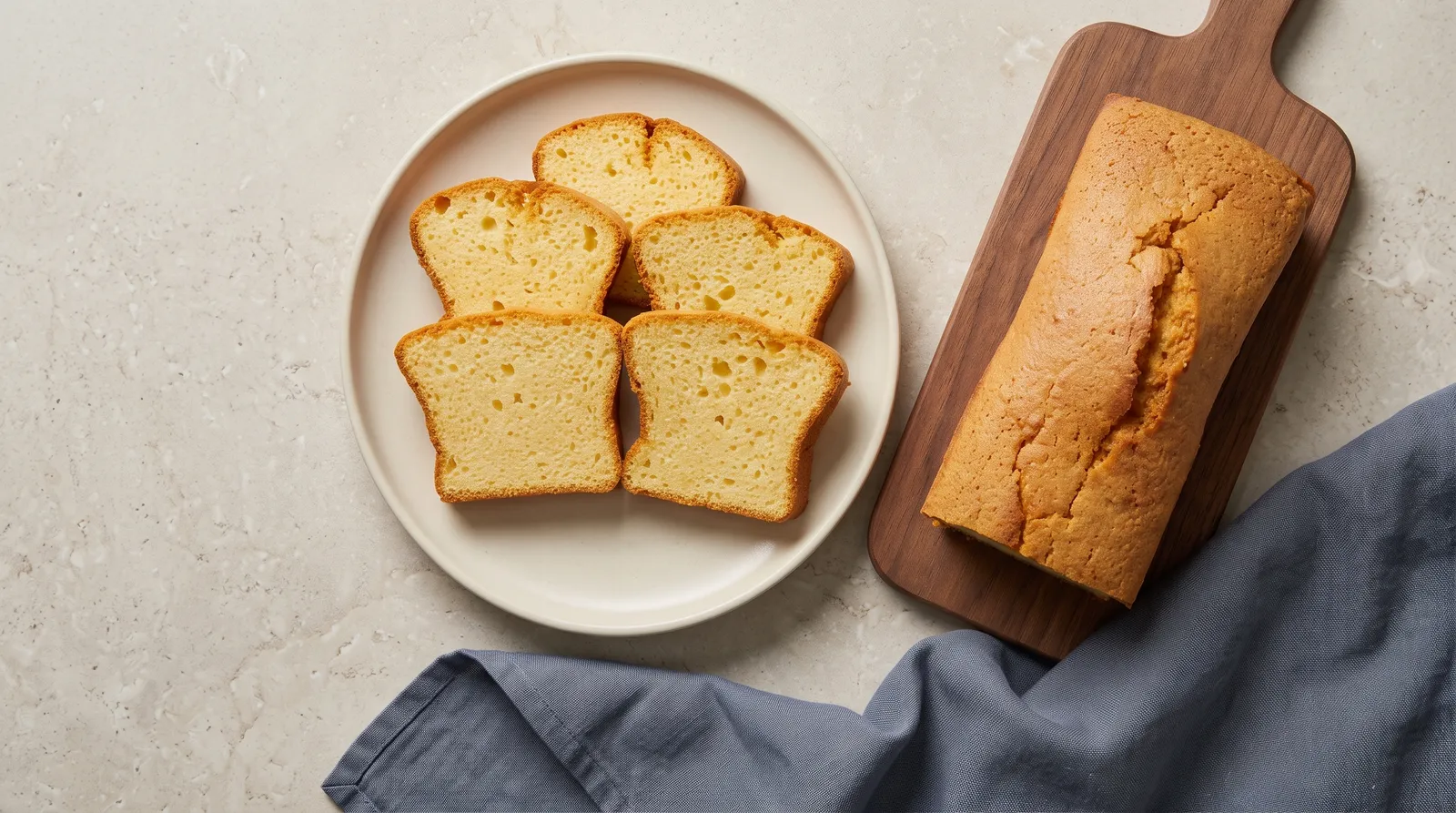
Quatre-quarts is named for its defining proportion rather than for a particular decoration or flavouring. The net weight of the eggs, measured after shelling, becomes the reference for the other three principal ingredients: the same weight of sugar, the same weight of wheat flour and the same weight of butter. Starting with 220 g of shelled egg therefore fixes all four at 220 g. That arithmetic is the identity of the cake, not a loose suggestion that can be replaced with unequal cups or oil.
A Breton profile is especially clear when the fat is demi-sel butter. Its salt is already part of the butter, so there is no separate salt addition to guess at. The butter should be softened to about 18–20 °C: pliable enough to become smooth and emulsify with the egg, but not melted. Excessive whipping is unnecessary. Quatre-quarts is richer and closer-textured than a foam cake, and too much incorporated air can produce an irregular rise rather than the fine, moist crumb that suits the equal-weight batter.
The mixing sequence is simple but worth controlling. Sugar is blended into the softened butter, the egg is added gradually so the emulsion stays cohesive, and the sifted flour is folded in only until dry streaks disappear. A lined 23 × 13 cm tin gives the batter enough depth for a 50-minute bake at 170 °C. The top should be deep golden and the centre fully set before the loaf comes out; then a full hour of cooling stabilises the butter-rich crumb before slicing.