French Recipes

Potée champenoise

Potée champenoise is not a Burgundian or Lorraine potée renamed after a wine region.

French Recipes
Share
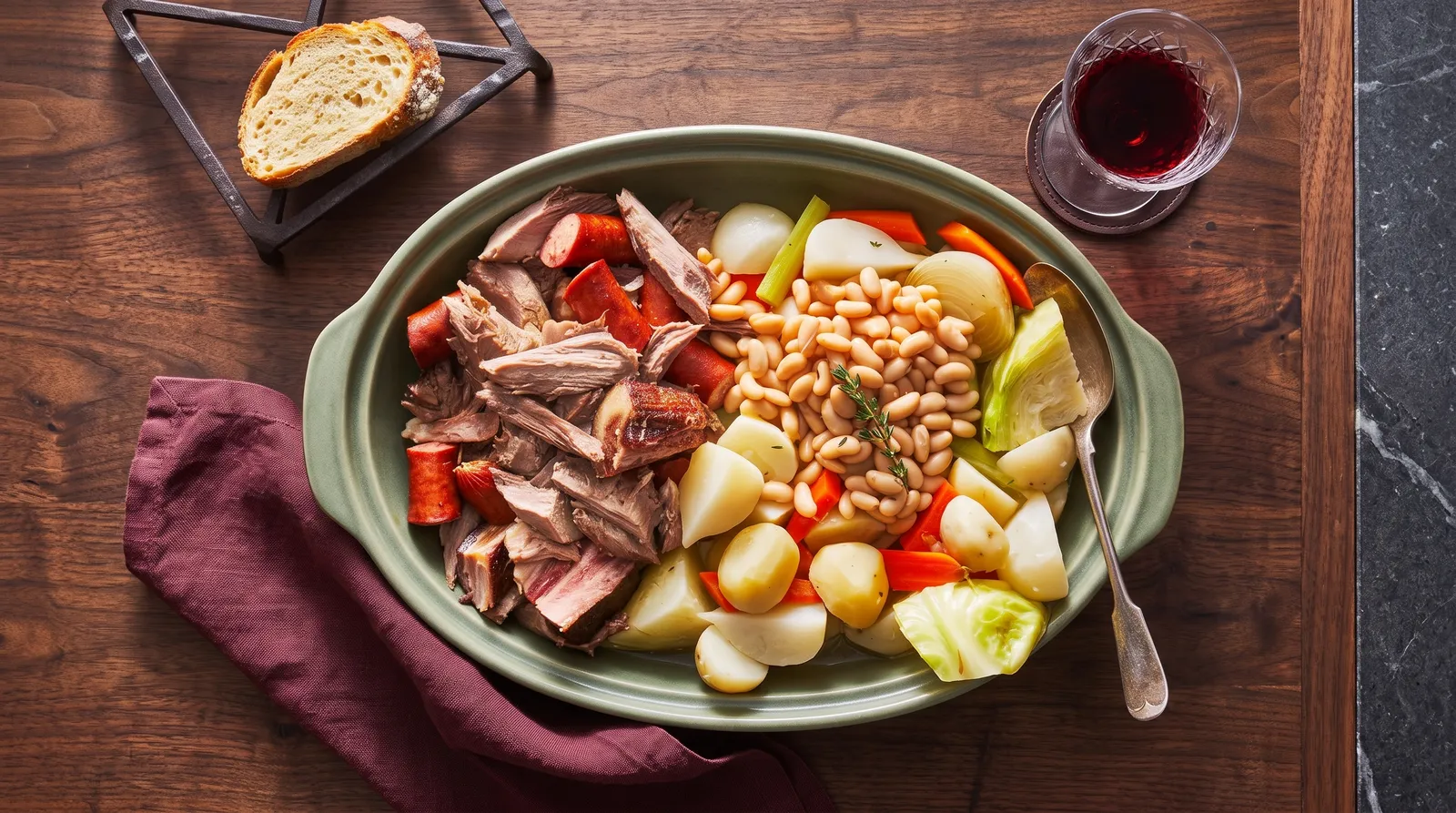
Potée champenoise — arranged on a serving platter
Cook time 170 minutes after 35 minutes of preparation.
Passive time 65 minutes after the 170-minute cooking schedule.
Calories per serving 730 kcal across the 270-minute schedule.
Yield 6 main-course servings.
Introduction and overview

Potée champenoise: Champagne potée with demi-sel pork belly and pork, smoked ham, sausage, cabbage, carrots, turnips, potatoes and white beans.

Potée champenoise is not a Burgundian or Lorraine potée renamed after a wine region. The Champagne profile used here combines demi-sel pork, a thick piece of smoked ham, pork sausage, cabbage, carrots, turnips and potatoes, with a modest quantity of cooked white beans supported by regional descriptions of the dish.

No Champagne wine is added. That restraint matters: regional identity comes from the meat-and-vegetable composition rather than automatically pouring local sparkling wine into the pot. The cured pork is soaked briefly, cabbage is blanched separately, and the main simmer is staged so ham and roots cook after the tougher pork has had a head start.

Cooked beans enter only in the final five minutes, which keeps them whole enough to remain recognisable in the bowl. Nutrition counts their drained cooked weight, the edible cured meats and a defined broth portion. It does not treat the starting three litres of water as though all of it is consumed.
Success points

Success points

  • Do not add Champagne wine simply because the dish is Champenois; the defining potée evidence is cured pork, ham, sausage, cabbage and vegetables.
  • Keep the beans cooked and drained before they enter the pot so they warm without dissolving.
  • Add salt only after tasting; cured pork, ham and sausage carry substantial sodium.
Ingredients

Ingredients

Meats

  • 500 g lean demi-sel pork belly, commercially cured
  • 500 g demi-sel pork shoulder or loin, boneless; commercially cured
  • 250 g smoked ham, thick piece; diced for service
  • 300 g plain pork cooking sausages, 6 pieces; commercially prepared

Vegetables, beans and broth

  • 600 g green cabbage, quartered and cored
  • 300 g carrots, peeled; thick slices
  • 250 g turnips, peeled; wedges
  • 500 g waxy potatoes, peeled; large pieces
  • 240 g cooked white beans, drained weight
  • 180 g yellow onions, quartered
  • 80 g celery stalks, thick slices
  • 3000 ml water
  • 4 g thyme-bay bouquet, tied
Method

Method

Directions

  1. Desalt the cured pork. Soak the demi-sel belly and pork shoulder in cold water under refrigeration for 60 minutes soaking, then drain and pat dry. The surface feels clean and no crusts of curing salt remain. A short cold soak moderates the pot without relying on aggressive dilution later. Keep the meat refrigerated throughout and discard the soaking water.

  2. Blanch the cabbage briefly. Bring a separate pot of water to 100 °C and blanch the cabbage quarters for 10 minutes, then drain well. The cabbage is flexible at the edges but still firm through the core. Blanching tempers the cabbage before it joins the cured meats. Drain away from the body because the cabbage holds very hot water.

  3. Start the cured meats. Place demi-sel belly, pork shoulder, onions, celery and bouquet in a large stockpot with exactly 3000 ml water. Bring to a gentle simmer and skim, then cook for 90 minutes. The pork is becoming tender and the broth is savoury but not violently boiling. Cured pork needs a long head start before the vegetables and sausage. Intact pork must reach at least 63 °C and ultimately cook until tender.

  4. Add the vegetables and ham. Add blanched cabbage, carrots, turnips and smoked ham and simmer gently for 40 minutes. The cabbage is tendering and the carrots and turnips are almost cooked through. The ham seasons the second half of the cook while the roots remain intact. Taste the broth before considering any additional salt; none is pre-allocated here.

  5. Finish with potatoes, sausage and beans. Add potatoes and sausages. Simmer 25 minutes, then add the drained white beans and cook 5 minutes more. The sausages reach 71 °C, the potatoes are tender, and the beans are hot but not broken down. Late beans prevent a canned or pre-cooked bean from turning pasty. Probe each sausage in the centre to confirm 71 °C.

  6. Rest before serving. Turn off the heat and rest for 5 minutes passive rest before slicing pork and dividing meat, vegetables, beans and broth among six deep plates. The broth has settled and the vegetables remain distinct when ladled. The pause completes the intact-pork rest interval and makes portioning safer. Remove any string or loose bone fragments before serving.

Serving and practical guidance

Practical

Serving and practical guidance

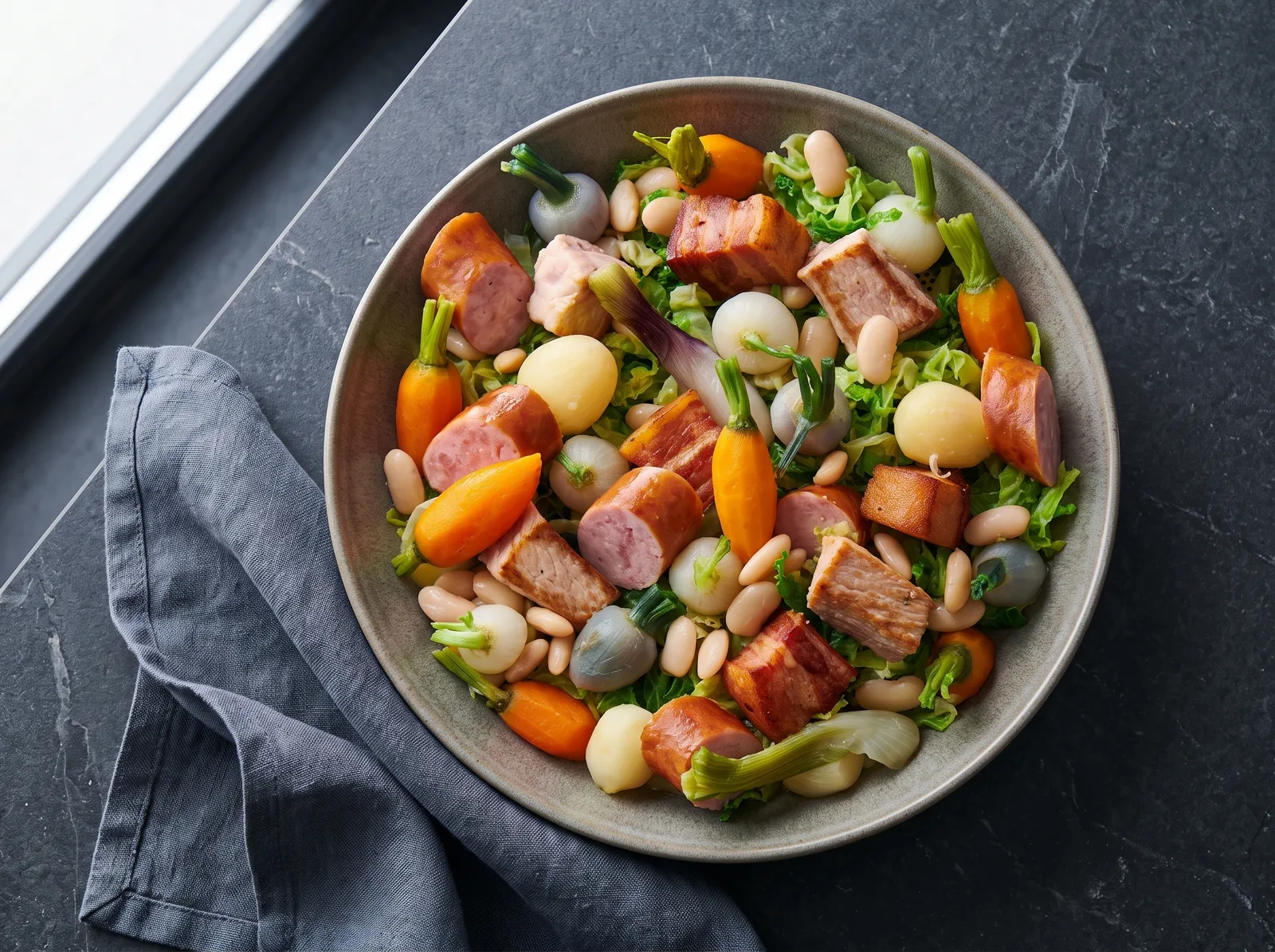
Serve in deep plates with visible beans, vegetables and sliced cured pork rather than as a blended soup.

Serving and practical guidance

Make ahead by chilling promptly and reheating gently; the broth will taste saltier when reduced, so avoid hard boiling.

Serving and practical guidance

Reheat leftovers to 74 °C and keep the bean stage gentle.

Serving and practical guidance

If using dried beans, cook them separately first and weigh the stated drained amount before they enter the pot.

Check

Broth too salty: cured products were saltier than expected; dilute modestly with measured hot water before the potato stage rather than after plating.

Check

Beans breaking down: they were added too early; they need only the final 5 minutes because they are already cooked.

FAQ

Does the potée require Champagne wine? No. The regional evidence used for the potée centres on cured pork, sausage, ham, cabbage and vegetables; adding Champagne is not necessary to establish the dish.

FAQ

Why add cooked beans at the end? They are already tender, so a long braise would break them down and muddy the broth.

Nutrition per serving

Nutrition per serving

  • Serving sizeabout 220 g edible meat, 350 g vegetables/beans and 200 ml broth
  • Calories730 kcal
  • Carbohydrate52 g
  • Protein47 g
  • Fat38 g
  • Fibre10 g
  • Sodium1800 mg
Allergens and food safety

Allergens and food safety

Allergens: celery. - Keep cured pork and sausage refrigerated and separate from ready-to-eat foods. - Ground pork sausage must reach 71 °C. - Intact pork must reach at least 63 °C and rest at least 3 minutes before eating; the braise exceeds the minimum. - Refrigerate leftovers within 2 hours and reheat leftovers to 74 °C. - Celery is present. No wine is used, so no wine-derived sulphite declaration is introduced by the formula.

Keep cured pork and sausage refrigerated and separate from ready-to-eat foods.

Ground pork sausage must reach 71 °C.

Intact pork must reach at least 63 °C and rest at least 3 minutes before eating; the braise exceeds the minimum.

Refrigerate leftovers within 2 hours and reheat leftovers to 74 °C.

Celery is present. No wine is used, so no wine-derived sulphite declaration is introduced by the formula.

Closing

Closing

  • Result: Potée champenoise with the texture and regional identity described above, portioned according to 1 of 6 servings.
  • Decisive technique: Do not add Champagne wine simply because the dish is Champenois; the defining potée evidence is cured pork, ham, sausage, cabbage and vegetables.