French Recipes

Piperade

A vegetable-first Basque piperade of slowly softened onion, tomato and sweet pepper with measured piment d’Espelette, cooked until jammy while the vegetables remain recognisable.

French Recipes
Share
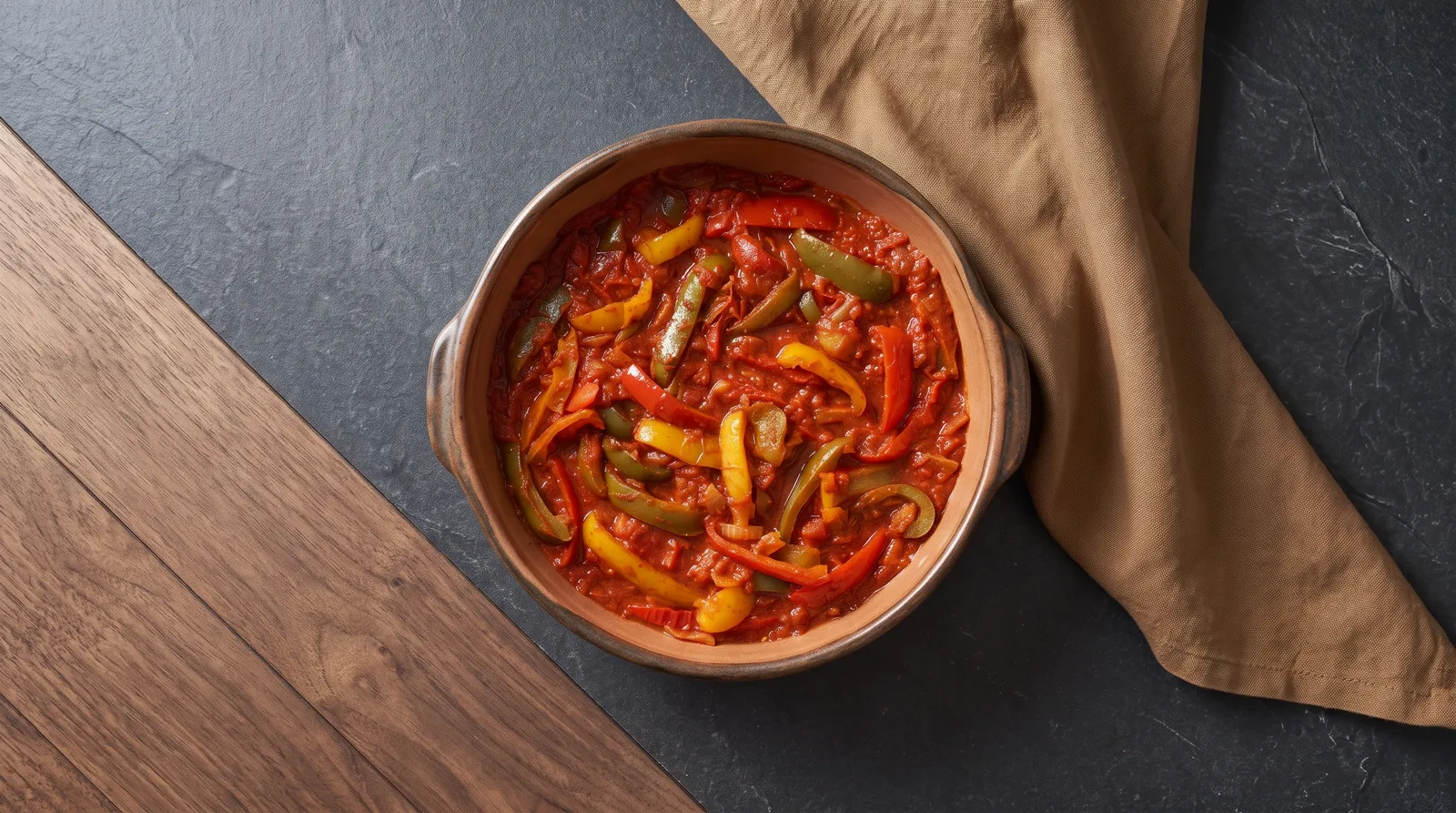
Piperade — shown in a cooking pot
Prep 20 minutes
Cook 65 minutes
Total 85 minutes
Yield about 1.25 kg piperade
Introduction

Piperade — Basque tomato, sweet pepper and onion compote

Piperade begins with vegetables, not eggs. The core combination is onion, tomato and sweet pepper or piment doux, finished with piment d’Espelette. Eggs and Bayonne ham belong to familiar ways of serving it, but keeping them outside the base preparation makes the vegetable structure clearer and avoids turning the dish into shakshuka or scrambled eggs with peppers.

Piment doux d’Anglet is ideal when available because it is mild, relatively thin-skinned and closely tied to the Basque flavour profile. A mild thin-skinned green pepper is the practical substitute. It should not be replaced gram-for-gram with hot chilli: most of the pepper quantity is there for sweet vegetal flavour and texture, while only 2 g piment d’Espelette supplies the measured heat.

The pan is wide because evaporation matters. Onions soften first without colouring, followed by the sweet-pepper strips and garlic. Tomato comes only after those vegetables are already supple. From there the mixture cooks uncovered until it loses its watery look and becomes spoonable, with enough reduction that a spatula trail remains visible for a moment.

The finish is a middle ground between stew and purée. The vegetables are soft and jammy but individual strips and pieces can still be seen. There is no browning target, no cheese and no egg in the pan. That restraint is what keeps the preparation useful as a side dish, a base for other Basque plates or a vegetable course on its own.

Success points

Success points

  • Keep the onions pale; browning pushes the flavour toward a different kind of pepper stew.
  • Use sweet pepper for bulk and piment d’Espelette for measured heat.
  • Reduce uncovered until the mixture is jammy, not watery, while leaving visible vegetable pieces.
Ingredients

Ingredients

Vegetables and seasoning

  • 900 g ripe tomatoes — cored and diced; skins retained
  • 500 g piment doux d’Anglet or thin-skinned sweet green pepper — seeded and cut into 8 mm strips
  • 300 g onions — thinly sliced
  • 15 g garlic — finely chopped
  • 45 ml olive oil
  • 2 g piment d’Espelette
  • 6 g fine salt
  • 1 g black pepper
  • 1 bay leaf
Method

Method

Soften the onion

  1. Soften the onions without colour. Heat the olive oil in a wide 30 cm sauté pan. Add onions and 2 g of the salt and cook for 10 minutes over medium-low heat, stirring regularly without browning. The onions are translucent, supple and still pale. A gentle start builds sweetness without the roasted flavour of browned onions. Keep hot oil under control and turn the pan handle inward.

Cook the sweet peppers

  1. Melt the sweet peppers. Add the sweet-pepper strips, garlic and bay leaf and cook for 20 minutes, partly covered for the first half and uncovered for the second. The pepper strips are soft and glossy but retain clear edges rather than collapsing into purée. Slow softening develops the piperade texture while avoiding fried or charred peppers. Handle cut peppers and later piment d’Espelette carefully and wash hands before touching eyes.

Reduce with tomato

  1. Reduce the tomatoes slowly. Add the tomatoes, remaining 4 g salt and black pepper. Cook uncovered for 35 minutes, stirring often enough to prevent sticking. Add the piment d’Espelette during the final 5 minutes. The mixture is jammy and spoonable, a trail drawn through the pan stays visible briefly, and separate pieces of pepper and tomato can still be seen. Uncovered slow reduction removes tomato water without browning the vegetables. Avoid leaning over the pan when stirring hot, bubbling tomato.

Serving, storage and make-ahead

Practical

Serving

Serve hot, warm or at room temperature. Eggs or Bayonne ham may be added separately as familiar variations, but they are not part of the nutrition values.

Make-ahead

Cut the vegetables earlier in the day or cook the entire piperade one day ahead; the flavours remain cohesive after chilling.

Storage and reheating

Refrigerate within 2 hours and use within 4 days. Reheat gently rather than frying the mixture again.

Pepper substitute

A mild thin-skinned green pepper is the closest practical direction when piment doux d’Anglet is unavailable; a thick bell pepper produces a fleshier result.

Should the tomatoes be peeled?

Not for this preparation. Dicing ripe tomatoes and giving them enough reduction time keeps the workflow simpler and the texture rustic.

Are eggs part of piperade?

They are a documented way to serve or finish piperade, but the vegetable mixture is complete on its own and is the base presented here.

Nutrition per serving

Nutrition per serving

  • Serving sizeabout 205 g piperade
  • Calories145 kcal
  • Carbohydrate19 g
  • Protein3 g
  • Fat7 g
  • Fibre5 g
  • Sodium430 mg
Allergens and food safety

Allergens and food safety

Allergens: None of the major allergens required by this preparation are present in the listed ingredients. - Wash hands after handling piment d’Espelette or any cut chilli. - Keep the pan stable around hot oil and bubbling tomato. - Refrigerate leftovers within 2 hours.

Wash hands after handling piment d’Espelette or any cut chilli.

Keep the pan stable around hot oil and bubbling tomato.

Refrigerate leftovers within 2 hours.

Closing

Closing

  • Result: soft, glossy vegetables with a jammy tomato base, mild pepper sweetness and restrained Espelette heat.
  • Decisive technique: soften without browning, then reduce uncovered until excess tomato water has gone.