French Recipes

Pimentade de poisson

Firm fish steaks gently poached in a French Guianese tomato, onion, lime, chilli and roucou sauce, with a short cold marinade and a 63 °C fish endpoint that keeps the flesh moist and intact.

French Recipes
Share
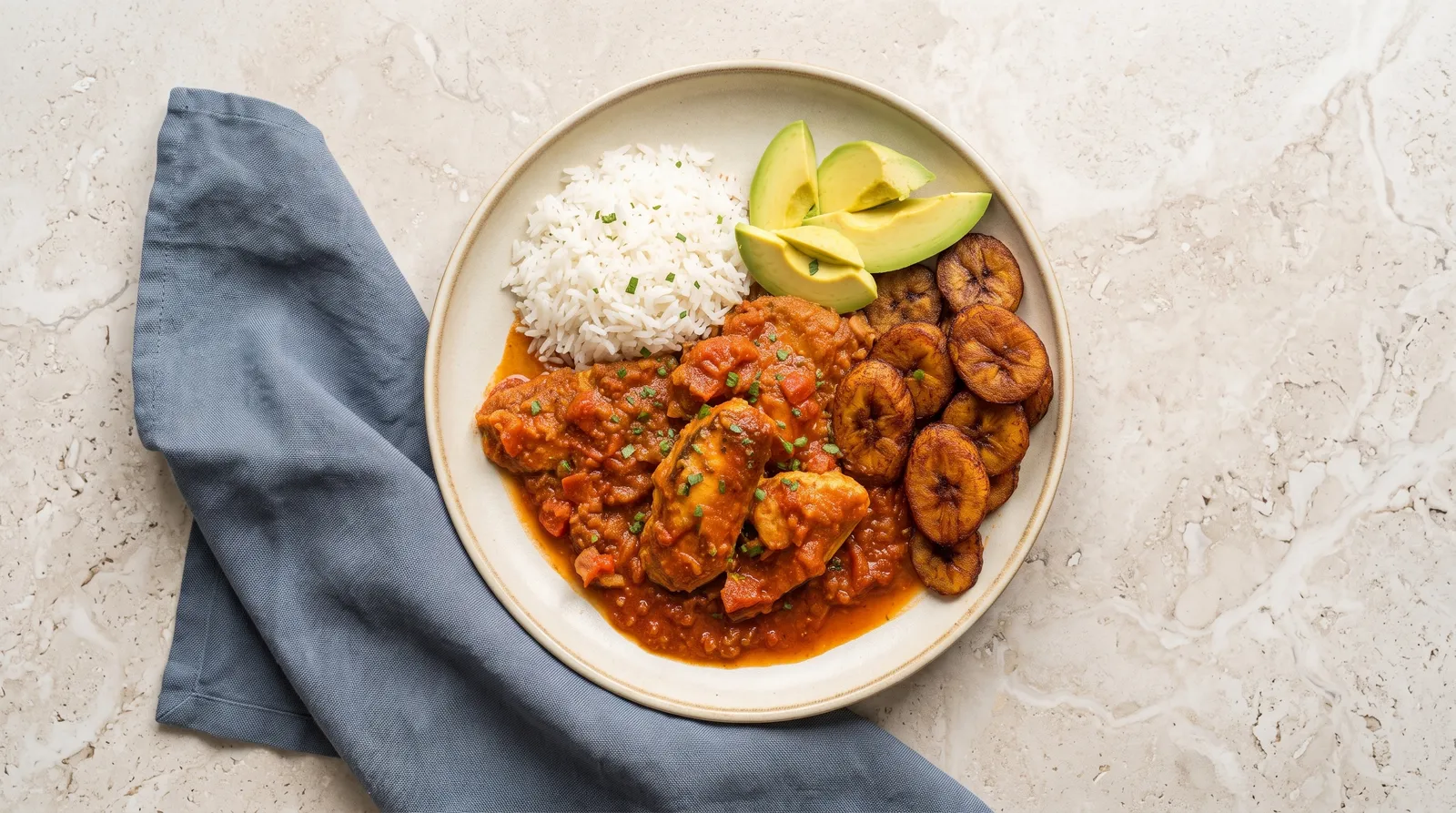
Pimentade de poisson — served on a plate
Prep 20 minutes
Cook 25 minutes
Total 75 minutes
Yield 4 main-course servings
Introduction

Pimentade de poisson — French Guianese fish in roucou-tomato sauce

French Guianese pimentade is a fish preparation built around a seasoned cooking liquid rather than a dry curry or a fried-fish sauce. Tomato, onion, cive, lime and chilli form the aromatic base, while roucou gives the sauce its distinctive red-orange colour. The fish remains in recognisable steaks and cooks in that liquid just long enough to take on the seasoning without falling apart.

Fish species vary with local catch and household preference, so the practical choice here is traceable sea bream cut into thick bone-in steaks by a fishmonger. That keeps the texture appropriate while avoiding any instruction for wild catching or primary fish processing. The purchased weight is 900 g; nutrition uses an estimated 720 g edible cooked flesh after the central bones are discarded.

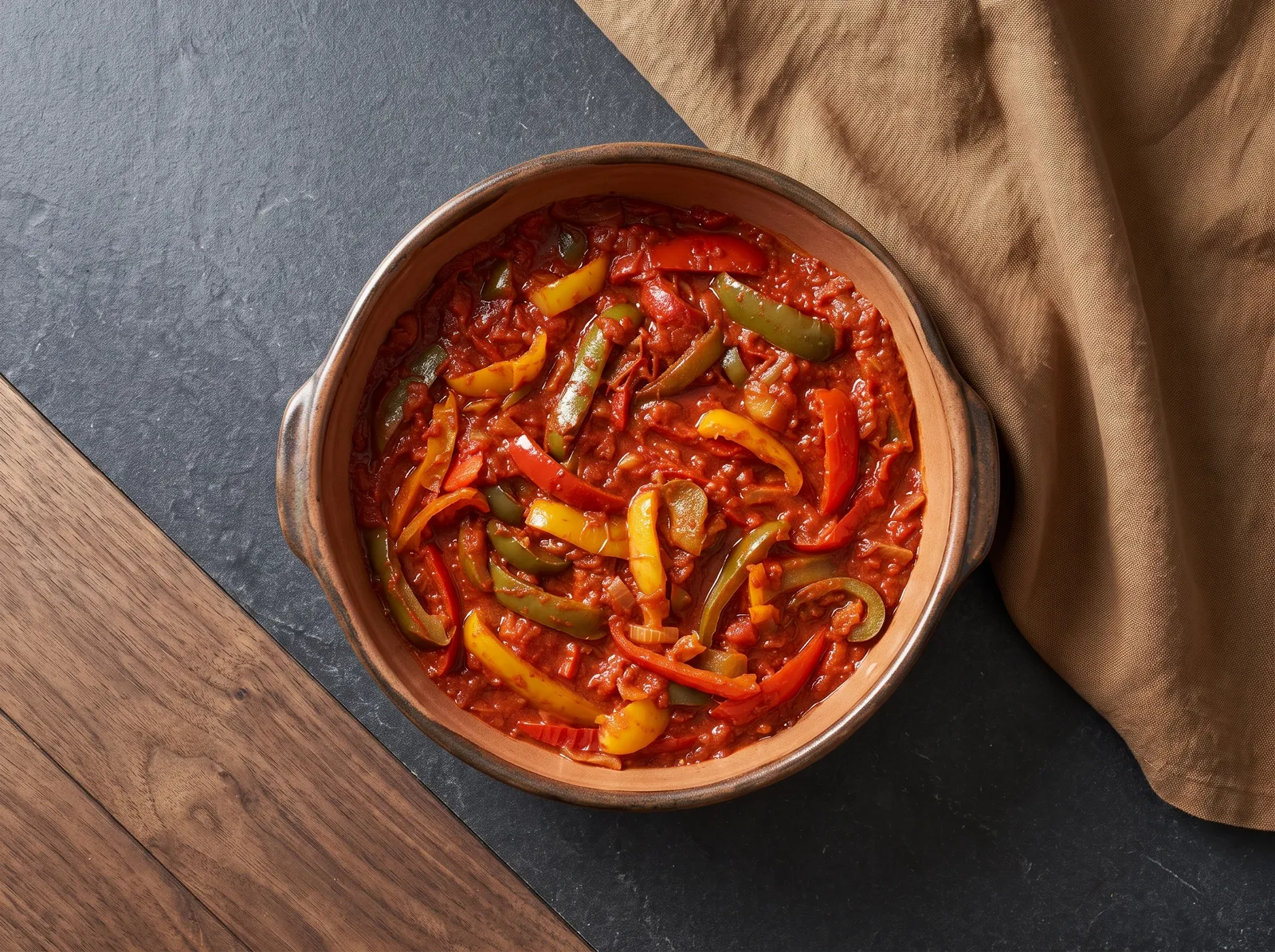
A thirty-minute refrigerated lime-and-garlic marinade seasons the fish without turning the exterior chalky. Roucou oil then carries colour through softened onion and cive before diced tomato cooks down to a sauce that still shows some pieces. The marinade joins the pan with a measured amount of water, so acidity and seasoning are not thrown away.

The final twelve-minute poach stays at a gentle simmer. The steaks are moved as little as possible and checked beside the bone for 63 °C. The correct finish is moist fish that flakes in sections, not flakes scattered through the sauce; the sauce should cling lightly rather than resemble a thin soup.
Success points

Success points

  • Use only professionally prepared fish steaks and keep them cold until the pan is ready.
  • Do not scorch roucou oil; moderate heat preserves colour without bitterness.
  • Keep the sauce at a quiet simmer and confirm 63 °C beside the bone before serving.
Ingredients

Ingredients

Fish and marinade

  • 900 g commercially cleaned sea-bream steaks — bone-in, skin-on, cut into 4 thick steaks; purchased culinary weight; Expected edible cooked fish yield about 720 g after central bones are discarded.
  • 60 ml fresh lime juice
  • 10 g garlic — finely grated for marinade
  • 3 g fine salt — for marinade
  • 1 g black pepper

Roucou tomato sauce

  • 30 ml roucou-infused oil — food-grade annatto/roucou oil
  • 180 g onion — thinly sliced
  • 40 g cive or spring onion — thinly sliced
  • 10 g garlic — finely chopped
  • 400 g ripe tomatoes — diced
  • 250 ml water
  • 10 g fresh mild chilli — split lengthwise; seeds removed for controlled heat
  • 2 g thyme
  • 15 g flat-leaf parsley — chopped
  • 3 g fine salt — for sauce
Method

Method

Marinate the fish

  1. Season the fish under refrigeration. Place the four commercially cleaned fish steaks in a shallow non-reactive dish with 60 ml lime juice, 10 g grated garlic, 3 g salt and pepper. Turn once, cover and refrigerate for 30 minutes. The fish surfaces are evenly coated with lime and garlic but remain firm rather than chalky. A short cold marinade seasons the thick steaks without curing their exterior excessively. Marinate only under refrigeration and keep the dish separate from ready-to-eat food.

Build the roucou sauce

  1. Soften aromatics in roucou oil. Heat 30 ml roucou oil in a wide 30 cm sauté pan. Add onion, cive and the remaining 10 g garlic and soften for 5 minutes without browning. The onion is translucent and the roucou oil is evenly distributed without smelling scorched. Gentle heat protects roucou from bitterness while carrying its colour through the sauce. Roucou oil stains; avoid splashing hot oil onto skin or porous surfaces.

  2. Concentrate the tomato. Add tomatoes, thyme and 3 g salt. Cook for 8 minutes, pressing only some of the tomato so the sauce thickens while retaining visible pieces. The tomatoes have softened into a spoon-coating base with some pieces still identifiable. Partial breakdown gives body without turning the sauce into a smooth purée. Keep the pan handle turned inward and control hot tomato splashes.

Poach the fish gently

  1. Poach the steaks quietly. Pour the fish marinade and 250 ml water into the pan, add the split mild chilli and bring to a gentle simmer. Lay the fish steaks in one layer, cover and cook for 12 minutes, turning once only if necessary. Check the thickest fish flesh beside the central bone for 63 °C. The sauce lightly coats the fish, the flesh flakes in moist sections and each steak reaches 63 °C without disintegrating. A quiet simmer cooks the fish through while preserving the steak shape. Use a thermometer beside, not against, the bone; handle the hot chilli and fish gently and beware of bones.

Finish the sauce

  1. Finish without breaking the fish. Remove the chilli if enough heat has infused, scatter over the parsley and spoon sauce over each steak before serving. The sauce is glossy, tomato pieces remain visible and the fish steaks lift from the pan in whole portions. Finishing off vigorous heat limits further flaking. Warn diners that bone-in steaks can contain small bones.

Serving, storage and make-ahead

Practical

Serving

Spoon sauce over one steak per person. Rice, couac, tubers or plantain can accompany the dish but are intentionally excluded from the nutrition values.

Make-ahead

Chop sauce vegetables in advance, but keep the fish marinade to the stated 30 minutes under refrigeration.

Storage and reheating

Chill within 2 hours and use within 2 days. Reheat gently so the sauce becomes hot without breaking the fish into fragments.

Fish choice

Traceable red drum/acoupa or another firm fish can replace sea bream when supplied ready for cooking. Match the edible weight and retain the 63 °C endpoint.

Is pimentade the same as blaff?

No. Both belong to a wider Caribbean and Guianese family of seasoned fish preparations, but the tomato-and-roucou profile here keeps the Guyanese pimentade identity distinct.

Why keep the steaks bone-in?

Thick steaks hold together well in the sauce and reflect a common presentation, but they require careful eating and an explicit bone warning.

Nutrition per serving

Nutrition per serving

  • Serving sizeabout 180 g edible cooked fish + about 180 g sauce
  • Calories335 kcal
  • Carbohydrate15 g
  • Protein39 g
  • Fat14 g
  • Fibre4 g
  • Sodium670 mg
Allergens and food safety

Allergens and food safety

Allergens: Fish. - Use traceable, commercially cleaned sea fish; no wild-catching or home primary-processing instructions are part of this preparation. - Marinate fish under refrigeration and keep raw-fish utensils separate from ready-to-eat foods. - Cook the thickest flesh beside the bone to 63 °C. - Handle chilli carefully and wash hands after touching cut surfaces. - Bone-in fish steaks may contain small bones; warn diners and eat carefully. - Refrigerate leftovers within 2 hours.

Use traceable, commercially cleaned sea fish; no wild-catching or home primary-processing instructions are part of this preparation.

Marinate fish under refrigeration and keep raw-fish utensils separate from ready-to-eat foods.

Cook the thickest flesh beside the bone to 63 °C.

Handle chilli carefully and wash hands after touching cut surfaces.

Bone-in fish steaks may contain small bones; warn diners and eat carefully.

Refrigerate leftovers within 2 hours.

Closing

Closing

  • Result: moist fish steaks in a bright roucou-tomato sauce with lime freshness and controlled chilli heat.
  • Decisive technique: poach gently, move the fish minimally and stop when the thickest flesh reaches 63 °C.