French Recipes

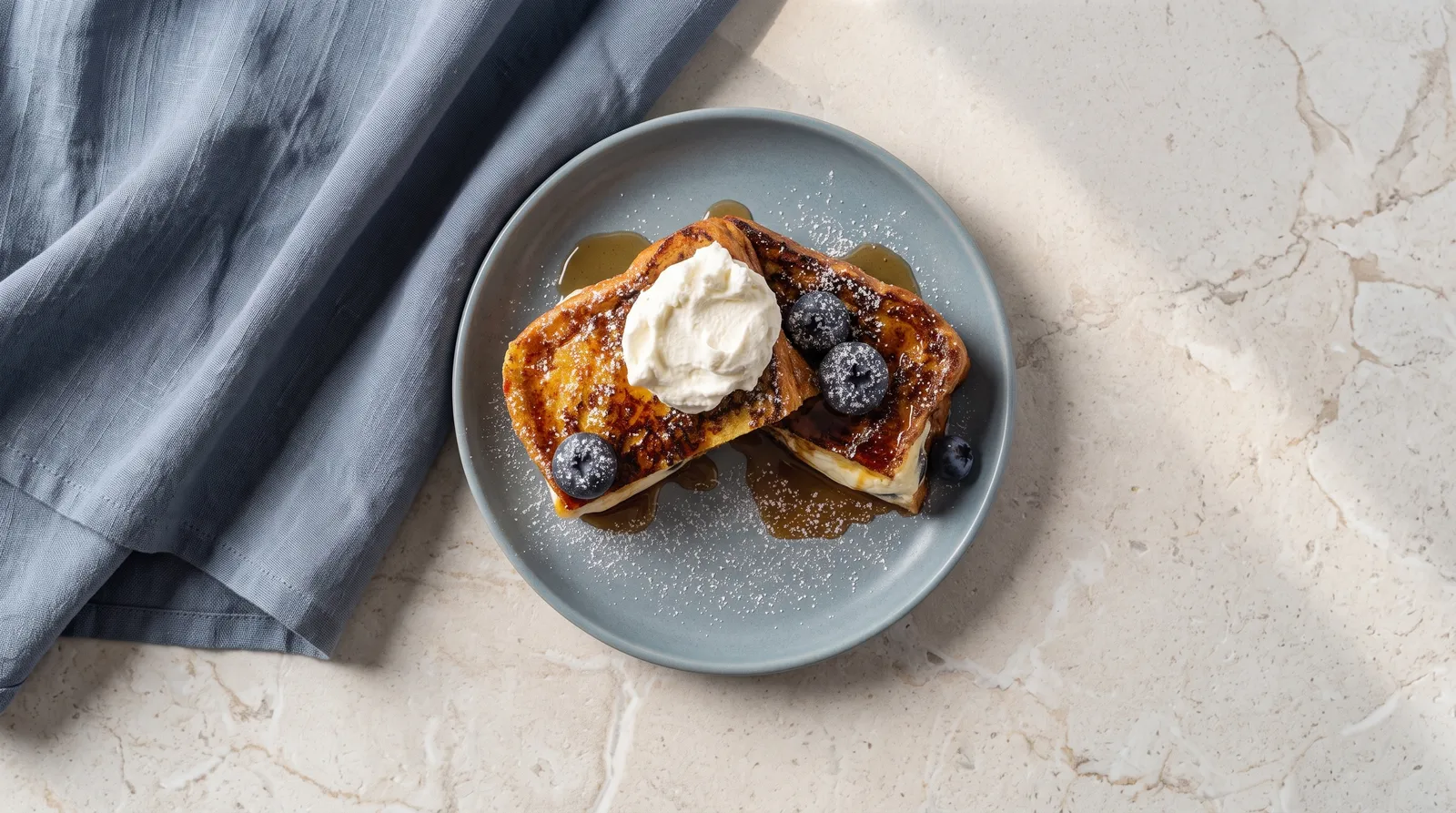
Pain perdu

Stale country bread is briefly soaked in a sweet milk-and-egg custard, then pan-cooked in measured butter until caramelized outside and fully cooked through.

French Recipes
Share
Pain perdu — served on a plate
Prep 12 minutes
Cook 12 minutes
Total 26 minutes
Yield 8 slices, 4 servings
Introduction and overview

French pain perdu with stale bread, milk, egg and butter

Pain perdu turns stale bread into a simple French pan-cooked dish rather than a casserole. The bread is cut into individual slices, soaked briefly in a milk-and-egg custard and browned in butter. The result should have a caramelized exterior and a tender centre that still feels like bread, not a wet pudding.

Bread condition matters. Eight stale slices, each about 2 cm thick and 40 g, are dry enough to absorb custard but sturdy enough to survive turning. The soak is intentionally short: two minutes is enough for this bread to take up flavour without collapsing. The custard stays chilled until cooking, and any mixture left after contact with raw egg and bread is discarded rather than saved.

The slices cook in two batches so the pan is not crowded and the 40 g butter can be divided evenly. Medium heat gives the surface time to brown while the egg-rich centre cooks to 71 °C. That temperature is the safety criterion; a golden outside does not prove the centre is fully cooked. Serve two slices per person straight from the pan. Fruit, ice cream or syrup can be offered separately, but they are not included in the base nutrition.

Success points

Success points

  • Use stale 2 cm slices that are firm enough to lift after soaking.
  • Keep the raw custard chilled until cooking and discard what remains after raw contact.
  • Cook in two batches with 20 g butter per batch for consistent browning.
  • Check the thickest slice for a 71 °C centre rather than relying on surface colour.
Ingredients

Ingredients

  • 320 g stale country bread, cut into eight 40 g slices about 2 cm thick
  • 300 ml cold whole milk
  • 3 l arge shell eggs, about 150 g edible egg in total
  • 60 g granulated sugar
  • 40 g salted butter, divided into 20 g for each pan batch
Method

Method

Directions

  1. Whisk the custard. Combine the milk, eggs and sugar in a shallow dish and whisk for about 5 minutes including measuring. The custard is smooth with no streaks of separate egg white or yolk. Keep it chilled until the pan is ready and do not taste it raw.

  2. Prepare eight even slices. Cut or arrange the stale bread into eight slices about 2 cm thick and 40 g each, allowing about 5 minutes. Eight even 2 cm slices are ready and firm enough to soak without collapsing.

  3. Soak briefly. Dip the bread in the chilled custard and turn it so both faces absorb liquid, for about 2 minutes total. The slices are saturated at the surface and centre but still lift in one piece. Discard any custard left after raw egg and bread contact.

  4. Cook in two batches. Melt 20 g butter in a large frying pan over medium heat, cook four slices, then repeat with the remaining 20 g butter and four slices. Allow about 6 minutes per batch, 12 minutes total. Both sides are caramelized and the egg-rich centre of every slice reaches 71 °C with no liquid custard remaining. Check the thickest slice with a food thermometer.

  5. Serve immediately. Transfer the eight cooked slices to warm plates as four portions of two, taking about 2 minutes. Each serving contains two hot slices with a browned exterior and fully cooked centre.

Serving and make-ahead

Practical

Serving and make-ahead

Serve pain perdu hot, two slices per person. Its best contrast is immediate: caramelized butter-and-sugar notes outside with a tender custard-soaked centre. Slice the stale bread ahead if useful, but prepare the egg custard close to cooking time and keep it chilled.

Storage and reheating

Refrigerate cooked leftovers within two hours. Reheat only until hot throughout; extended heating makes the bread tough. Raw-contact custard is not a make-ahead leftover and should be discarded after the soaking step.

Substitutions

Brioche can be used if a richer, sweeter result is acceptable, but it changes both texture and nutrition. Unsalted butter can replace salted butter if seasoning is adjusted, while the total butter quantity remains 40 g. Optional fruit, ice cream or syrup are separate additions and are not included in the nutrition below.

Troubleshooting

Troubleshooting

  • Slices break during turningThe bread is too fresh or soaked too long. Use firmer stale bread and shorten the contact time.
  • Outside browns before the centre is safeThe heat is too high. Reduce to medium and allow the centre to reach 71 °C without burning the surface.
Nutrition per serving

Nutrition per serving

  • Serving size2 cooked slices from a batch of 8
  • Calories441 kcal
  • Carbohydrate58.1 g
  • Protein14.4 g
  • Fat16.7 g
  • Fibre2.2 g
  • Sodium542 mg
Allergens and food safety

Allergens and food safety

Allergens: egg, milk and wheat/gluten. Keep the raw egg custard chilled and do not taste it uncooked. Discard custard left after it has contacted raw egg and bread. Cook the egg-rich centre of each slice to 71 °C; colour alone is not a safety test. Refrigerate cooked leftovers within two hours.

FAQ

FAQ

Is pain perdu the same as baked French-toast casserole?

No. This preparation uses separate soaked slices cooked in a frying pan, not bread baked together in a custard-filled dish.

How wet should the bread be before cooking?

The centre should absorb custard, but each slice should still lift as one piece. If it bends or tears before reaching the pan, the soak has gone too far for that bread.

Closing

Closing

  • Result: The finished slices are caramelized and buttery outside with a tender, fully cooked custard-soaked centre.
  • Decisive technique: Use stale, sturdy bread and medium heat long enough for the centre to reach 71 °C without burning the exterior.