Flan pâtissier — tall vanilla custard in a pâte brisée case
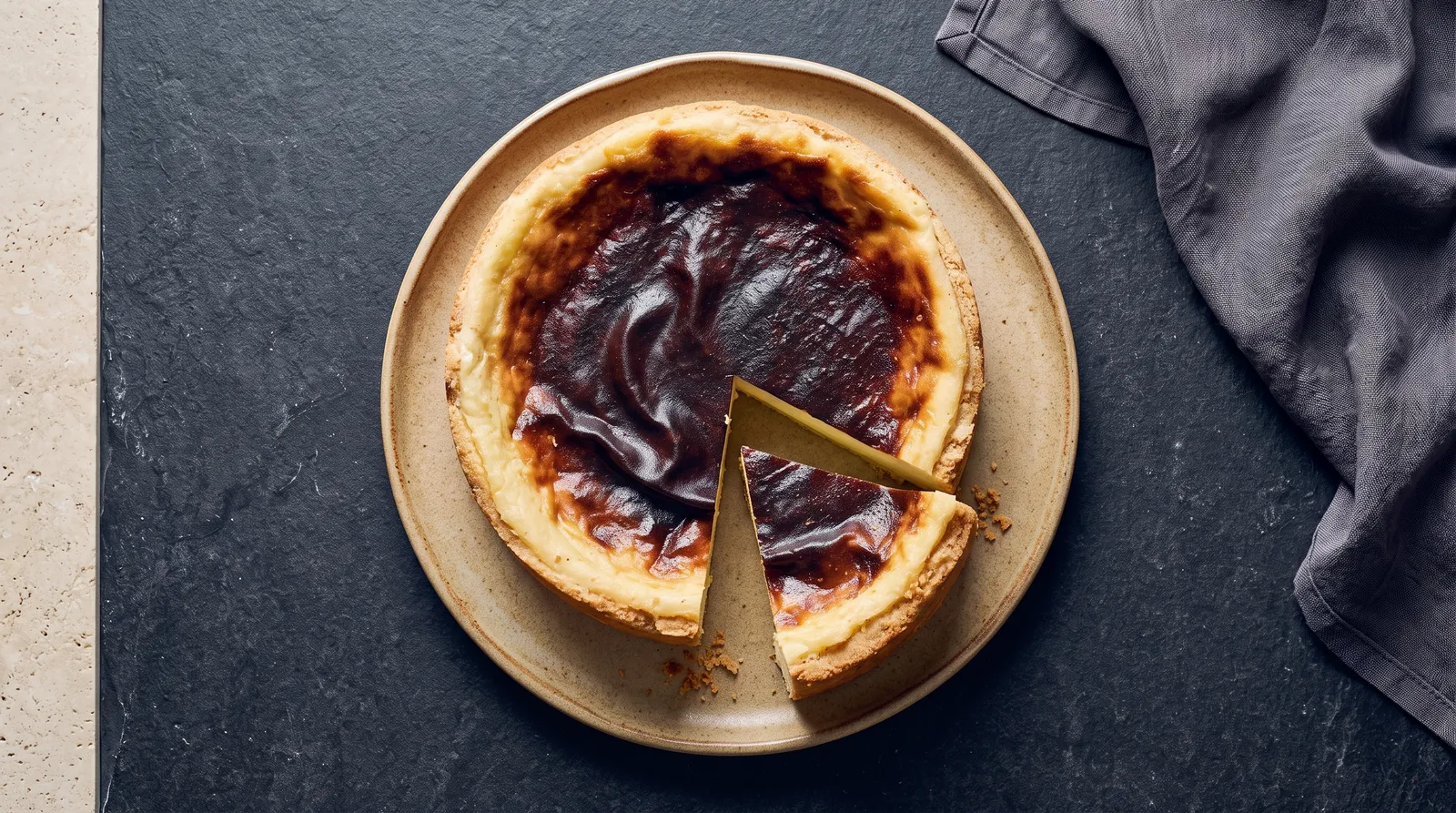
Flan pâtissier is a bakery custard defined by the meeting of two structures: a pastry case and a tall, starch-thickened egg custard. It is not crème caramel, which relies on caramel and no pastry, and it is not far breton, whose flour is dispersed through a baked batter. Here the shell is distinct, while the vanilla custard is cooked on the stove before it goes into the oven.
The 20 cm mould is deliberately at least 4.5 cm high. Roll the chilled all-butter pâte brisée to about 2.5 mm, line the sides cleanly and trim away excess dough; only the roughly 280 g that remains in the shell is counted as eaten. A 30-minute refrigerator rest firms the butter and gives the side wall more resistance when hot custard is added.
The custard is made with whole milk, cream, eggs, sugar and cornstarch. Heating the dairy with vanilla starts the flavour extraction, while whisking sugar and starch smoothly into the eggs prevents dry lumps. Once the mixtures are combined, return them to the saucepan and bring the custard to about 95 °C and a brief boil. It should look glossy and thick enough to leave whisk trails that close slowly.
Baking at 190 °C sets the filled flan and gives the top its characteristic dark spotting. The coldest centre must reach at least 71 °C and feel set without becoming dry. One hour of rack cooling is followed by four hours at 4 °C or below. That long chill is what turns a still-soft hot custard into the smooth, clean bakery-style slice expected from flan pâtissier.