French Recipes

Féroce d’avocat

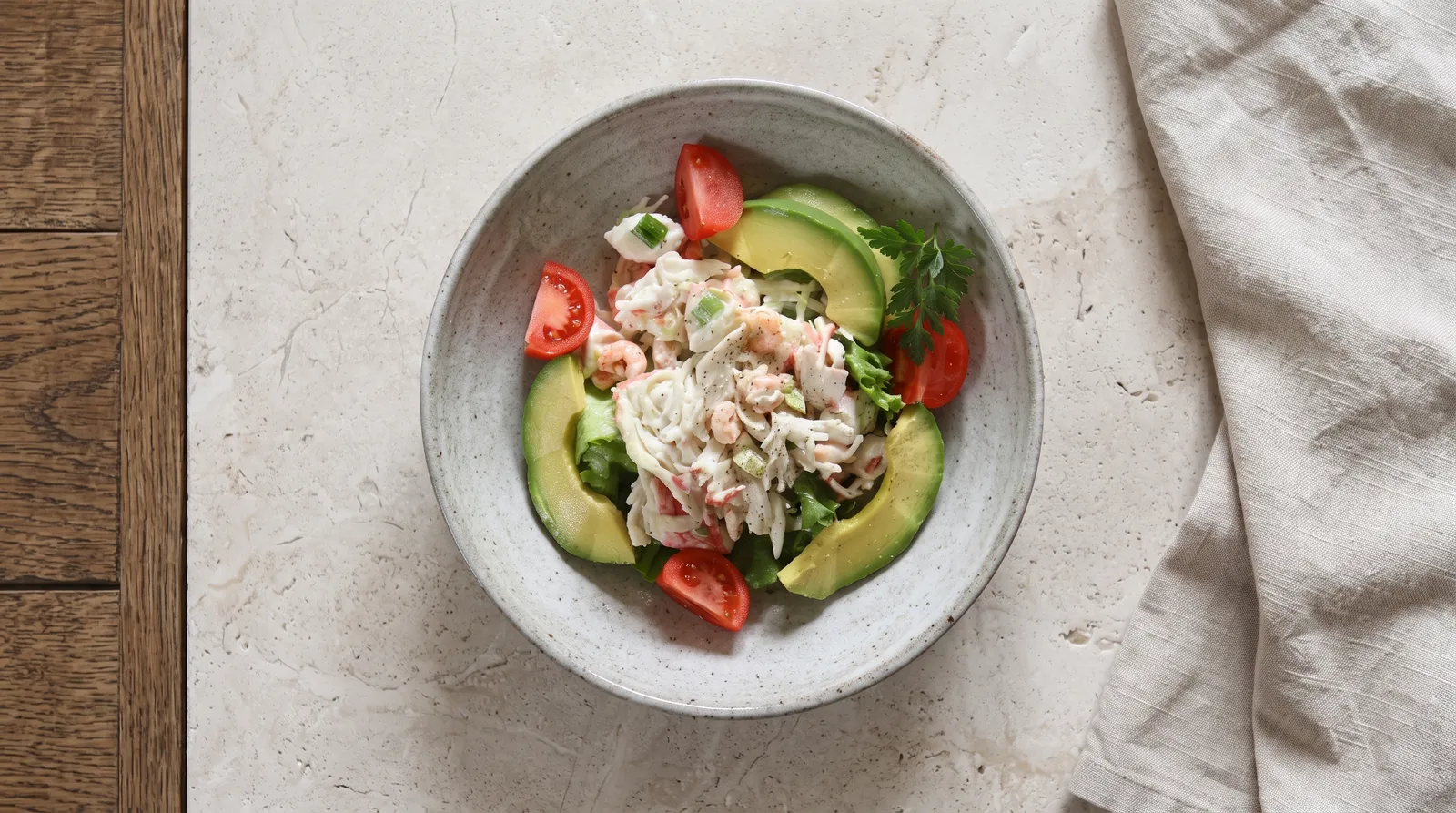
A chilled Martiniquais mixture of ripe avocado, safely desalted and cooked salt cod, roasted cassava flour and chile, shaped into twelve small balls.

French Recipes
Share
Féroce d’avocat — served on a plate
Prep 35 minutes
Cook 10 minutes
Total 1545 minutes
Yield 12 small balls; 6 servings of 2 balls
Overview

Féroce d’avocat — Martiniquais avocado, salt cod and cassava flour

Féroce d’avocat is a Martiniquais preparation whose identity depends on a combination that should not be reduced to “avocado dip with fish”. Ripe avocado supplies the soft base, salt cod contributes firm flakes and deep savoury character, and roasted cassava flour thickens the mixture in a way that is fundamental to the dish. Chile provides the heat suggested by the name, while lime keeps the avocado lively and balanced.

The longest part of the recipe is the cod preparation. Dry salt cod is soaked for a full 24 hours under refrigeration, with three measured 1,500 ml water baths. The water changes remove excess salt while the 4 °C-or-below temperature prevents the fish from sitting warm for an extended period. After desalting, the cod is cooked to at least 63 °C, drained, stripped of skin and bones, flaked and cooled promptly in a shallow tray.

Cassava safety deserves its own clarity. Use a commercially processed roasted cassava flour that is labelled ready to eat. Do not grind or use untreated raw cassava as a shortcut: some cassava varieties contain cyanogenic compounds that require proper processing. The flour here is a finished food ingredient, folded into the avocado and cold cod rather than cooked as a detoxification step in the recipe.

Once mixed, the féroce should be thick enough to scoop and shape. Twelve balls give six servings of two each. Because the preparation contains cooked fish and mashed avocado and receives no further heat, it stays refrigerated at 4 °C or below and is served within 24 hours. That short holding period also protects the fresh green flavour and texture.
Success points

Success points

  • Desalt only under refrigeration, changing all 1,500 ml water at each 8-hour interval.
  • Cook the cod before it enters the cold mixture and cool it completely in a shallow tray.
  • Add roasted ready-to-eat cassava flour gradually through the mixture so it binds without forming dry lumps.
  • Handle hot chile carefully and wash hands before touching eyes or face.
Ingredients

Ingredients

Salt cod preparation

  • 250 g dry salted cod, bone-in or skin-on purchased weight — After 24-hour desalting, cooking and skin/bone removal, target about 300 g drained edible flaked fish for the mixture.
  • 4500 ml potable water, for three 1,500 ml desalting baths — All water is discarded and excluded from nutrition.

Féroce mixture

  • 400 g ripe avocado flesh, weighed after skin and stone removal — All 400 g retained.
  • 120 g commercial roasted cassava flour labelled ready to eat — All retained; raw or untreated bitter cassava flour is not acceptable.
  • 40 ml fresh lime juice — All retained.
  • 10 g fresh hot chile, stemmed, finely minced — All retained; wear gloves if skin is sensitive.
  • 30 g neutral oil — All retained.
  • 2 g black pepper — All retained.
Method

Method

Directions

  1. First cold soak. Place the 250 g dry salt cod in a covered non-reactive container with 1,500 ml fresh water and refrigerate. Time: 8 hours soaking. Temperature: 4 °C or below. The cod is fully submerged and remains cold throughout the soak.

  2. Second cold soak. Drain and discard the first water, add a fresh 1,500 ml water and return the cod to the refrigerator. Time: 8 hours soaking. Temperature: 4 °C or below. The cod remains fully submerged in clean cold water.

  3. Third cold soak. Drain again, add the final 1,500 ml water and refrigerate for a final 8 hours. Time: 8 hours soaking. Temperature: 4 °C or below. The cod has completed 24 hours of cold desalting without warming above refrigerator temperature.

  4. Cook and flake the cod. Drain the cod, transfer it to a saucepan, cover with fresh unmeasured cooking water from the tap, bring just to a simmer and cook for 10 minutes. Drain, remove skin and bones and flake the edible fish. Time: 10 minutes. Temperature: 63 °C minimum internal fish temperature. Cooking after desalting provides a clear safety endpoint before the fish enters a cold dish. Check the thickest piece for at least 63 °C and discard skin and bones. The cod is opaque, flakes readily with a fork, and the thickest piece reaches at least 63 °C.

  5. Cool the flaked cod. Spread the flaked cod in a shallow clean tray and refrigerate for 60 minutes before mixing. Time: 60 minutes cooling and refrigeration. Temperature: 4 °C or below. Cooling before avocado mixing protects the cold chain and limits avocado softening. The flaked cod is fully cold to the touch with no residual steam.

  6. Mash the avocado. Mash the 400 g avocado flesh with the 40 ml lime juice and 30 g oil until mostly smooth with a little texture. Time: 5 minutes. The avocado is cohesive and creamy with small pieces still visible, not whipped into a loose sauce.

  7. Combine the féroce. Fold in about 300 g drained edible flaked cod, the 120 g ready-to-eat roasted cassava flour, chile and black pepper. Time: 8 minutes. The mixture is thick, cohesive and scoopable, with visible cod flakes and no dry pockets of cassava flour.

  8. Shape and chill for service. Divide into 12 equal balls, place on a clean covered tray and hold at 4 °C or below until served, no longer than 24 hours from mixing. Time: 5 minutes. Temperature: 4 °C or below. Twelve compact balls hold their shape without weeping liquid or cracking apart.

Practical guidance

Practical

Practical guidance

Serve directly from refrigeration, two balls per person. The mixture should be cohesive enough to hold shape but soft enough to eat with a fork.

Practical guidance

For make-ahead, complete the 24-hour desalting first, then cook and chill the fish. Mix with avocado as close to serving as practical.

Practical guidance

Store covered at 4 °C or below and use within 24 hours. Do not reheat the finished preparation.

Practical guidance

Only roasted, commercially processed cassava flour labelled ready to eat is suitable here. A pre-seasoned jar of cod chiquetaille would alter salt, acid, oil and chile levels and is not a silent one-for-one substitute.

Troubleshooting

Mixture is crumbly — the cassava flour was added too quickly or the avocado was unusually dry; fold thoroughly before considering any change.

Troubleshooting

Mixture is loose — the avocado was watery or the cod was not drained well; drain the fish thoroughly and keep the fixed cassava amount.

Troubleshooting

Too salty after desalting — a salt-cod product may start with very different salt levels; do not add any extra salt and choose a lower-salt batch next time rather than extending room-temperature soaking.

Nutrition per serving

Nutrition per serving

  • Serving size2 balls, 1/6 batch
  • Calories278 kcal
  • Carbohydrate24 g
  • Protein13 g
  • Fat15 g
  • Fibre5 g
  • Sodium357 mg
Allergens and food safety

Allergens and food safety

Allergens: Fish (cod)

Desalt the cod only at 4 °C or below and discard each soaking bath.

Cook the thickest cod piece to at least 63 °C until opaque and readily flaked, then cool promptly in a shallow tray before combining.

Use commercially processed cassava flour labelled ready to eat; untreated raw cassava can contain hazardous cyanogenic compounds.

Hold the finished féroce at 4 °C or below and serve within 24 hours.

FAQ

FAQ

Why are there three measured water changes?

They make the 24-hour cold desalting reproducible and keep the discarded liquid out of the nutrition calculation.

Can raw cassava be grated into the mixture?

No. This recipe requires a processed ready-to-eat cassava flour; untreated raw cassava is not an acceptable substitute.

Closing

Closing

  • Result: twelve chilled balls with creamy avocado, distinct flakes of cod and the dry, binding grain of roasted cassava flour.
  • Decisive technique: desalinate the cod under refrigeration, cook it to 63 °C, cool it fully, and use only ready-to-eat processed cassava flour.