French Recipes

Escalope normande

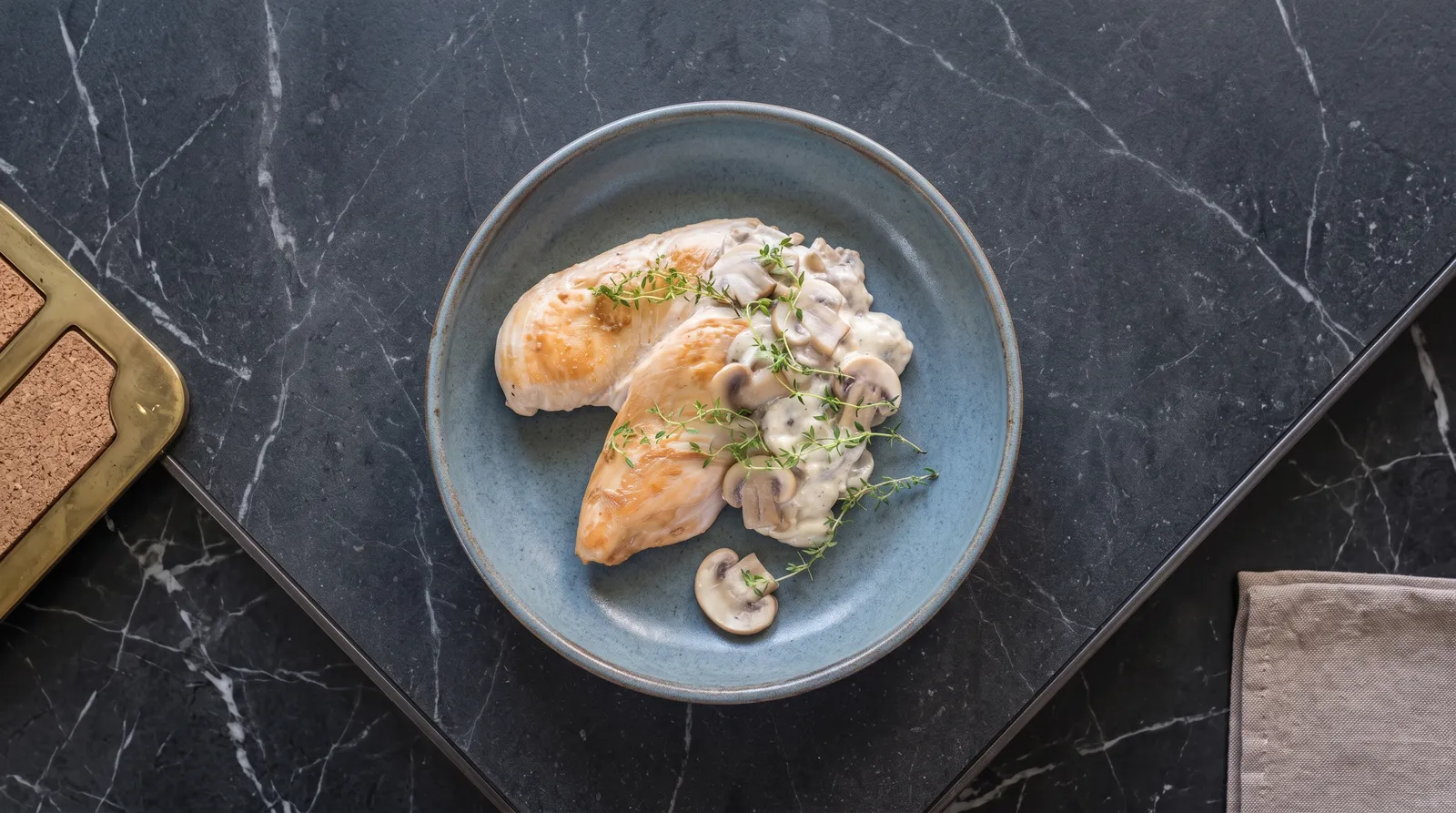
Thin veal escalopes are browned to 63 °C and rested for three minutes, then paired with mushrooms and a reduced cider-Calvados cream sauce finished gently so it stays smooth.

French Recipes
Share
Escalope normande — served on a plate
Prep 20 minutes
Cook 26 minutes
Total 49 minutes
Yield 4 veal escalopes with about 75 ml sauce each
Introduction and overview

Escalope normande: veal with mushrooms, cider, Calvados and cream

Escalope normande is defined here as veal with a sauce that tastes unmistakably of Normandy: mushrooms, dry cider, a measured amount of Calvados and crème fraîche. It is not breaded, so it remains clearly separate from cordon bleu. The veal is pounded to an even 8–10 mm, which lets it brown quickly before the sauce is built in the same skillet.

Mushroom water is the first thing the sauce must manage. The slices are cooked until their released liquid has almost disappeared and they begin to brown. Calvados is then added with the pan off the heat, specifically without flambéing, before the pan returns to medium heat for a short reduction. Cider follows and is reduced by roughly half. This sequence concentrates the apple notes while avoiding a watery cream sauce.

Crème fraîche goes in only after the alcoholic liquids have reduced. Low heat brings the sauce to about 85 °C and a final volume near 300 ml without a hard boil. The target is glossy and spoon-coating, not separated into fat and watery liquid. The veal itself must reach 63 °C at the thickest point and then rest for a full three minutes. Alcohol may remain in the final sauce despite the uncovered reduction.
Success points

Success points

  • Keep the escalopes at an even thickness; a thick end and thin end cannot reach the same doneness together.
  • Cook away mushroom water before deglazing so cider and cream do not become diluted.
  • Take the pan off the heat before pouring Calvados and never pour spirit from a bottle over an open flame.
Ingredients

Ingredients

Veal

  • 600 g veal escalopes, 4 trimmed escalopes, about 150 g each, pounded to an even 8–10 mm
  • 4 g fine salt
  • 1 g black pepper, ground
  • 40 g unsalted butter, 35 g assumed consumed; about 5 g remains in the pan

Norman sauce

  • 300 g button mushrooms, sliced
  • 80 g shallots, finely chopped
  • 200 ml dry Norman cider, contains sulphites
  • 40 ml Calvados
  • 200 ml crème fraîche, about 30% fat
  • 10 g flat-leaf parsley, chopped
Method

Method

Veal

  1. Brown the veal and reach 63 °C. Pat the evenly pounded escalopes dry, season with the 4 g salt and pepper, melt half the butter in a wide skillet and cook the veal, turning once, until the centre of each reaches at least 63 °C. Use Wide skillet, tongs and food thermometer. Work at medium-high heat. Allow 6 minutes. Target 63 °C. Each escalope is browned on both sides and its thickest centre reaches at least 63 °C. Thin even escalopes brown quickly while the thermometer guards against undercooking. Measure in the thickest part without touching the pan; colour alone is not a safety test.

  2. Rest the veal for three minutes. Move the veal to a clean warm plate and rest it while beginning the sauce. Use Clean warm plate. Work under room temperature conditions. Allow 3 minutes resting. Target 63 °C. The veal has rested for a full 3 minutes after reaching at least 63 °C and remains warm and moist. The three-minute rest completes the intact-veal safety rule and lets juices settle. Do not shorten the 3-minute rest.

Mushroom cider cream sauce

  1. Brown the mushrooms and shallots. Add the remaining butter, mushrooms and shallots to the skillet and cook until the mushrooms first release their water and then begin to brown. Use Same skillet. Work at medium-high heat. Allow 6 minutes. The mushroom liquid has mostly evaporated, the slices are lightly browned and the shallots are soft. Driving off mushroom water prevents a diluted cream sauce. Use clean utensils that have not touched raw veal.

  2. Deglaze with Calvados without flambéing. Take the skillet off the heat, pour in the Calvados, return it to medium heat and simmer uncovered; do not ignite it. Use Same skillet. Work at medium heat. Allow 3 minutes. The harsh raw-spirit aroma has softened and only a thin Calvados glaze remains around the mushrooms. Off-heat addition controls flare risk; simmering reduces the spirit before cider is added. Keep the bottle away from the hot pan and any flame; alcohol remains after cooking.

  3. Reduce the cider. Pour in the cider and simmer uncovered until its volume is reduced by about half and the pan juices taste concentrated. Use Same skillet. Work at medium heat. Allow 8 minutes. Roughly 100 ml of cider reduction remains and it coats the mushrooms lightly instead of pooling like water. Reduction concentrates the apple character and gives the cream enough flavour without excessive liquid. Cider contains sulphites and the sauce may retain alcohol.

  4. Finish gently with cream. Lower the heat, stir in the crème fraîche and warm without a hard boil until the sauce reaches about 85 °C and a final volume near 300 ml; return the veal only long enough to coat it, then add parsley. Use Same skillet and food thermometer. Work at low heat. Allow 3 minutes. Target 85 °C. The sauce is smooth, glossy and lightly coats the back of a spoon at about 300 ml, with no oily split around the edges. Moderate finishing heat protects the dairy emulsion and keeps the veal from overcooking. Do not boil aggressively after adding cream; serve the veal promptly once coated.

Practical guidance

Practical

Serving

Serve one veal escalope with about 75 ml mushroom-cider cream sauce and parsley from the pan. This sauce is rich enough that a plain side is usually sufficient, but any side dish is outside the declared nutrition.

Storage, reheating and make-ahead

The completed dish is best fresh because repeated heating can toughen thin veal and split cream. If leftovers remain, cool promptly and refrigerate at 4 °C or below within two hours for up to two days. Warm over low heat only until hot, stirring the sauce gently and avoiding a hard boil. Mushrooms may be sliced and shallots chopped ahead, but the veal and cream sauce are best cooked shortly before serving. A finished cream sauce can split if repeatedly cooled and boiled.

Substitutions

- Chicken or pork escalope: Not identity-preserving. Those proteins require different safety endpoints and change the defined veal preparation; they are not automatic substitutes. - Omitting Calvados: Not identity-preserving. The cider-and-cream sauce still reads as Norman, but it loses the measured apple-brandy layer present here.

Troubleshooting

Troubleshooting

  • Watery Norman sauce.The mushrooms kept too much liquid or the cider was not reduced to the stated volume. Cook away the mushroom water first and reduce the cider by about half before adding the cream.
  • Greasy or split cream sauce.The crème fraîche mixture was boiled too hard after the dairy went in. Keep the finish on low heat, stop around 85 °C and serve when the sauce is smooth and lightly coats the spoon.
Nutrition per serving

Nutrition per serving

  • Serving size1 veal escalope with about 75 ml sauce
  • Calories515 kcal
  • Carbohydrate8 g
  • Protein36 g
  • Fat36 g
  • Fibre1 g
  • Sodium527 mg
Allergens and food safety

Allergens and food safety

Allergens: Milk, Sulphites

Cook intact veal escalopes to at least 63 °C in the thickest centre and rest them for a full 3 minutes.

Add Calvados off the heat and do not flambé; alcohol may remain after the 3-minute Calvados simmer and 8-minute cider reduction.

Keep crème fraîche refrigerated at 4 °C or below until use and refrigerate leftovers within 2 hours.

FAQ

FAQ

Do I have to flambé the Calvados?

No. This method adds it off heat and reduces it without ignition, retaining the ingredient while avoiding a deliberate flame operation.

Can chicken replace the veal?

That would require a different safety temperature and would change the defined veal escalope normande in this recipe.

Closing

Closing

  • Tender rested veal under a smooth mushroom sauce with concentrated cider, Calvados and cream.
  • Drive off mushroom water and reduce the alcohols before adding cream, then stop the sauce at a gentle spoon-coating consistency.