French Recipes

Diots au vin blanc

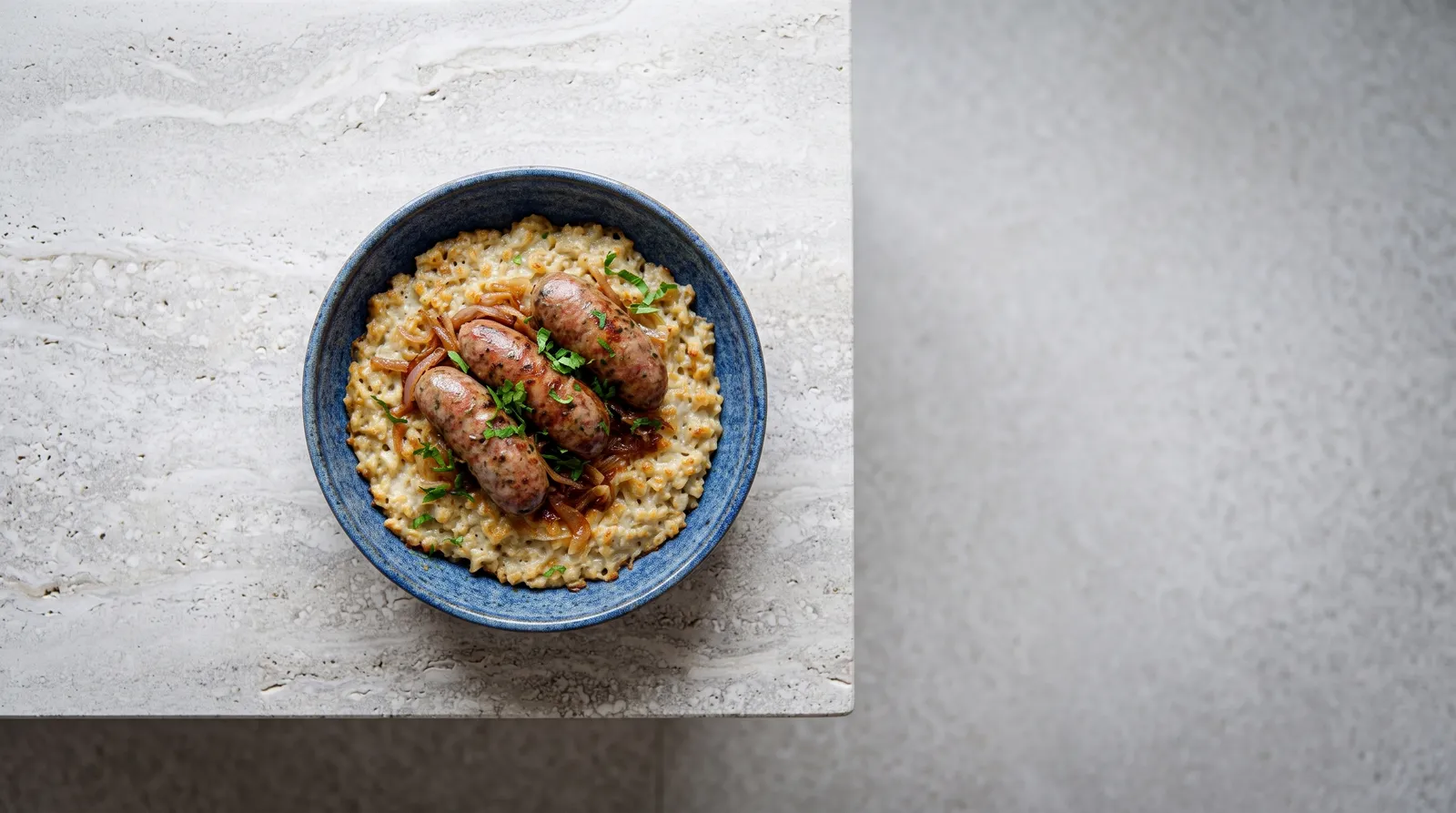
Raw Savoyard diots browned whole, simmered in white wine and onion to a 71 °C centre, then served with reduced sauce.

French Recipes
Share
Diots au vin blanc — shown in a pan
Prep 10 minutes
Cook 67 minutes
Total 77 minutes
Yield 8 diots with sauce, 4 portions
Introduction and overview

Diots au vin blanc: Savoyard sausages in white wine

Diots au vin blanc is a Savoyard preparation built around actual diots: plump pork sausages cooked with onion and dry white wine. This recipe assumes fresh raw diots, not a pre-cooked supermarket sausage. The natural casings stay intact throughout browning and simmering so the sausages retain their juices; piercing them is neither needed nor helpful before they are fully cooked.

Browning starts the flavour, but colour is not a safety test. After the onions soften and a small amount of flour coats them, 500 ml wine and 250 ml water form the simmering liquid. The pan is covered and kept at a gentle simmer for forty minutes, with a probe thermometer confirming at least 71 °C in the centre of the sausages.

Only then are the diots moved to a clean warm plate while the sauce reduces uncovered for ten minutes. That ordering prevents overcooking the sausage while still concentrating the onion-wine sauce. Some alcohol may remain after the roughly fifty minutes of hot wine cooking. Polenta is a natural supported accompaniment, but it remains outside the ingredient list and nutrition calculation.
Success points

Success points

  • Brown the diots. Casings are lightly browned and intact; sausages are not yet assumed cooked through.
  • Simmer to the safety endpoint. Sauce simmers gently, casings stay intact, and the centre of every tested sausage reaches at least 71 °C.
  • Reduce the sauce. Sauce is glossy, lightly thickened and clings to the diots without being pasty.
Ingredients

Ingredients

Diots and sauce

  • 8 diots raw pork sausages; 720 g net total, natural casings intact — Check package ingredients for label-dependent allergens; this execution treats them as raw pork sausage.
  • 300 g yellow onions, thinly sliced
  • 25 g unsalted butter — Used for browning; nutrition assumes it remains in the served sauce except negligible pan film.
  • 20 g plain wheat flour — Sauce thickener; declares wheat/gluten.
  • 500 ml dry Savoyard white wine — Alcohol may remain; sulphites expected on typical wine labels.
  • 250 ml water — Part of the simmering liquid; some evaporates during reduction.
  • 3 g fresh thyme
  • 2 g bay leaves, about 2 leaves — Remove before serving.
  • 1 g black pepper, freshly ground
Method

Method

Directions

  1. Prepare the onions and diots. Slice the onions; take the raw diots directly from 4 °C cold storage only when the pan is ready, and leave every casing intact. Allow 5 minutes. Temperature: 4 °C. Onions are evenly thin and sausages remain cold and unpierced. Wash hands and sanitise surfaces after handling raw sausages.

  2. Brown the diots. Melt the butter in a heavy sauté pan and brown the whole diots on several sides without piercing them. Use medium heat. Allow 8 minutes. Casings are lightly browned and intact; sausages are not yet assumed cooked through. Raw pork remains unsafe at this stage; do not judge safety by colour.

  3. Soften the onions. Remove the diots briefly, add the sliced onions to the same pan and cook until soft and translucent without deep browning. Use medium-low heat. Allow 8 minutes. Onions are soft, glossy and translucent. Keep the browned but undercooked diots on a clean plate away from ready-to-eat food.

  4. Cook the flour coating. Stir the 20 g flour into the onions and cook briefly until no dry flour remains. Use medium-low heat. Allow 1 minute. Flour forms a smooth coating on the onions with no dry pockets. Do not inhale loose flour dust.

  5. Simmer to the safety endpoint. Pour in the 500 ml white wine and 250 ml water, add thyme, bay and pepper, return the diots, bring to a gentle simmer, cover and cook until every sausage reaches at least 71 °C at its centre. Use low heat. Allow 40 minutes. Temperature: 71 °C. Sauce simmers gently, casings stay intact, and the centre of every tested sausage reaches at least 71 °C. Verify 71 °C with a thermometer; do not rely on sausage colour.

  6. Reduce the sauce. Transfer the cooked diots to a warm clean plate, discard bay leaves, then simmer the sauce uncovered until reduced enough to coat a spoon; return the sausages briefly to coat. Use medium heat. Allow 10 minutes. Sauce is glossy, lightly thickened and clings to the diots without being pasty. Alcohol may remain after the total wine cooking time.

Serving, storage and make-ahead

Practical

Serving, storage and make-ahead

Serve two diots per person with their onion-wine sauce. Polenta may be served alongside, but it is not part of the nutrition values shown here.

Serving, storage and make-ahead

Cooked diots and sauce can be cooled promptly and refrigerated at 4 °C or below for up to 2 days.

Serving, storage and make-ahead

Reheat in the sauce to at least 74 °C throughout. Keep the simmer gentle so the casings do not burst.

Serving, storage and make-ahead

A different raw pork sausage can follow the same safety method, but it is not identity-equivalent to Savoyard diots. A different dry white wine likewise changes the regional expression.

Nutrition per serving

Nutrition per serving

  • Serving size2 diots with one quarter of the sauce
  • Calories640 kcal
  • Carbohydrate15.2 g
  • Protein30.2 g
  • Fat49.3 g
  • Fibre1.4 g
  • Sodium1985 mg
Allergens and food safety

Allergens and food safety

Allergens: Sulphites from white wine, Wheat/gluten from flour, Check the diot label for celery, mustard, milk or additional wheat/gluten; these are product-dependent.

Treat the diots as raw pork sausage and cook every sausage to at least 71 °C in the centre.

Prevent cross-contamination from raw sausage and use a clean plate after cooking.

Refrigerate leftovers at 4 °C or below and reheat to at least 74 °C.

White wine may retain alcohol after cooking.

Closing

Closing

  • Result: Juicy whole diots with an onion-white-wine sauce reduced enough to coat the sausages.
  • Decisive technique: Do not pierce raw diots; verify 71 °C in the centre before reducing the sauce.