French Recipes

Chou farci limousin

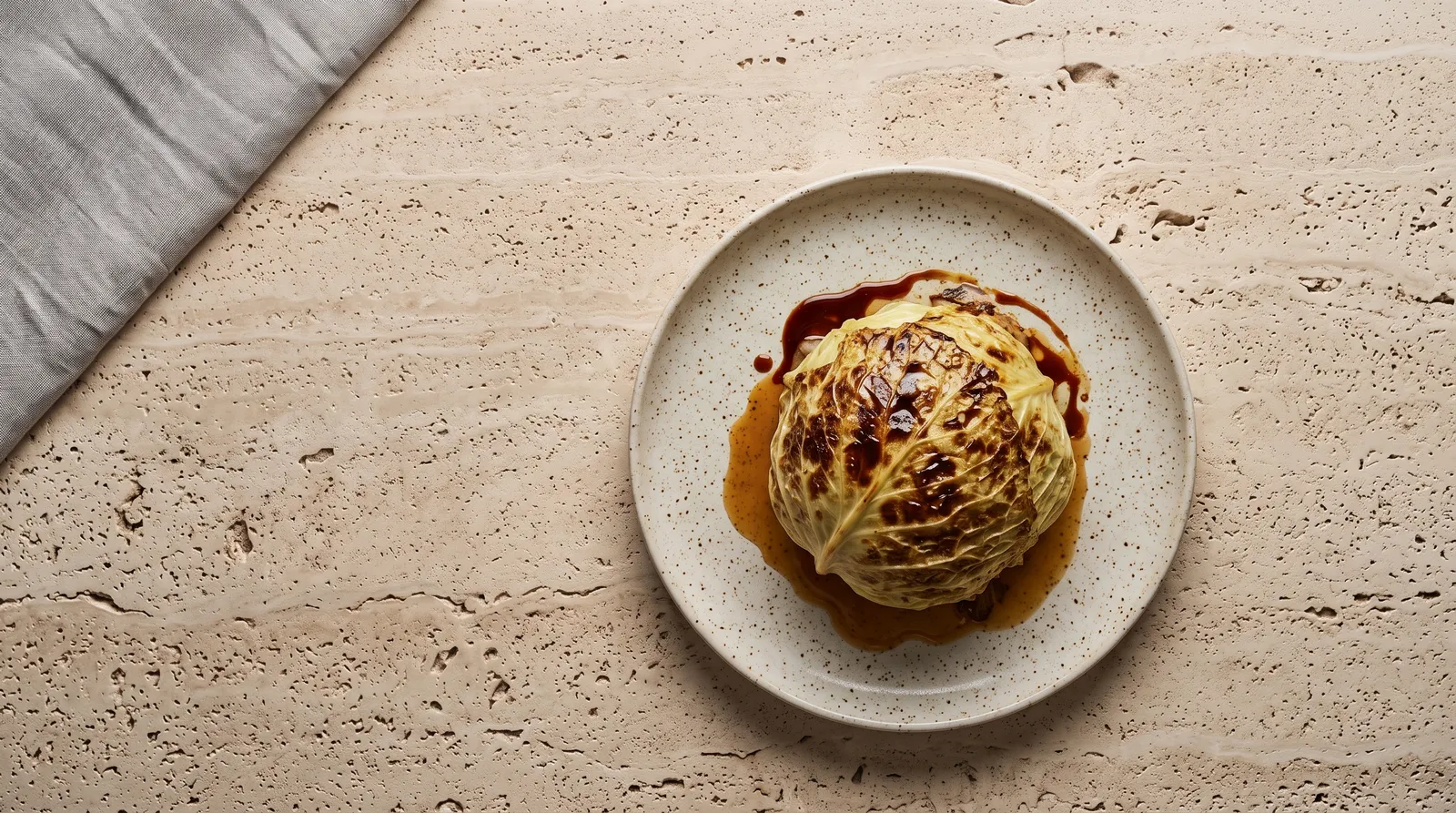
Eight Limousin-style cabbage parcels filled with semi-salted pork, softened vegetables and milk-soaked bread, slowly braised with white wine and pork liquor and served two per person with potatoes.

French Recipes
Share
Chou farci limousin — served on a plate
Prep 28 minutes
Cook 355 minutes
Total 536 minutes
Yield 8 stuffed-cabbage parcels plus potatoes, 4 portions
Introduction and overview

Chou farci limousin — cabbage parcels with petit-salé filling and potatoes

The Limousin preparation here is kept distinct from the Auvergnat chou farci. It takes its cue from a regional petit-salé preparation: semi-salted pork shoulder is first desalted in a measured cold soak, gently poached with bouquet garni and chopped into a soft vegetable-and-bread filling. Blanched cabbage leaves then become individual parcels rather than one reconstructed head.

Salt control starts before cooking. Semi-salted pork varies by producer, so the preparation uses a defined two-hour refrigerated soak without improvising repeated water changes. The pork is poached as a whole piece to 63 °C and rested before chopping. Carrot, onion and leek are softened in lard, white wine is reduced, and stale bread softened with milk provides the binder. Eight equal parcels keep portioning and braising consistent.

The parcels braise covered at 125 °C with a smaller second addition of wine and some reserved pork liquor until the cabbage is spoon-tender and the centres reach 74 °C. Plain boiled potatoes make a supported, practical accompaniment. Wine is cooked in both the filling and braise, but residual alcohol is not assumed to be zero; the nutrition arithmetic states the retention basis instead of claiming complete evaporation.
Success points

Success points

  • Desalt with a measured cold soak rather than untracked water changes.
  • Poach the whole pork gently before chopping.
  • Drain leaves well and make eight compact parcels.
  • Braise gently until both leaf tenderness and 74 °C centre temperature are achieved.
Ingredients

Ingredients

Petit-salé filling

  • 800 g semi-salted pork shoulder, boneless
  • 5000 ml cold water, 2500 ml for desalting soak and 2500 ml for poaching
  • 10 g bouquet garni
  • 150 g carrot, finely sliced
  • 150 g onion, finely sliced
  • 200 g leek, finely sliced
  • 100 g stale bread
  • 200 ml whole milk
  • 25 g lard
  • 150 ml dry white wine, for filling
  • 1 g black pepper

Cabbage and braise

  • 1200 g Savoy cabbage, large leaves separated; about 900 g edible after core and tough waste
  • 100 ml dry white wine, for braising liquid
  • 300 ml reserved pork poaching liquor, strained
  • 600 g potatoes, peeled, medium size
Method

Method

Desalt and cook pork

  1. Desalt the pork. Soak the 800 g semi-salted pork shoulder in 2500 ml of the listed cold water. Heat: cold water. Timing: 2 hours passive soaking. Purpose: A defined soak moderates semi-salted pork without improvising repeated water changes. The pork remains firm but its surface salinity has been reduced by the measured soak. Safety. Keep the pork refrigerated during desalting.

  2. Poach the pork. Drain the pork, transfer it to 2500 ml fresh listed water with bouquet garni and gently poach until the thickest part reaches 63 °C; reserve 300 ml strained liquor. Heat: gentle simmer. Timing: 120 minutes. Purpose: Gentle poaching cooks the semi-salted shoulder while producing a useful braising liquor. The pork is tender enough to chop and the thickest part has reached 63 °C. Safety. Rest the whole pork at least 3 minutes after reaching 63 °C.

  3. Rest the poached pork. Rest the whole poached pork before chopping. Heat: room temperature. Timing: 3 minutes passive rest. Purpose: The rest completes the conservative whole-pork safety control. The pork has rested for at least 3 minutes after reaching 63 °C. Safety. Keep total room-temperature handling brief.

  4. Cool the cooked pork. Spread the pork in a shallow dish until cool enough to chop safely. Heat: room temperature. Timing: 20 minutes passive cooling. Purpose: Cooling briefly makes chopping practical. The pork is cool enough to handle but has not been left at room temperature for more than 2 hours. Safety. Refrigerate if assembly is delayed.

Cabbage and filling

  1. Blanch the cabbage leaves. Blanch the separated cabbage leaves until flexible, then drain. Heat: boiling. Timing: 5 minutes. Purpose: Flexible leaves wrap the filling cleanly. The leaves fold without tearing while retaining enough structure to make parcels.

  2. Drain the leaves. Spread the leaves to cool and drain thoroughly. Heat: room temperature. Timing: 10 minutes passive cooling. Purpose: Dry leaves prevent diluted filling. The leaves are cool and no free water beads on their surfaces.

  3. Soften carrot, onion and leek. Melt the 25 g lard and cook carrot, onion and leek slowly until very tender. Heat: low. Timing: 15 minutes. Purpose: Slow cooking gives the farmhouse filling a soft aromatic base. The vegetables are soft and sweet-smelling with little browning.

  4. Reduce wine into the filling. Add the 150 ml white wine to the vegetables and reduce briefly, then add chopped pork and the bread soaked in 200 ml milk; simmer gently until the filling is cohesive and season with pepper. Heat: medium-low. Timing: 35 minutes. Purpose: Reduction controls moisture and leaves enough acidity to balance the pork. The filling is moist and cohesive, the vegetables are very soft and no pool of wine remains at the base of the pan.

Parcels and braise

  1. Form eight parcels. Divide the filling into eight equal portions, wrap each securely in cabbage leaves and arrange seam-side down in a baking dish. Timing: 20 minutes. Purpose: Individual parcels keep the Limousin form visibly distinct from the whole Auvergnat cabbage. Eight compact parcels sit snugly in one layer and no filling is exposed.

  2. Braise the parcels. Add 100 ml white wine and the 300 ml reserved pork liquor around the parcels; cover and bake at 125 °C until the parcel centres reach 74 °C. Heat: 125 °C oven. Timing: 160 minutes. Purpose: Slow braising tenderises the leaves and brings the mixed cooked filling safely back to serving temperature. The cabbage is spoon-tender and the centre of each tested parcel reaches 74 °C. Safety. Check 74 °C in the centre of a representative parcel.

  3. Boil the potatoes. During the final part of braising, boil the 600 g potatoes until tender. Heat: gentle boil. Timing: 20 minutes. Purpose: Plain potatoes suit the braising juices and keep the service traditional in character. A small knife slides through the potatoes without resistance, but they remain intact.

Serving

Practical

Serving

Serve two parcels per person with boiled potatoes and a little strained braising liquid.

Make-ahead

Poach the semi-salted pork and chill it one day ahead; assemble and braise the parcels on the day of service.

Storage and reheating

Cool leftover parcels promptly and refrigerate at 4 °C or below for up to 3 days. Reheat covered with a little braising liquid to 74 °C.

Fresh pork shoulder for semi-salted pork.

It removes the cured character that defines this chosen Limousin filling; it is therefore a different variant and requires separate seasoning rather than a silent swap.

The parcels open in the dish.

Cause: The leaves were too small or the seam was placed upward. Correction: Overlap two leaves where necessary and place the seam underneath.

The filling tastes excessively salty.

Cause: A very salty cured shoulder was not sufficiently desalted. Correction: Use the measured two-hour cold soak and choose semi-salted pork rather than fully cured dry-salted meat.

Technique in focus

Measured desalting, gentle pork poaching and eight tightly wrapped parcels are the elements that keep the Limousin identity and execution clear.

Nutrition per serving

Nutrition per serving

  • Serving size1 of 4 equal portions, 2 parcels plus potatoes
  • Calories890 kcal
  • Carbohydrate56 g
  • Protein52 g
  • Fat47 g
  • Fibre9 g
  • Sodium1800 mg
Allergens and food safety

Allergens and food safety

Allergens: Milk; Gluten; Sulphites from white wine.

Desalt the semi-salted pork under refrigeration.

Cook the whole pork to 63 °C and rest at least 3 minutes before chopping.

Reheated mixed parcels must reach 74 °C in the centre.

Keep stored portions at 4 °C or below.

White wine is cooked but the finished dish should not be described as alcohol-free.

FAQ

FAQ

Can fresh pork replace the semi-salted shoulder?

That makes a different filling. The cured character is part of this Limousin preparation and should not disappear through a silent substitution.

Why is the final parcel temperature 74 °C if the pork was already cooked?

The chopped cooked pork is mixed with other ingredients and then handled during assembly, so the finished parcel is reheated conservatively throughout.

Closing

Closing

  • Result: Eight Limousin-style cabbage parcels filled with semi-salted pork, softened vegetables and milk-soaked bread, slowly braised with white wine and pork liquor and served two per person with potatoes.
  • Decisive technique: Measured desalting, gentle pork poaching and eight tightly wrapped parcels are the elements that keep the Limousin identity and execution clear.