French Recipes

Cari bichiques

A carefully handled Réunionnais cari in which legally purchased bichiques are folded into a reduced onion, tomato, garlic, ginger, thyme and turmeric base, then cooked only until tender and safe.

French Recipes
Share
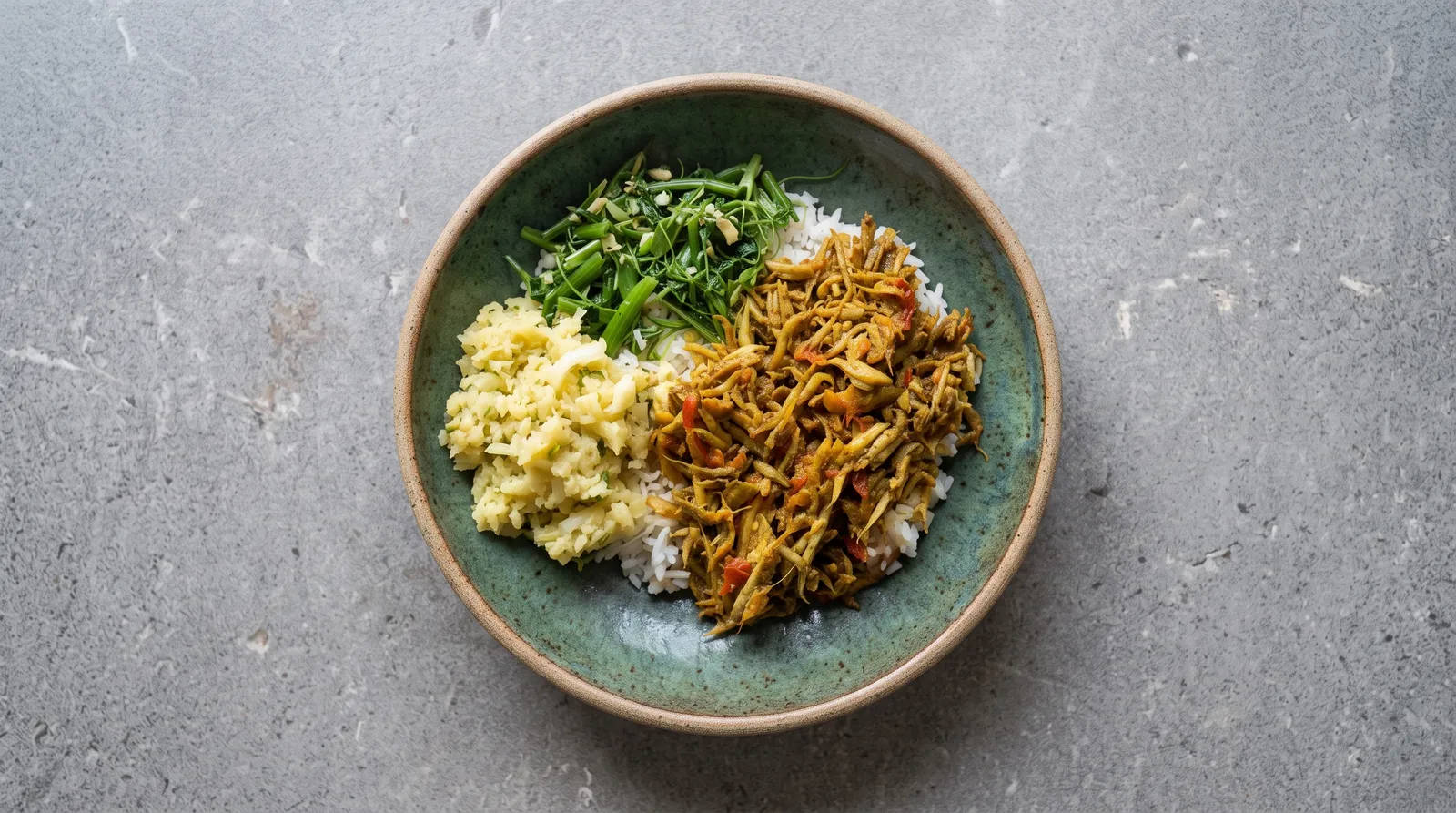
Cari bichiques — served on a plate
Prep 20 minutes
Cook 25 minutes
Total 48 minutes
Yield 4 main-course portions
Introduction and overview

Cari bichiques — Réunionnais bichique curry with a short tomato sauce

Cari bichiques belongs unmistakably to Réunion’s cari tradition, but its defining ingredient makes it far less casual than an everyday chicken cari. Bichiques are tiny juvenile goby fry whose harvest is regulated because of pressure on the resource. For a home cook, the responsible starting point is therefore not a fishing technique but a legal, traceable commercial purchase. If bichiques cannot be obtained through a lawful supply chain, another fish may make a good cari, but it should not be presented under this name.

The flavour structure is deliberately restrained: onion, garlic, ginger, thyme and turmeric support ripe tomato, while the fish remain the centre of the dish. The tomato is cooked down before the bichiques enter the pan so the fish do not have to endure a long simmer. Once they are added, low heat and minimal folding are essential. The ideal finish is moist enough to spoon over rice but short enough that the sauce clings to the fish instead of forming a broth.

Texture is the main execution test. Bichiques can turn from distinct tender fish into a broken paste if they are scrubbed during cleaning or stirred repeatedly in the pan. Gentle rinsing, thorough draining and a brief final cook protect them. Food safety still requires a measured cooked endpoint of 63 °C, and leftovers need rapid chilling and a 74 °C reheat, even though repeated reheating is not ideal for such a delicate ingredient.
Success points

Success points

  • Buy only bichiques that are legally marketed and traceable.
  • Drain rather than squeeze after rinsing.
  • Reduce the tomato before adding the fish.
  • Stir as little as possible once the bichiques enter the pan.
Ingredients

Ingredients

Cari

  • 500 g legally purchased traceable bichiques, gently rinsed and well drained; No wild harvesting instructions; no substitute preserves this dish identity.
  • 220 g onion, finely sliced
  • 18 g garlic, crushed
  • 20 g fresh ginger, crushed
  • 350 g ripe tomatoes, diced
  • 25 g neutral oil
  • 3 g ground turmeric
  • 4 g fresh thyme leaves
  • 3 g fine salt
  • 1 g black pepper, freshly ground
Method

Method

Preparation

  1. Rinse and drain. Rinse the 500 g bichiques very gently in three changes of cold potable water, then drain without pressing or rubbing the fish. Heat: cold water. Timing: 8 minutes. Purpose: The fragile juvenile fish are easily damaged by rough washing. The bichiques are free of visible grit and remain intact rather than mashed. Safety. Keep the fish cold and return them to refrigeration if cooking is delayed.

Cari base

  1. Soften the onion. Heat the oil and cook the 220 g onion gently, stirring, without browning. Heat: medium-low. Timing: 5 minutes. Purpose: A soft onion base keeps the sauce rounded rather than bitter. The onion is soft and translucent with no dark edges.

  2. Build the aromatics. Add the garlic, ginger, turmeric, thyme and black pepper and stir until fragrant. Heat: medium-low. Timing: 2 minutes. Purpose: Brief cooking opens the aromatics without scorching garlic or turmeric. The aromatics smell fragrant and the turmeric is evenly dispersed.

  3. Reduce the tomato. Add the 350 g tomatoes and 3 g salt; simmer uncovered until the tomato breaks down into a short, spoon-coating base. Heat: medium-low. Timing: 10 minutes. Purpose: A short sauce protects the delicate fish from prolonged stirring. The tomato has collapsed and little free water remains around the spoon.

Finish

  1. Cook the bichiques gently. Fold in the drained bichiques and cook with minimal stirring until the fish reach 63 °C in representative portions. Heat: low. Timing: 8 minutes. Purpose: Gentle heat prevents the tiny fish from breaking into a paste. The bichiques are opaque and tender, and the sauce is moist but not watery. Safety. Verify 63 °C with a clean food thermometer where practical; do not rely on appearance alone.

  2. Settle the sauce. Rest the cari off the heat without stirring before serving. Timing: 3 minutes passive rest. Purpose: A brief rest lets the sauce settle without extra cooking. The surface stops bubbling and the short sauce clings lightly to the fish.

Serving

Practical

Serving

Serve hot with plain rice; a small portion of grains may accompany it, but the short cari sauce should remain the focus.

Make-ahead

Prepare the chopped aromatics and tomato ahead; keep bichiques refrigerated and add them only when the sauce is ready.

Storage and reheating

Cool leftovers promptly in a shallow covered container and refrigerate at 4 °C or below for up to 2 days. Reheat once to 74 °C, folding very gently.

No fish substitution is identity-equivalent.

A substitute can produce a fish cari, but it is not cari bichiques.

The fish break down.

Cause: The pan was stirred or boiled too hard after the bichiques were added. Correction: Use low heat and fold only enough to distribute the fish.

The cari is watery.

Cause: The tomato base was not reduced before the fish went in. Correction: Reduce the tomato until little free liquid remains before adding the bichiques.

Technique in focus

The decisive technique is to finish the tomato base first and treat the bichiques as a fragile final ingredient rather than a fish that needs prolonged stewing.

Nutrition per serving

Nutrition per serving

  • Serving size1 of 4 equal portions
  • Calories205 kcal
  • Carbohydrate9 g
  • Protein21 g
  • Fat8 g
  • Fibre2 g
  • Sodium390 mg
Allergens and food safety

Allergens and food safety

Allergens: Fish.

Use only legally purchased, traceable bichiques; do not harvest them for this recipe.

Keep raw bichiques refrigerated at 4 °C or below.

Cook representative portions to 63 °C.

Cool cooked leftovers promptly; reheat leftovers to 74 °C.

FAQ

FAQ

Can another fish replace bichiques?

It can produce another fish cari, but the identity changes. Do not label that dish cari bichiques.

Why is there no fishing advice?

The fishery is regulated and conservation-sensitive. The household recipe begins with legally purchased, traceable bichiques.

Closing

Closing

  • Result: A carefully handled Réunionnais cari in which legally purchased bichiques are folded into a reduced onion, tomato, garlic, ginger, thyme and turmeric base, then cooked only until tender and safe.
  • Decisive technique: The decisive technique is to finish the tomato base first and treat the bichiques as a fragile final ingredient rather than a fish that needs prolonged stewing.