French National Dishes

Cari poulet

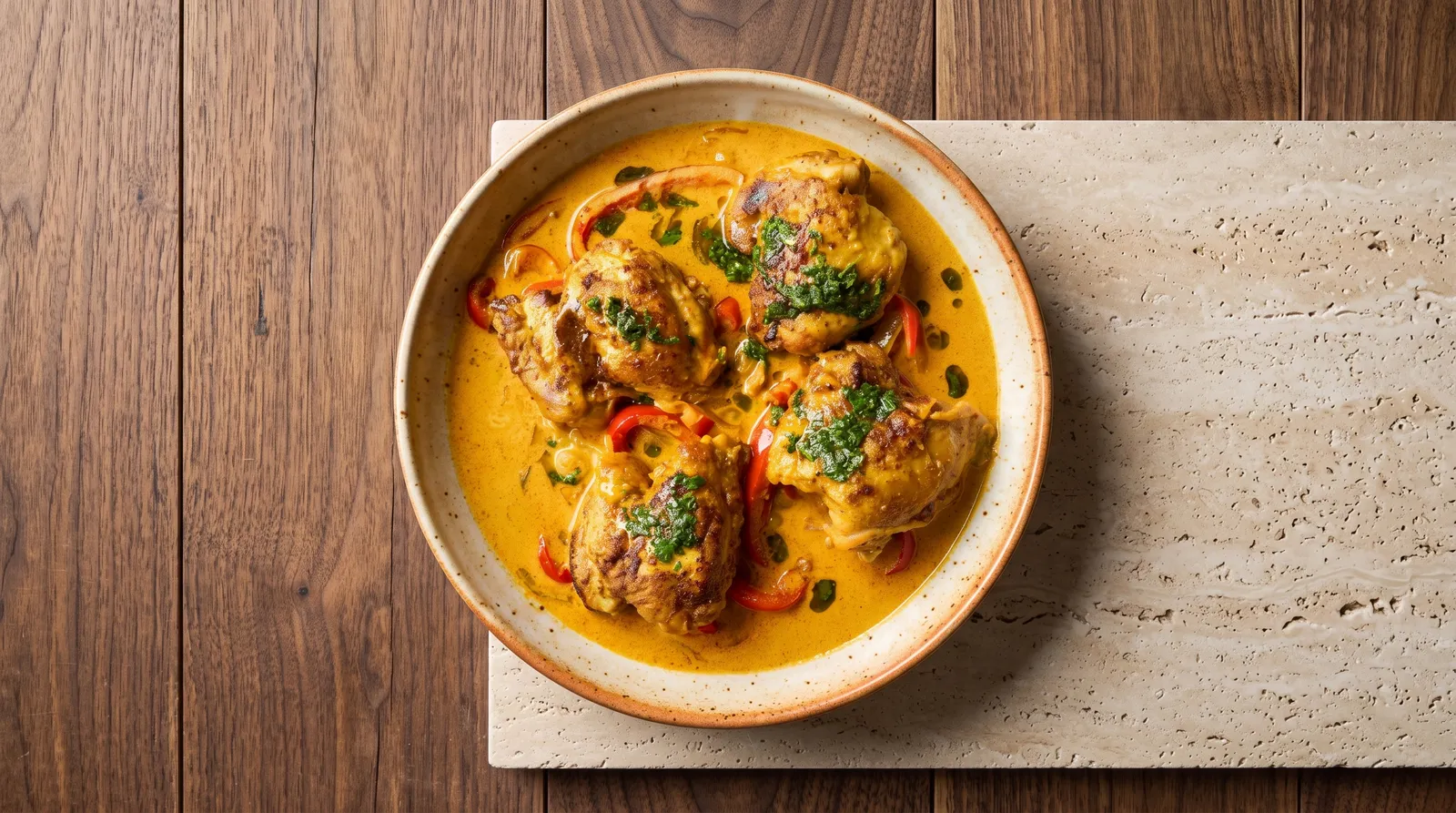
Bone-in chicken is browned, then simmered with pounded garlic and ginger, onion, thyme, turmeric and tomato until the meat reaches 74 °C and the sauce is concentrated but still generous enough for rice.

French National Dishes
Share
Cari poulet — shown in a pan
Prep 20 minutes
Cook 50 minutes
Total 70 minutes
Yield 6 main-course portions
Introduction and overview

Cari poulet — Réunionnais chicken cari with tomato, ginger and turmeric

Cari poulet is one of the most recognisable everyday dishes of Réunion. Tomato and tomato-free preparations both exist, so a coherent recipe has to choose rather than blur the two. Here the widespread tomato style is used: browned chicken is coated with onion and a pounded garlic-ginger seasoning, then thyme, turmeric and tomato build a compact sauce. No massalé blend is added, because that would shift the flavour profile toward a different Réunionnais preparation.

The chicken is cut into bone-in pieces so browning creates a deep savoury base and the later simmer develops body. Water is deliberately limited. The pieces should braise, not float, and the uncovered finish concentrates the juices into the characteristic ‘sufficient but short’ sauce. If the bird releases a lot of fat, skimming at the end improves balance without stripping away the browned flavour developed at the beginning.

Safety and texture meet at the same practical control: measure 74 °C in the thickest pieces without touching bone. Timing alone is unreliable because a whole chicken cut into eight pieces can vary greatly in thickness. Once safe, reduce only as long as needed to tighten the sauce. Cooling leftovers in shallow containers and reheating to 74 °C keeps the dense chicken-and-sauce mixture within conservative food-safety limits.
Success points

Success points

  • Brown before adding wet ingredients.
  • Keep the garlic-ginger mixture from scorching.
  • Use only enough water to braise rather than flood the casserole.
  • Confirm 74 °C in the thickest pieces, then reduce the sauce.
Ingredients

Ingredients

Cari

  • 1400 g whole chicken pieces, bone-in, skin-on, cut into 8 to 10 pieces
  • 250 g onion, finely sliced
  • 24 g garlic, crushed
  • 25 g fresh ginger, crushed
  • 450 g ripe tomatoes, diced
  • 35 g neutral oil
  • 4 g ground turmeric
  • 4 g fresh thyme leaves
  • 7 g fine salt
  • 1 g black pepper, freshly ground
  • 250 ml water, hot
Method

Method

Brown the chicken

  1. Brown the chicken. Heat the 35 g oil and brown the chicken pieces in a single layer, working in two turns if needed. Heat: medium-high. Timing: 12 minutes. Purpose: Browning develops the roasted base expected in this cari. The skin and cut surfaces are deeply golden without blackened spots. Safety. Handle raw poultry separately from ready-to-eat foods and wash hands and tools after contact.

Build the cari

  1. Soften the onion. Lower the heat, add the 250 g onion and cook until softened. Heat: medium. Timing: 4 minutes. Purpose: The onion loosens the browned fond without diluting it. The onion is translucent and picks up the browned juices from the pan.

  2. Cook the pounded aromatics. Add garlic, ginger, salt and pepper and cook briefly. Heat: medium-low. Timing: 2 minutes. Purpose: Short cooking prevents bitterness. The garlic and ginger are fragrant but not browned.

  3. Add turmeric, thyme and tomato. Stir in turmeric and thyme, then add the 450 g tomatoes and cook until they begin to collapse. Heat: medium. Timing: 7 minutes. Purpose: Tomato is used here in the widespread Réunionnais style rather than mixing tomato and no-tomato formulas. The tomatoes soften and form a thick red-gold coating around the chicken.

  4. Simmer the chicken. Add the 250 ml hot water, cover and simmer, turning the pieces once, until the thickest chicken pieces reach 74 °C. Heat: low. Timing: 20 minutes. Purpose: A moderate amount of liquid braises the pieces without turning the cari into soup. The chicken is tender at the joints and the liquid has become a concentrated cooking sauce. Safety. Measure 74 °C in the thickest part of the meat without touching bone.

  5. Shorten and degrease the sauce. Uncover and simmer until the sauce is sufficient but short; skim excess surface fat if needed. Heat: medium-low. Timing: 5 minutes. Purpose: Final reduction creates the characteristic short sauce and permits practical fat management. The sauce coats the chicken and a spoon drawn across the base leaves a brief clear trail.

Serving

Practical

Serving

Serve with white rice and cooked pulses; spoon over enough sauce to season the rice without drowning it.

Make-ahead

The aromatics may be crushed and the vegetables cut several hours ahead; keep the chicken chilled until browning.

Storage and reheating

Cool in shallow containers and refrigerate at 4 °C or below for up to 3 days. Reheat chicken and sauce together to 74 °C; add only a small splash of water if the sauce has tightened.

Boneless chicken thighs.

They cook faster and lose the bone-in character; check 74 °C earlier and expect a slightly less gelatinous sauce.

The sauce is greasy.

Cause: The chicken released more fat than the sauce can emulsify. Correction: Skim excess fat during the final uncovered reduction.

The chicken is pale.

Cause: Too many pieces were crowded into the pan. Correction: Brown in two turns so moisture can evaporate.

Technique in focus

Brown the chicken first, add only a measured amount of water, and finish uncovered so the sauce becomes short rather than soupy.

Nutrition per serving

Nutrition per serving

  • Serving size1 of 6 equal portions
  • Calories455 kcal
  • Carbohydrate14 g
  • Protein32 g
  • Fat28 g
  • Fibre3 g
  • Sodium620 mg
Allergens and food safety

Allergens and food safety

Allergens: No major allergen is inherent in the specified ingredient list; verify packaged ingredient labels where relevant.

Keep raw poultry at 4 °C or below and prevent cross-contamination.

Cook the thickest pieces to 74 °C.

Cool leftovers promptly and reheat to 74 °C.

FAQ

FAQ

Can the tomatoes be omitted?

A tomato-free Réunionnais cari poulet exists, but it is a separate coherent style. Omitting them here would require rebalancing the liquid and aromatics.

Is this a massalé?

No. The profile is garlic, ginger, thyme and turmeric without a massalé spice blend.

Closing

Closing

  • Result: Bone-in chicken is browned, then simmered with pounded garlic and ginger, onion, thyme, turmeric and tomato until the meat reaches 74 °C and the sauce is concentrated but still generous enough for rice.
  • Decisive technique: Brown the chicken first, add only a measured amount of water, and finish uncovered so the sauce becomes short rather than soupy.