Brioche Parisienne (Brioche à Tête) for an 18 cm Mould
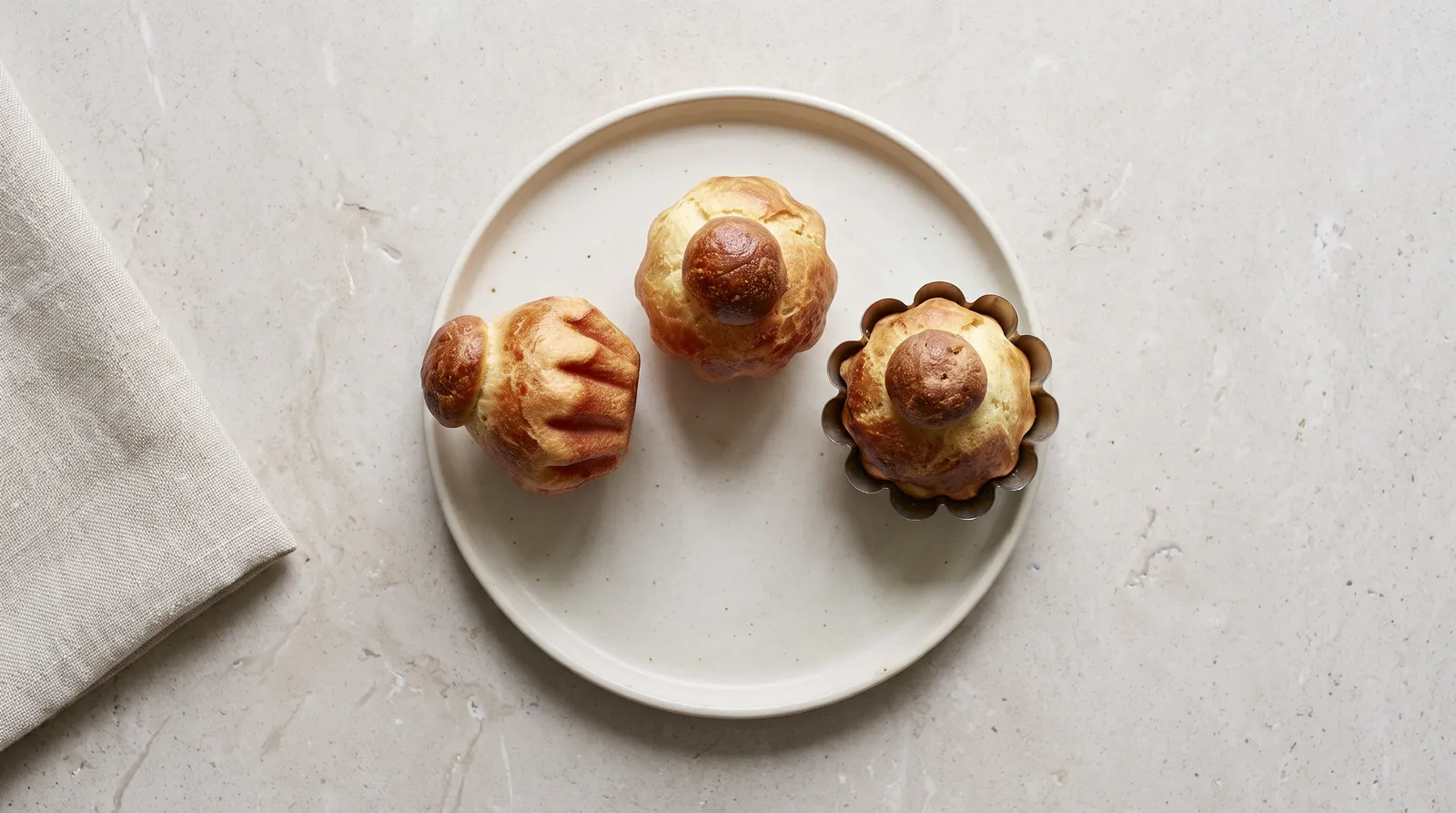
Brioche parisienne is recognised by its fluted body and smaller top knot, often called the head. The shape looks decorative, but it also exposes whether the dough has enough strength to support a large butter load. A successful loaf should have a thin, deeply golden crust and a tender, shreddable crumb rather than a cake-like interior. The 18 cm mould fixes the scale here, so the amount of dough, proof height and baking time work together rather than relying on a professional bakery mould.
The dough uses strong white flour, 60% whole egg and just over 50% butter relative to flour weight. That enrichment makes mixing sequence important. Gluten is developed before the butter is fully absorbed, then the dough is kept near 24 °C so the butter stays pliable rather than melting into a greasy film. A short room-temperature fermentation starts the yeast, while the long 4 °C rest firms the fat and gives the dough enough body for precise shaping.
The head stays centred through geometry rather than luck. About one fifth of the cold dough is shaped into a pear with a narrow neck. The larger piece is rounded tightly, opened deeply at the centre and the neck is pushed down into that opening, anchoring the top knot inside the body. A moderate proof at 25 °C lets the structure expand without softening the butter too much; the loaf is baked only after the head remains distinct and the body has risen close to the mould edge.