French Recipes

Bourdelot aux poires

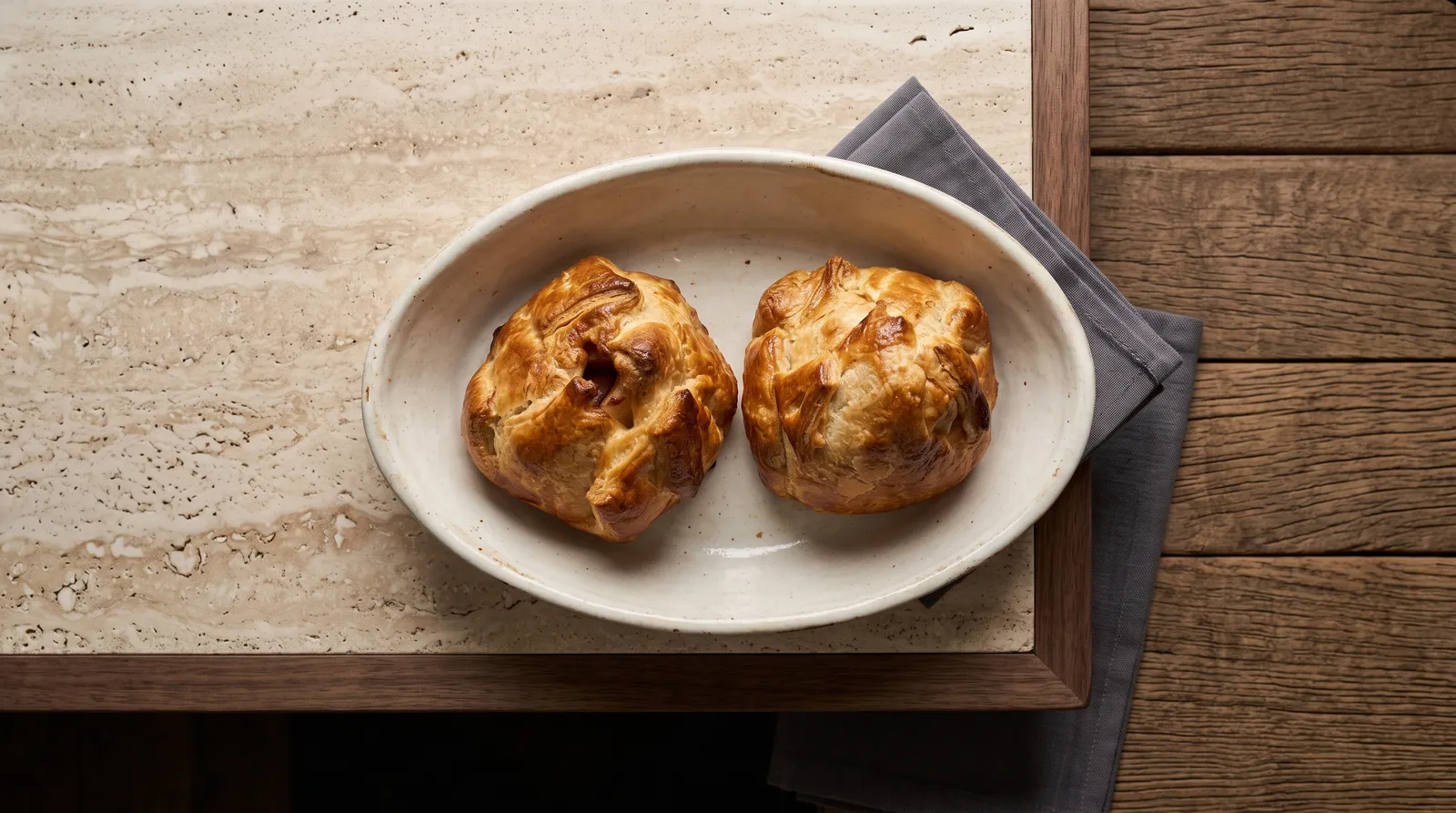
Whole firm-ripe pears wrapped individually in butter shortcrust pastry with sugar and butter, vented and baked until the shell is deep golden and the fruit is tender through the centre.

French Recipes
Share
Bourdelot aux poires — arranged on a serving platter
Prep 35 minutes
Cook 45 minutes
Total 95 minutes
Yield 6 individual pastries
About this dish

Norman pear bourdelot in butter shortcrust pastry

Bourdelot and douillon are names attached to Norman whole-fruit pastries, and the boundary between them is not described identically everywhere. Some sources distinguish the name by whether the filling is an apple or a pear; others use the terms more broadly. This recipe keeps the supplied name, bourdelot aux poires, while treating that terminology as regional rather than universal.

The technique itself is clear: use a firm-ripe pear that can soften in the oven without collapsing into purée. Each fruit is wrapped individually in butter shortcrust pastry with a measured amount of sugar and butter. The wrapper needs enough thickness to seal without becoming doughy, and a small vent near the stem gives steam somewhere to escape as the fruit releases moisture.

Two cues decide doneness. The pastry must be an even deep gold, but the pear also needs to be tender when tested through the vent with a thin skewer. One cue cannot replace the other. After baking at 180 °C, a 15-minute cooling period lets the pastry firm and the fruit juices settle while the pear remains pleasantly warm.
Success points

Success points

  • Choose firm-ripe pears that will soften without collapsing.
  • Do not stretch the pastry so thin that it tears around the fruit.
  • Seal the seams and leave a small vent near the stem.
  • Check both golden pastry and pear tenderness before removing the tray.
Ingredients

Ingredients

  • 1200 g firm-ripe dessert pears, 6 medium pears, about 200 g each
  • 400 g butter shortcrust pastry, chilled but pliable
  • 60 g caster sugar
  • 30 g unsalted butter, soft
  • 18 g egg yolk, for glaze
  • 10 ml water, to loosen the egg-yolk glaze
Method

Method

Wrap the pears

  1. Prepare the pears. Peel the pears while keeping them whole and trim the base so each stands upright. Time: 12 minutes. Continue until each pear stands upright without wobbling and remains whole.

  2. Portion the pastry. Divide the pastry into six portions, roll each large enough to enclose one pear, and place a pear in the centre with 10 g sugar and 5 g butter. Time: 15 minutes. Continue until each pastry portion can meet around the pear without stretching paper-thin.

  3. Wrap, seal and vent. Bring the pastry up around each pear, seal the seams, leave a small vent near the stem and brush with the yolk-water glaze. Time: 8 minutes. Continue until all six pears are fully enclosed with sealed seams and a small steam vent near the top.

Bake and cool

  1. Bake fruit and pastry together. Bake the wrapped pears until both pastry and fruit reach their finishing cues. Maintain 180 °C. Time: 45 minutes. Continue until the pastry is evenly deep golden and a thin skewer meets little resistance in the pear through the vent.

  2. Let the pastries settle. Cool the pastries briefly on a rack before serving. Time: 15 minutes passive cooling. Continue until the pastry has firmed enough to lift cleanly while the pear remains warm.

Practical guidance

Practical

Serving

Serve warm rather than piping hot. Cream may accompany the pastry if desired, but it is not included in this base recipe or nutrition estimate.

Make-ahead

The pears can be wrapped and chilled for a few hours before baking. Bake from cold and use the visual and skewer cues rather than relying on colour alone.

Storage and reheating

Cool completely before covering. Refrigerate at 4 °C or below for up to 2 days because the baked fruit keeps the pastry moist. Reheat in a 160 °C oven for about 10 minutes if a warm serving is wanted.

Valid substitutions

- pear variety: Another firm dessert pear may be used if it holds its shape through baking. Very ripe or soft pears can collapse before the pastry colours. - shortcrust pastry: Some Norman versions use puff pastry. The shell becomes lighter and more layered; this is a different pastry basis from the recipe given here.

Troubleshooting

Troubleshooting

  • Pastry splitsit was stretched too thin or seams were poorly sealed; roll an even wrapper and press the joins firmly.
  • Pear still firm when crust is darkthe fruit was underripe or too large; choose smaller firm-ripe pears and test through the vent.
  • Soggy basehot pastries sat on the tray too long; move them to a rack after the short settling period.
Nutrition per serving

Nutrition per serving

  • Serving size1 pear pastry
  • Calories465 kcal
  • Carbohydrate66 g
  • Protein6 g
  • Fat20 g
  • Fibre7 g
  • Sodium220 mg
Allergens and food safety

Allergens and food safety

Allergens: Wheat/gluten, Milk, Egg.

Wash hands and utensils after handling raw egg-yolk glaze.

Refrigerate cooled pastries at 4 °C or below if storing beyond the day of baking.

Reheat stored pastries in a 160 °C oven only until hot; do not repeatedly warm and cool them.

FAQ

FAQ

Is this the same as a douillon?

The names overlap in Normandy, and sources do not apply one distinction everywhere. This recipe uses the supplied pear-bourdelot name while acknowledging that some local usage calls pear versions douillons.

Why not add Calvados?

Calvados appears in some variations, but this base keeps the fruit, butter, sugar and pastry treatment without alcohol.

Closing

Closing

  • Result: A warm whole pear with a tender centre inside a crisp, deep-golden butter pastry shell.
  • Decisive technique: Seal the wrapper well, vent it near the stem and check pear tenderness as carefully as pastry colour.