French National Dishes

Ttoro

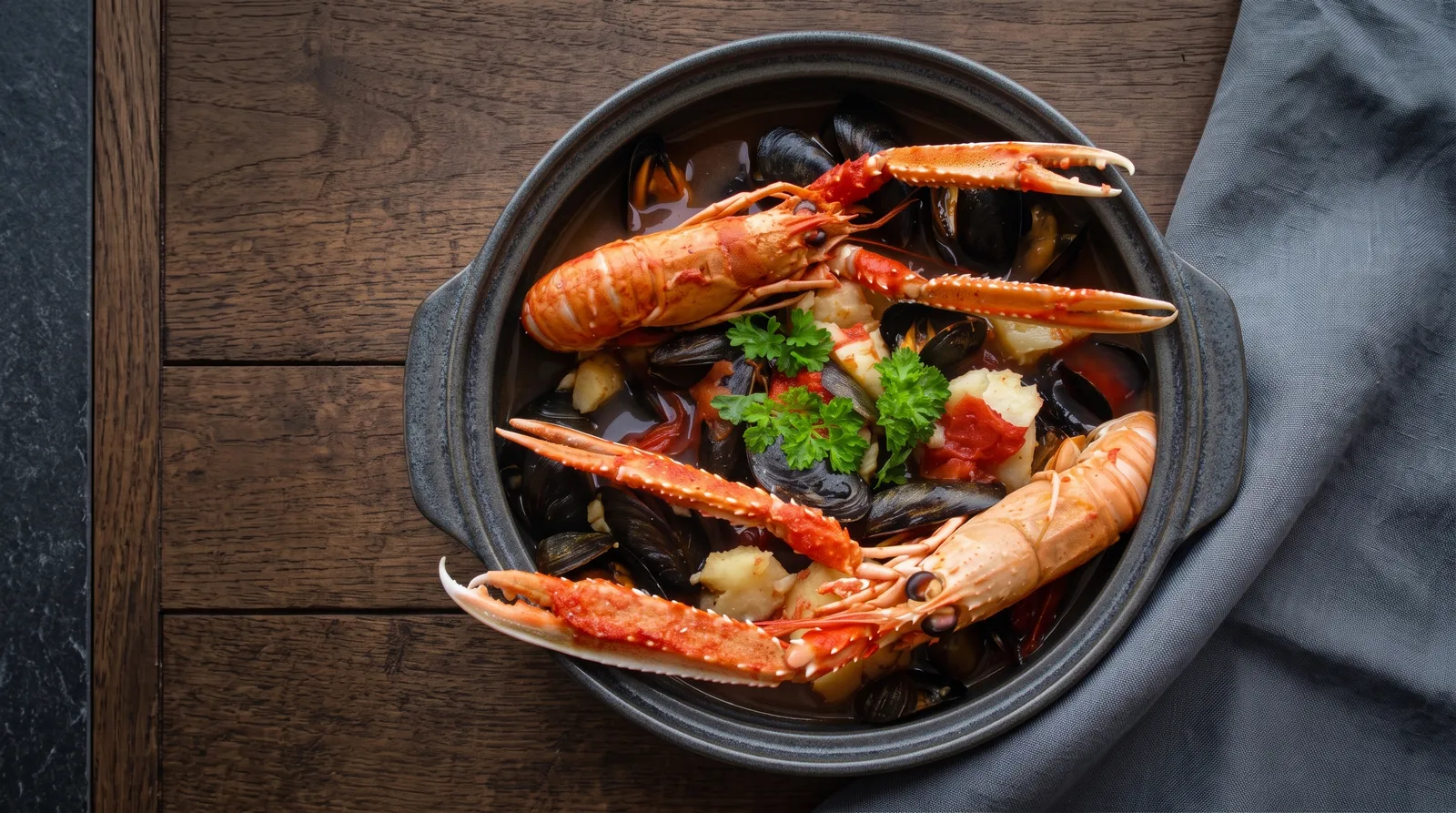
A concentrated Basque fish stew with separate fumet, potatoes, tomato, mild peppers, Espelette pepper, whole fish pieces, squid, mussels and langoustines.

French National Dishes
Share
Ttoro — shown in a cooking pot
Prep 40 minutes
Cook 95 minutes
Total 135 minutes
Yield about 3.6 kg stew
About this dish

Ttoro — Basque fish stew from the Saint-Jean-de-Luz and Ciboure tradition

Ttoro is associated with the fishing communities of Ciboure and Saint-Jean-de-Luz, where the fish mix has always been able to change with the catch. What remains important is the structure: a concentrated Basque base, whole pieces of fish rather than a puréed soup, and seafood added according to how quickly each species cooks.

This version makes a separate fumet from legally sourced fish head and frames, then strains those solids out completely. The served seafood is locked by purchased and edible weight so bones, shells and stock-only trimmings are not silently counted as food. Conger, monkfish and hake are joined by squid, mussels and langoustines.

The base of onion, potato, tomato and mild green pepper is reduced with white wine before fumet and Espelette pepper are added. Conger starts first, monkfish and squid follow, and the hake, mussels and langoustines finish the stew. The final seafood stage stops when every component reaches 63 °C, keeping the fish intact instead of overboiling it.
Success points

Success points

  • Strain the fumet carefully so no fish bones pass into the stew.
  • Add seafood in stages rather than all at once.
  • Keep the final simmer gentle enough that the hake does not disintegrate.
Ingredients

Ingredients

Fish fumet

  • 800 g fish head and frames — legally sourced hake/conger trimmings; stock-only purchased weight; 0 g served edible flesh, strained and discarded
  • 250 ml dry white wine
  • 1500 ml cold water
  • 5 g bouquet garni
  • 4 g fine salt

Stew

  • 500 g conger steaks — bone-in purchased weight; about 400 g edible flesh served
  • 500 g monkfish tail — trimmed purchased weight; about 450 g edible flesh served
  • 500 g hake steaks — bone-in purchased weight; about 400 g edible flesh served
  • 300 g cleaned squid — prepared weight; 300 g edible
  • 500 g mussels — scrubbed, shell-on purchased weight; about 150 g edible meat served
  • 300 g langoustines — shell-on purchased weight; about 120 g edible tail meat; shells remain for service unless diners prefer peeled
  • 300 g onions — thinly sliced
  • 500 g potatoes — peeled, 2 cm dice
  • 200 g tomato — peeled and chopped
  • 300 g mild green peppers — thin strips
  • 20 g garlic — finely chopped
  • 250 ml dry white wine
  • 100 ml olive oil
  • 5 g bouquet garni
  • 4 g Espelette pepper
  • 4 g fine salt
  • 10 g flat-leaf parsley — finely chopped
Method

Method

Make the fumet

  1. Prepare seafood and stock bones. Keep all seafood chilled while checking fish pieces for obvious bones and shell fragments; reserve the purchased head and frames for stock only. Allow 20 minutes. The serving fish is portioned, chilled and free of loose pin bones or shell debris that can be removed by hand. Keep seafood refrigerated until each stage.

  2. Simmer the fumet. Combine fish head and frames with 250 ml wine, 1,500 ml cold water, bouquet garni and salt; bring to a gentle simmer and cook without a rolling boil. Use gentle simmer. Allow 45 minutes. The fumet smells clean and marine and the liquid is lightly cloudy rather than violently emulsified.

  3. Filter the fumet. Strain the fumet through a fine sieve and discard the head, frames and bouquet garni. Allow 5 minutes. The strained fumet contains no visible bones or solid fish debris. Check the sieve and broth for bone fragments.

Build the base and poach seafood

  1. Build the vegetable base. Warm 60 ml olive oil and cook onions, potatoes, tomato, peppers and the second bouquet garni; add the remaining 250 ml wine and reduce until little free wine remains. Use medium heat. Allow 15 minutes. The vegetables are softened at the edges and the wine is reduced to a glossy coating rather than a pool. Alcohol may remain; keep wine away from open flame.

  2. Start with the conger. Add 1,200 ml strained fumet and Espelette pepper, bring to a gentle simmer, then add conger and cook first. Use gentle simmer. Allow 10 minutes. The conger pieces are beginning to firm but are not yet flaking apart.

  3. Layer in monkfish and squid. Add monkfish and squid and continue the gentle simmer. Use gentle simmer. Allow 10 minutes. The monkfish has turned opaque at the edges and the squid is tender rather than hard.

  4. Finish the seafood. Add hake, mussels and langoustines, cover and cook just until all seafood reaches 63 °C and the mussels open. Use gentle simmer. Allow 10 minutes. Temperature: 63 °C. The hake is opaque and just flakes, the langoustine tails are opaque, and the mussel shells have opened. Verify fish and shellfish reach 63 °C; discard mussels that remain closed after cooking.

  5. Enrich and serve. Stir in the remaining 40 ml olive oil, garlic and parsley off the heat and serve the concentrated stew immediately. The sauce is glossy, the fish pieces remain distinct and the garlic-parsley finish smells fresh. Serve promptly and refrigerate leftovers within 2 hours.

Serving, storage and make-ahead

Practical

Serving, storage and make-ahead

Serve in deep bowls so each portion gets sauce, fish, shellfish and potatoes. The fumet and vegetable base can be made earlier, chilled promptly and brought back to a simmer before the seafood is added. Refrigerate leftovers within 2 hours and use within 2 days; reheat gently to 74 °C, accepting that delicate fish will firm further. Seasonal local white fish can replace one of the firm fish components if the same staggered cooking logic is maintained. White wine remains part of the sauce, so complete alcohol disappearance is not assumed.

Troubleshooting

Troubleshooting

  • Fish falls apartThe stew boiled hard or delicate fish entered too early. Keep a gentle simmer and add hake near the end.
  • Shell fragments in the bowlShellfish or stock were not checked and strained carefully. Inspect mussels and langoustines and pass the fumet through a fine sieve.
Nutrition per serving

Nutrition per serving

  • Serving size1 of 6 generous bowls
  • Calories560 kcal
  • Carbohydrate35 g
  • Protein55 g
  • Fat18 g
  • Fibre5 g
  • Sodium1100 mg
Allergens and food safety

Allergens and food safety

Allergens: fish, crustacean, mollusc, sulphites.

Use legally sourced seafood and keep it chilled until cooking. Check fish for bones and shellfish for fragments. Cook fish, crustaceans and molluscs to 63 °C; discard mussels that do not open. Refrigerate leftovers within 2 hours and reheat to 74 °C. White wine alcohol may remain.

FAQ

FAQ

Is ttoro a Basque bouillabaisse?

No. Both are Mediterranean/Atlantic fish stews in the broad sense, but ttoro has its own Luzian-Basque identity, ingredient logic and sauce structure.

Can every fish be cooked for the same time?

No. Firm fish starts first; hake and shellfish need a shorter final cook to stay intact.

Closing

Closing

  • Result — a concentrated Basque seafood stew with distinct fish pieces and a tomato-pepper-wine broth.
  • Decisive technique — build and strain the fumet first, then stagger the seafood so every species reaches 63 °C without overcooking.