French National Dishes

Tripes à la mode de Caen

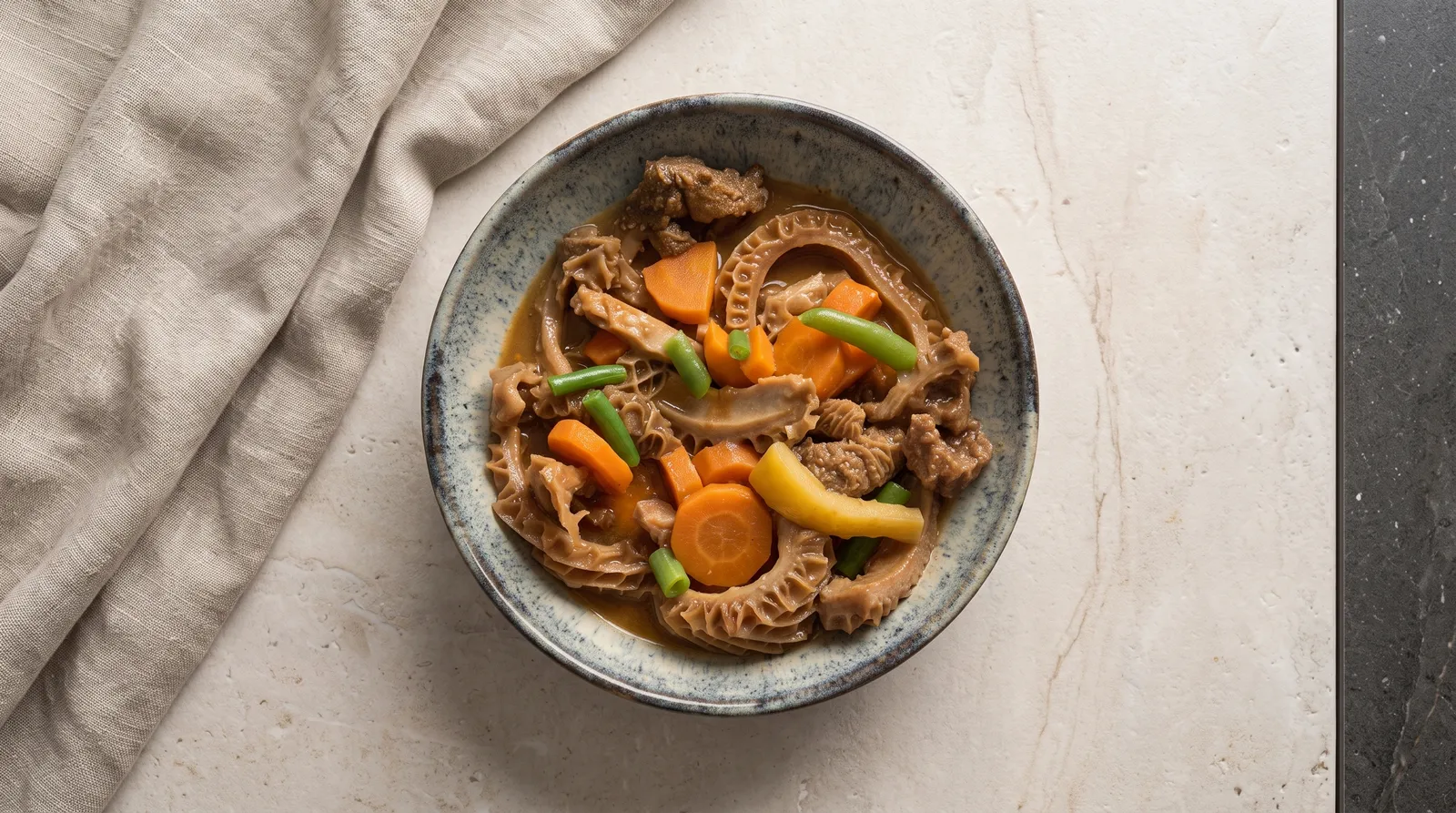
Commercially cleaned beef tripe and a gelatin-rich veal foot braised slowly with Norman cider, Calvados and vegetables until completely tender.

French National Dishes
Share
Tripes à la mode de Caen — served in a bowl
Prep 30 minutes
Cook 370 minutes
Total 400 minutes
Yield about 2.4 kg finished braise
About this dish

Tripes à la mode de Caen — Norman cider and Calvados braised tripe

Tripes à la mode de Caen is a Norman long braise centred on beef tripe, a gelatin-rich foot component and cider rather than tomato. This recipe uses only commercially cleaned tripe and a butcher-prepared split veal foot; it does not ask the home cook to perform slaughter or primary offal cleaning.

The cocotte starts with gently softened vegetables, then receives the tripe, foot, cider and Calvados. A tightly covered six-hour oven braise turns firm connective tissue tender and gives the sauce a lightly gelatinous body. The dish is ready by texture as well as temperature: the tripe should cut easily with the side of a spoon.

The purchased foot weight is not treated as if every gram were edible. About 250 g of collagenous soft tissue is counted as contributing to the finished sauce, while the bone is removed before serving. This matters both for nutrition and for safe service, because small fragments must not remain in the pot.
Success points

Success points

  • Use commercially cleaned tripe and commercially butchered foot.
  • Keep the cocotte tightly covered through the long braise.
  • Remove all bones and whole aromatics before service.
Ingredients

Ingredients

Braise

  • 1200 g commercially cleaned beef tripe — chilled, cut into 4–5 cm pieces; purchased and edible weight both 1,200 g
  • 650 g butcher-prepared split veal foot — commercially butchered; about 250 g edible collagenous tissue contributes to the sauce; bone discarded after cooking
  • 200 g carrots — sliced
  • 200 g onions — sliced
  • 100 g celery stalks — sliced
  • 20 g garlic — crushed
  • 30 g unsalted butter
  • 750 ml dry brut cider
  • 50 ml Calvados
  • 5 g fresh thyme
  • 2 g bay leaves — 2 leaves
  • 1 g whole cloves — 2 cloves
  • 8 g fine salt
  • 2 g black pepper
Method

Method

Assemble the cocotte

  1. Prepare the cleaned tripe. Cut only the already commercially cleaned tripe into even pieces and prepare the vegetables; do not undertake primary offal cleaning. Allow 20 minutes. The tripe pieces are evenly sized and remain cold to the touch. Keep tripe and veal foot refrigerated until the cocotte is assembled.

  2. Sweat the vegetables. Melt the butter and sweat carrots, onions and celery without hard browning. Use medium-low heat. Allow 8 minutes. The vegetables are glossy and starting to soften without dark edges.

  3. Load the cocotte. Add the tripe and veal foot, turn briefly in the vegetables, then add garlic, herbs, cloves, salt and pepper. Use medium-low heat. Allow 2 minutes. The tripe is evenly distributed through the vegetables and seasonings.

Long braise

  1. Add the braising liquids. Pour in cider and Calvados, bring just to a simmer, cover tightly and transfer to the oven. Use medium heat then oven. Allow 5 minutes. Temperature: 150 °C. The liquid is at a gentle simmer before the covered cocotte goes into the oven. Keep alcohol away from open flame and do not flambé.

  2. Braise until tender. Braise covered until the tripe is completely tender and the gelatin-rich foot has enriched the sauce; verify the offal is above 71 °C. Use oven. Allow 355 minutes. Temperature: 150 °C. The tripe cuts easily with the side of a spoon and the sauce has a lightly gelatinous body. Verify the edible offal is at least 71 °C.

  3. Finish the sauce. Remove bones, bay and cloves, skim only excess surface fat, and serve with the sauce. No bone fragments remain and the sauce clings lightly to the tender tripe. Check carefully for small bone fragments.

Serving, storage and make-ahead

Practical

Serving, storage and make-ahead

Serve the tripe very hot, with simple steamed or boiled potatoes if you want a neutral accompaniment for the sauce. The braise is well suited to make-ahead cooking: cool it rapidly in shallow containers, refrigerate, then reheat the next day. Store within 2 hours and use within 3–4 days. Reheat to 74 °C. A butcher-prepared beef foot can replace the veal foot while preserving a bovine gelatin source, although the flavour and quantity change. Cider and Calvados are part of the braise and alcohol is not assumed to disappear completely.

Troubleshooting

Troubleshooting

  • Tripes remain rubberyThe connective tissue has not softened enough. Continue the covered braise at the same gentle oven temperature until spoon-tender.
  • Sauce is greasyToo much surface fat was retained. Skim only the clear excess after cooking, keeping the gelatin-rich sauce underneath.
Nutrition per serving

Nutrition per serving

  • Serving sizeabout 400 g including sauce, 1 of 6 servings
  • Calories590 kcal
  • Carbohydrate18 g
  • Protein46 g
  • Fat28 g
  • Fibre3 g
  • Sodium980 mg
Allergens and food safety

Allergens and food safety

Allergens: celery, sulphites.

Use commercially cleaned tripe and commercially butchered foot; do not perform primary offal cleaning at home. Keep offal chilled, cook edible offal to at least 71 °C, and braise until completely tender. Refrigerate leftovers within 2 hours and reheat to 74 °C. Cider and Calvados alcohol may remain despite the long braise.

FAQ

FAQ

Is this the same as tripoux?

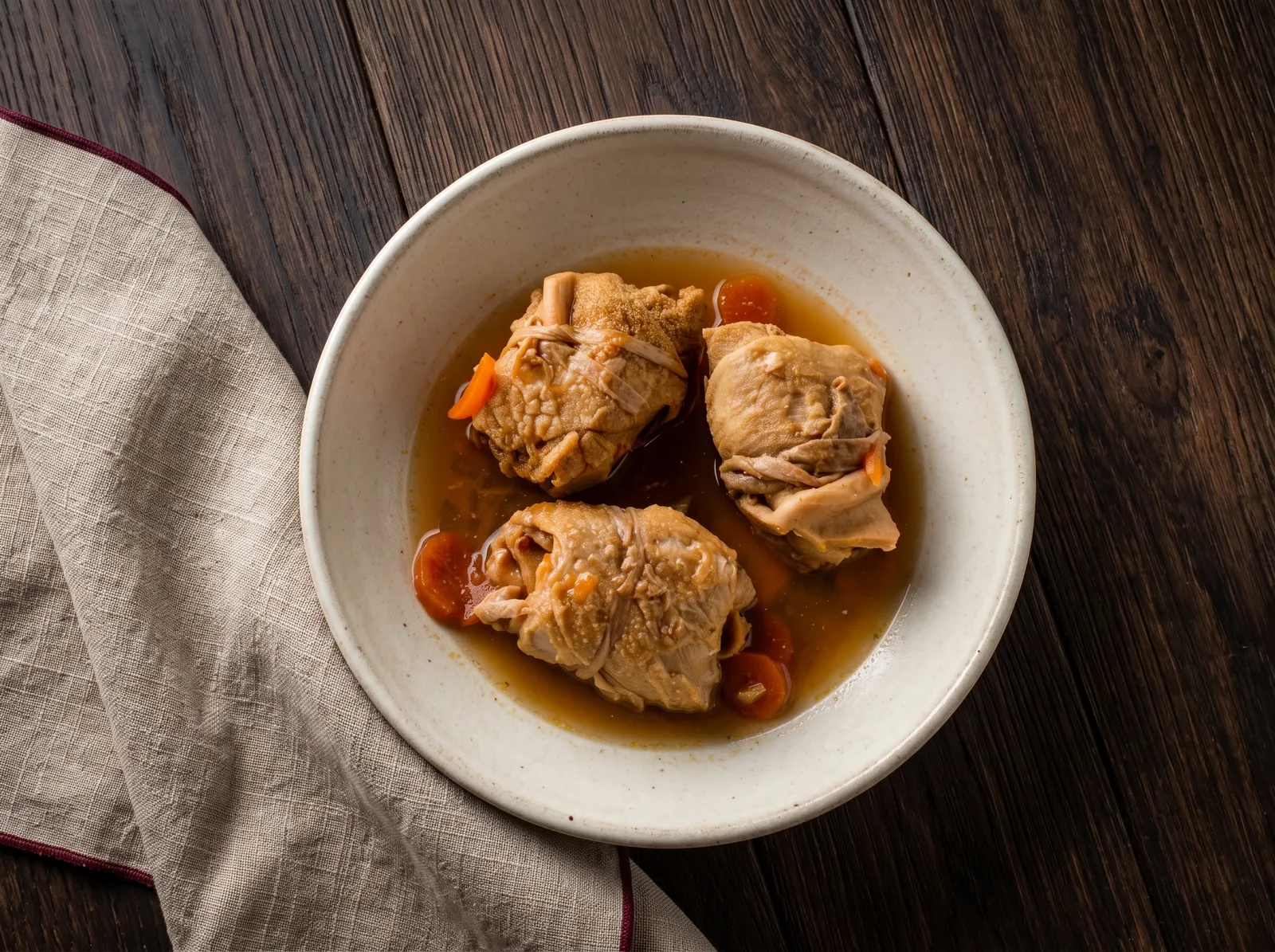
No. Tripes à la mode de Caen is a loose Norman tripe braise; tripoux are small stuffed stomach parcels.

Do the tripes need home cleaning?

No. This recipe starts with commercially cleaned tripe and explicitly avoids primary cleaning instructions.

Closing

Closing

  • Result — spoon-tender beef tripe in a cider-rich, lightly gelatinous Norman sauce.
  • Decisive technique — seal the cocotte and maintain the full long braise until the tripe is completely tender.