Rousquilles — Catalan anise and lemon ring biscuits
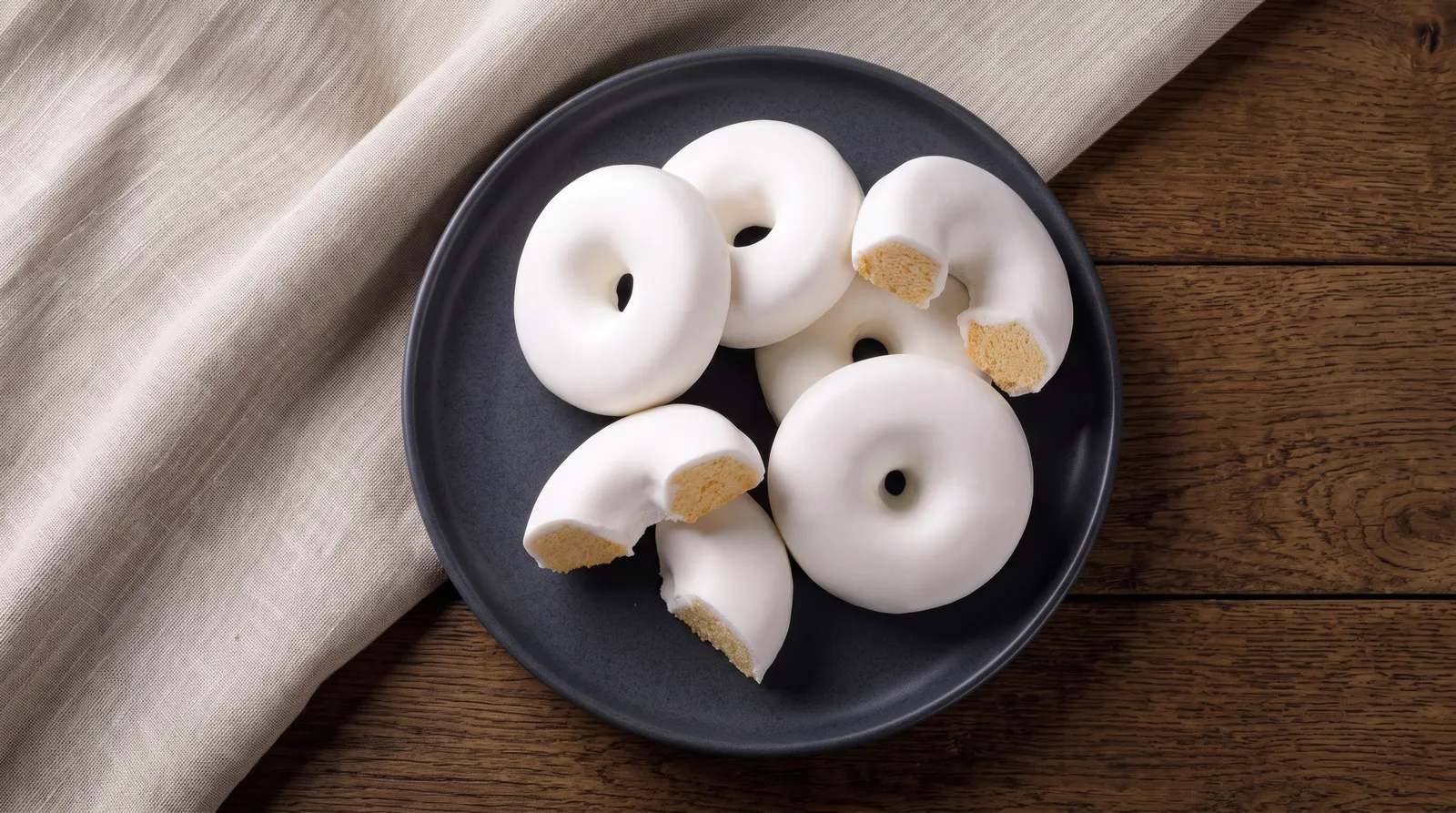
Rousquilles are Catalan ring biscuits associated with the Pyrénées-Orientales, recognisable by their soft, tender crumb, anise-and-citrus perfume and opaque white coating. They are not doughnuts and they are not intended to become hard commercial-style iced rings. The dough combines flour, icing sugar, butter, egg yolk, honey and milk, with lightly crushed green anise and lemon zest. Rolled to about 1 cm and cut with a wide outer cutter plus a small centre hole, the rings keep enough thickness to stay tender after baking.
Resting is a major part of the schedule. The mixed dough chills for two hours before shaping, which firms the butter and relaxes the flour so the rings cut cleanly without needing extra flour worked into the dough. They bake at 160 °C only until the crumb is set and still pale. A deep golden colour would push them towards a drier biscuit. After baking, the rings cool completely before glazing; warm biscuits would thin the coating and encourage it to run into puddles.
The white finish is made with a cooked sugar syrup brought to 118 °C and whisked into pasteurised egg white, with lemon juice to sharpen the sweetness. Hot syrup is the principal hazard: it clings to skin and can cause severe burns, so a stable saucepan and clear work area are essential. Once coated, the biscuits need a full two hours at room temperature for the glaze to dry opaque. That passive drying time belongs to the recipe just as much as the oven time.