French National Dishes

Pommes de terre au lard

Pommes de terre au lard is a broad French household label rather than one single protected formula.

French National Dishes
Share
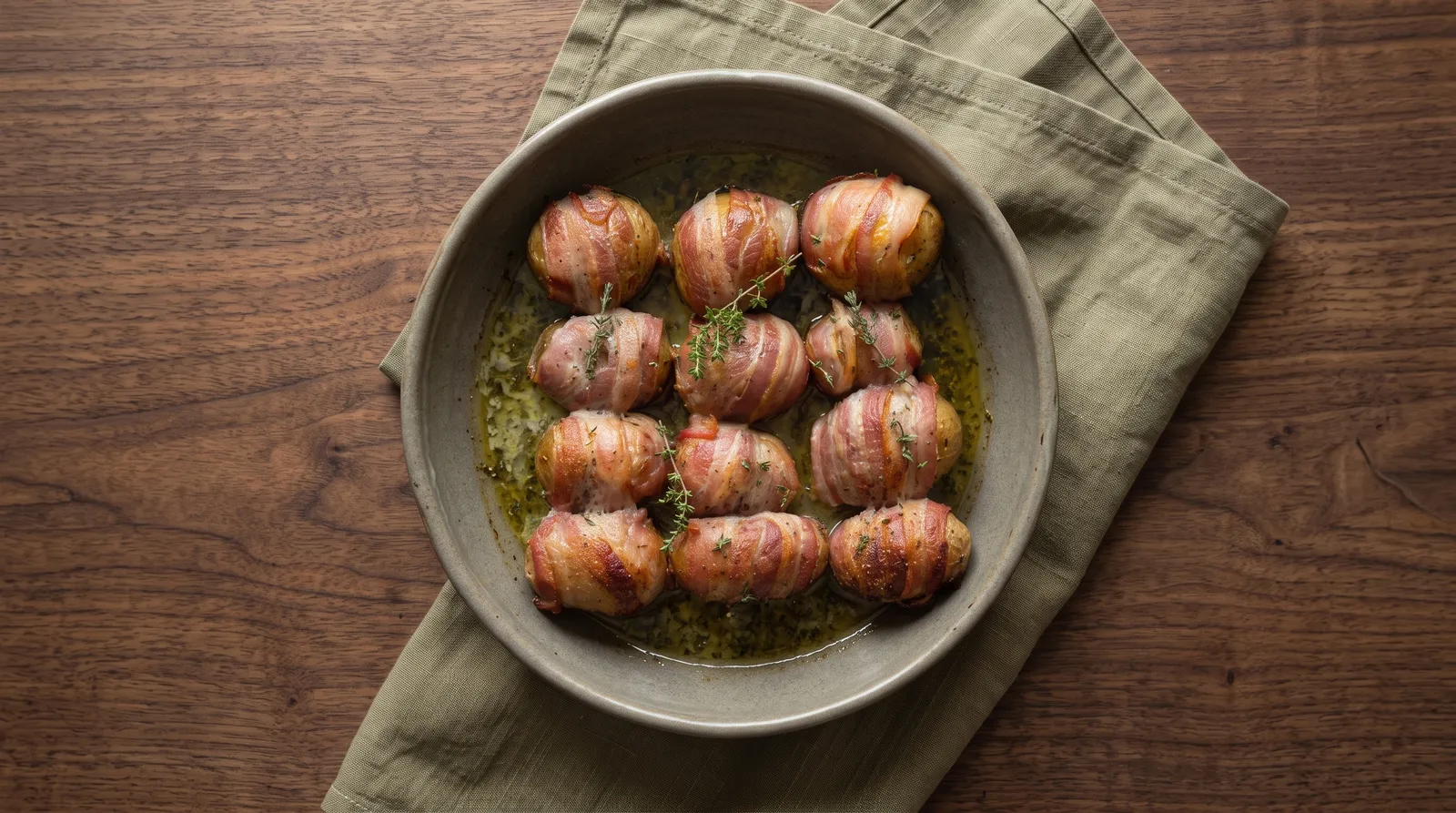
Pommes de terre au lard — presented in a serving dish
Cook time 75 minutes after 25 minutes of preparation.
Passive time 5 minutes after the 75-minute cooking schedule.
Calories per serving 420 kcal across the 105-minute schedule.
Yield 4 main-side servings.
Introduction and overview

Pommes de terre au lard: Vosges/Alsace farmhouse-style layered potatoes with smoked bacon and onions, aligned with the roïgebrageldi tradition but published under the supplied generic dish name.

Pommes de terre au lard is a broad French household label rather than one single protected formula. The Vosges/Alsace farmhouse context is useful because it documents the required potato-bacon-onion identity while remaining clearly distinct from Périgord sarladaise potatoes.

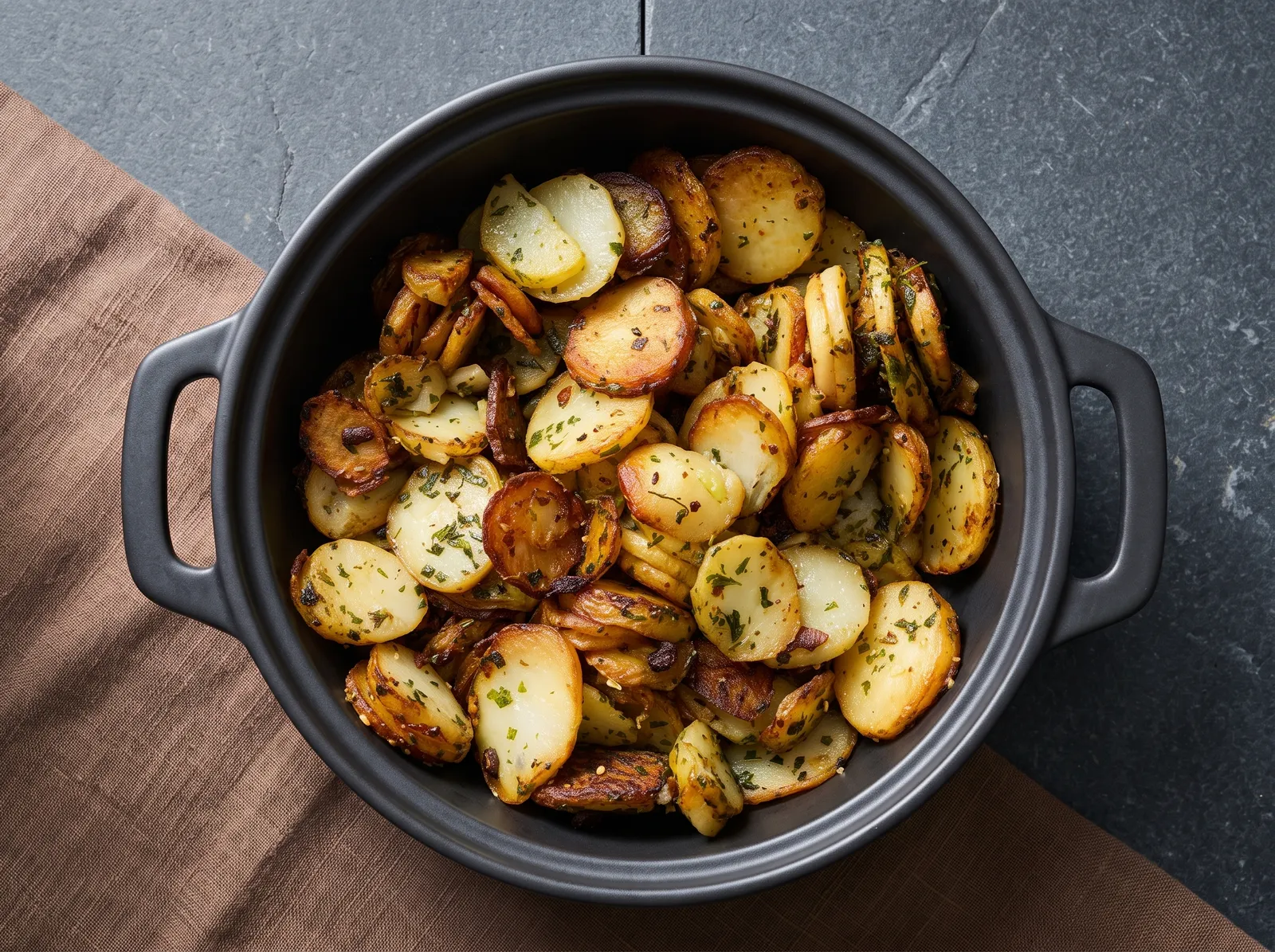
The defining texture is neither a crisp sauté nor a creamy gratin. Thin waxy slices soften in a small amount of wine and broth, while bacon fat and butter coat the layers. The covered phase does most of the cooking; the short uncovered finish gives the upper slices colour without drying the centre.

Cured pork determines the seasoning. A rind-on purchase is not treated as fully edible for nutrition, and the listed 160 g is the edible bacon weight after trimming. The casserole also keeps the rendered fat rather than draining it, so the nutrition calculation counts that retained cooking fat rather than pretending it disappears.
Success points

Success points

  • Use a waxy potato so the 4 mm slices become tender without collapsing.
  • Render rather than aggressively fry the bacon; the rendered fat is part of the cooking medium.
  • Salt only after tasting because cured pork and broth already contribute sodium.
Ingredients

Ingredients

  • 900 g waxy potatoes, peeled and sliced 4 mm thick — about 1,000 g purchased weight before peeling
  • 160 g smoked pork belly bacon, rind removed; cut into 12 mm lardons — about 185 g purchased rind-on; 160 g edible weight used
  • 200 g yellow onions, thinly sliced
  • 40 g unsalted butter, divided
  • 100 ml dry Alsace white wine, Riesling or similarly dry wine
  • 100 ml low-sodium vegetable broth, hot
  • 1 g fine salt, use only after tasting the bacon
  • 1.5 g black pepper, freshly ground
Method

Method

Directions

  1. Prepare the potatoes. Peel 1,000 g purchased potatoes to obtain about 900 g, slice them evenly to 4 mm and keep the slices together rather than rinsing away all surface starch. The slices are even, dry on the surface and still intact. Even slices finish together and a little starch helps the layers bind. Use a hand guard with a mandoline and keep fingertips behind the blade.

  2. Render the bacon. Set the bacon in a cold 28 cm heavy lidded casserole, then cook over medium-low heat for 8 minutes, stirring occasionally, until much of the fat is rendered and the edges begin to colour. The bacon has released a glossy layer of fat and the edges are lightly browned. A slow render seasons the potatoes without scorching the cured pork. Commercially prepared bacon still requires safe handling; the later covered cook and final 5-minute rest exceed the 63 °C plus 3-minute intact-pork minimum.

  3. Soften the onions. Add the onions and 20 g butter to the rendered bacon and cook over medium-low heat for 7 minutes, stirring, until the onions are soft but not deeply browned. The onions are translucent and supple, with no dark scorched edges. Soft onions distribute sweetness and moisture through the potato layers. Hot rendered fat can spit; add the onions carefully.

  4. Build the casserole. Take the pan off the heat. Layer the sliced potatoes over the bacon and onions, dotting with the remaining 20 g butter. Add the 100 ml wine and 100 ml broth around the edge, then season with pepper and at most 1 g salt. Return to medium heat for 5 minutes. Steam is rising steadily and liquid is just beginning to simmer around the edges. Bringing the liquid to a simmer before the oven starts the covered braise evenly. Taste the cooking liquid before adding salt because cured bacon varies sharply in salinity.

  5. Cook covered. Cover tightly and cook at 190 °C for 45 minutes without stirring the layers. A thin knife slides through a central potato slice with only slight resistance. Covered cooking softens the centres without breaking the slices apart. Use dry oven gloves; the lid, steam and rendered fat are burn hazards.

  6. Brown the top. Uncover and continue at 190 °C for 10 minutes, until the top layer takes on light golden patches and the cooking liquid is mostly absorbed. The top potatoes show golden edges while the lower layers remain moist, not soupy. A short uncovered finish gives colour without turning the dish into a crisp fry. Keep the casserole stable when removing the hot lid.

  7. Rest before serving. Remove the casserole from the oven and rest it uncovered for 5 minutes before portioning. The bubbling subsides and the potato layers hold together when lifted. The pause lets starch and fat settle and also completes the mandatory intact-pork rest interval. Do not serve the bacon before the full rest has elapsed.

Serving and practical guidance

Practical

Serving and practical guidance

Serve straight from the casserole after the 5-minute rest so each portion carries potatoes, onions and bacon together.

Serving and practical guidance

For advance preparation, assemble only shortly before cooking; raw sliced potatoes darken and release starch if left too long.

Serving and practical guidance

Store promptly within 2 hours, covered and chilled. Reheat once to 74 °C, keeping the dish covered for most of the reheating so the potatoes do not dry out.

Serving and practical guidance

A wine-free adaptation can be made with broth and a little mild vinegar, but it loses the small Riesling note associated with this farmhouse interpretation.

Check

Potatoes breaking apart usually means slices were too thin or the casserole was stirred; keep 4 mm slices and leave the layers undisturbed during the covered cook.

Check

A greasy finish usually means the bacon was very fatty and little liquid evaporated; render slowly and give the dish the full uncovered finish.

FAQ

Why not use floury potatoes? Waxy potatoes hold their 4 mm shape through the long covered cook, so the dish remains layered rather than turning into mash.

FAQ

Is this the same as pommes sarladaises? No. Sarladaise potatoes are a Périgord preparation centred on sliced potatoes cooked in duck or goose fat with garlic and parsley, without this bacon-and-onion braise.

Nutrition per serving

Nutrition per serving

  • Serving sizeabout 350 g cooked potatoes, bacon, onions and cooking juices
  • Calories420 kcal
  • Carbohydrate55 g
  • Protein15 g
  • Fat17 g
  • Fibre6 g
  • Sodium980 mg
Allergens and food safety

Allergens and food safety

Allergens: sulphites from the wine; check cured bacon and broth labels for additional allergens or sulphites. - Keep raw or uncooked pork separate from ready-to-eat foods and wash hands and utensils after contact. - The bacon must pass at least 63 °C and the dish must rest at least 3 minutes before eating; the long covered cook normally takes it well beyond that threshold. - Refrigerate cooked leftovers within 2 hours. - Wine alcohol may remain after cooking; a 1-hour-scale simmer/braise does not remove all ethanol. - Rendered fat and steam can cause severe burns.

Keep raw or uncooked pork separate from ready-to-eat foods and wash hands and utensils after contact.

The bacon must pass at least 63 °C and the dish must rest at least 3 minutes before eating; the long covered cook normally takes it well beyond that threshold.

Refrigerate cooked leftovers within 2 hours.

Wine alcohol may remain after cooking; a 1-hour-scale simmer/braise does not remove all ethanol.

Rendered fat and steam can cause severe burns.

Closing

Closing

  • Result: Pommes de terre au lard with the texture and regional identity described above, portioned according to 1 of 4 portions.
  • Decisive technique: Use a waxy potato so the 4 mm slices become tender without collapsing.