French National Dishes

Fricassée de lambi

A Martinican-style queen-conch fricassée made from traceable commercially cleaned lambi, lime and aromatics, pressure-tenderised and simmered in a Creole tomato sauce.

French National Dishes
Share
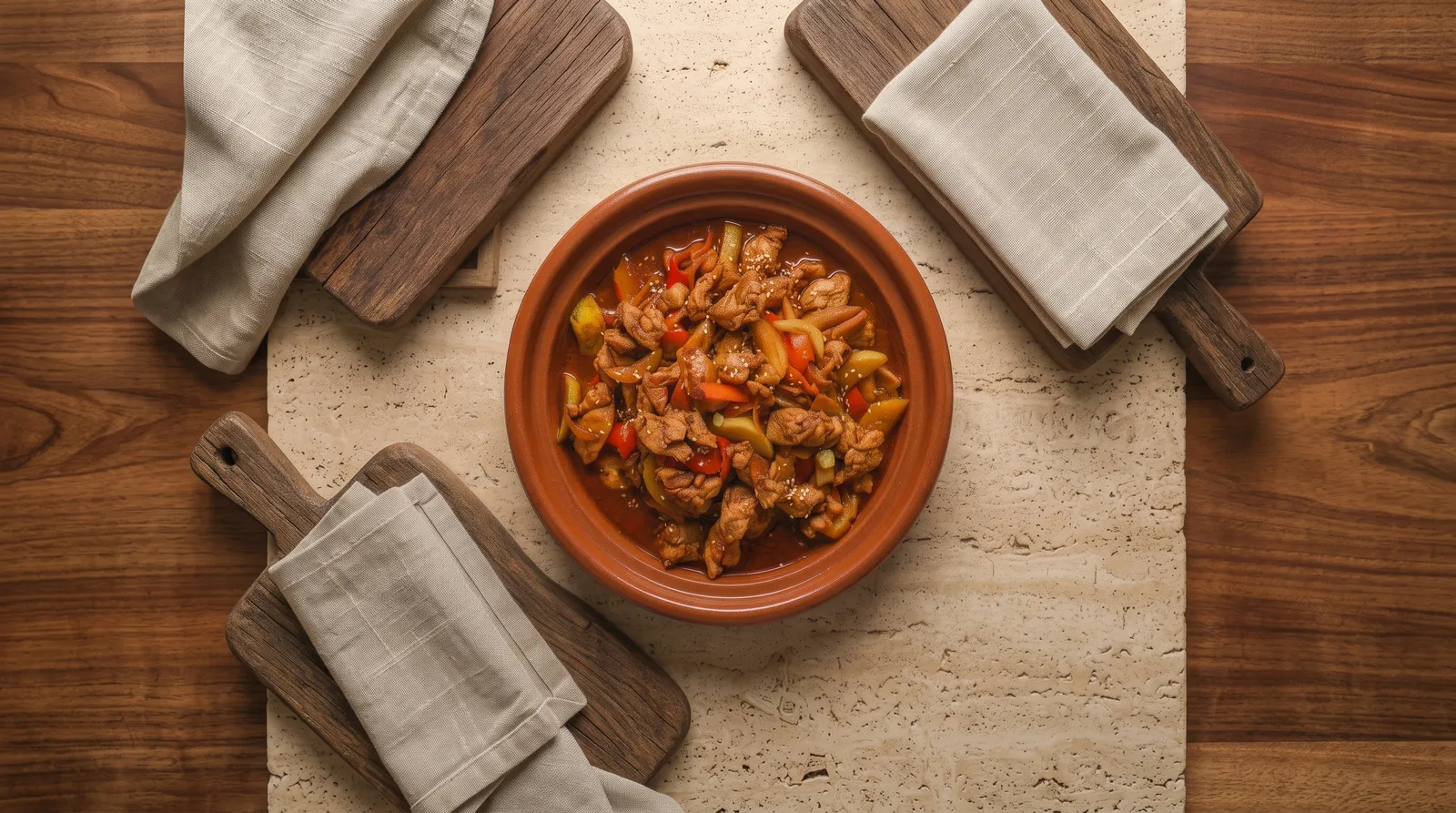
Fricassée de lambi — served in a bowl
Prep 30 minutes
Cook 55 minutes
Total 865 minutes
Yield about 1.05 kg finished fricassée
Introduction and overview

Fricassée de lambi: Martinican conch stew

Fricassée de lambi is a French Antillean conch preparation, not a generic seafood stew. Lambi is queen conch, a mollusc whose firm muscle needs deliberate tenderising. This household version uses only legally marketed, commercially cleaned frozen meat from an authorised supplier; it does not ask the cook to harvest, crack, purge or clean a wild animal.

The flavour structure is recognisably Martinican: lime, garlic, cive, parsley, thyme and allspice season the meat before it meets a tomato, onion and chilli base. The raw-contact marinade is not discarded into the sink or treated as a cold sauce. It travels into the pressure cooker and is fully cooked with the conch before the meat is transferred into the finishing sauce.

Texture is the decisive test. Reaching at least 63 °C throughout is the safety threshold in this record, but temperature alone does not make lambi pleasant to eat. The conch continues through a pressure stage and a gentle 20-minute simmer until it yields to the bite without turning rubbery, while the sauce reduces to roughly 400 g and clings to the pieces.
Success points

Success points

  • Start from traceable commercially cleaned meat; do not attempt to harvest or process wild queen conch.
  • Tenderness requires both the controlled pressure stage and the gentle finishing simmer.
Ingredients

Ingredients

Lambi and marinade

  • 650 g commercially cleaned queen conch (lambi) meat — raw, frozen then thawed; drained edible weight from an authorised supplier
  • 30 ml fresh lime juice
  • 12 g garlic — finely chopped
  • 20 g spring onion or cive — finely sliced
  • 10 g flat-leaf parsley — chopped
  • 2 g fresh thyme leaves
  • 2 g ground allspice

Sauce

  • 40 g neutral cooking oil
  • 70 g onion — finely sliced
  • 100 g ripe tomato — diced
  • 450 ml water — 225 ml for pressure cooking and 225 ml for sauce
  • 1 g fresh hot chilli — finely chopped
  • 5 g caster sugar
  • 8 g fine salt
Method

Method

Cold preparation

  1. Thaw the lambi safely. Thaw the sealed commercially cleaned conch in a covered container in the refrigerator for about 12 hours at 4 °C. Drain to 650 g edible meat. The 650 g drained conch is fully thawed but remains at 4 °C or below.

  2. Tenderise and marinate. Pound the conch pieces evenly without shredding them, then coat with lime juice, garlic, cive, parsley, thyme and allspice. Cover and marinate for 60 minutes at 4 °C. The pieces are evenly flattened without being shredded and are coated with lime, garlic, cive, parsley, thyme and allspice.

Cooking

  1. Pressure-tenderise the lambi. Transfer the conch and all marinade to the pressure cooker with 225 ml of the water. Cook at high pressure for 25 minutes, then release pressure as directed by the appliance. The conch has reached at least 63 °C throughout and begins to yield when pierced, though final tenderness develops in the sauce.

  2. Build the sauce base. Heat the oil in a wide saucepan. Cook the onion for several minutes, add the tomato and chilli, and continue for a total of about 10 minutes. The onion is translucent, the tomato has softened and the aromatics smell cooked rather than raw.

  3. Finish the fricassée. Add the pressure-cooked conch, its cooking liquid, the remaining 225 ml water, sugar and salt. Simmer gently for about 20 minutes. The lambi is tender rather than rubbery and the sauce has reduced to about 400 g, coating the pieces without being watery.

Portioning

  1. Portion with the sauce. Stir the finished fricassée so the conch and sauce are evenly distributed, then divide into five portions of about 210 g. Five portions of about 210 g each include both conch and sauce.

Serving, storage and planning

Practical

Serving, storage and planning

Serve the fricassée hot with sauce distributed through every portion. Rice can accompany it, but rice is deliberately outside the measured recipe so the five 210 g portions and their nutrition remain based on conch and sauce only.

Serving, storage and planning

The longest planning stage is cold handling: thaw the commercial product for about 12 hours at 4 °C, then marinate for 60 minutes at the same temperature. Keep raw mollusc and its utensils away from ready-to-eat foods throughout this period.

Serving, storage and planning

Refrigerate cooked leftovers at 4 °C or below within 2 hours and use within 2 days. Reheat gently until uniformly steaming hot. Repeated hard boiling can tighten conch that was tender at the first service.

Troubleshooting

If the conch remains rubbery, tenderness has not developed enough. Continue a gentle simmer with sufficient sauce rather than turning the heat up to a violent boil.

Troubleshooting

If the sauce is thin after the meat is tender, remove the lid and reduce gently until it coats the pieces. Do not add an unmeasured starch thickener.

Nutrition per serving

Nutrition per serving

  • Serving size1 of 5 portions (about 210 g)
  • Calories260 kcal
  • Carbohydrate7.5 g
  • Protein35 g
  • Fat9 g
  • Fibre1.5 g
  • Sodium840 mg
Allergens and food safety

Allergens and food safety

Allergen: Mollusc (queen conch/lambi).

Safety: Use only legally harvested, traceable commercially cleaned conch from an authorised supplier; never gather, crack, purge or process wild queen conch for this recipe.

Safety: Thaw and marinate at 4 °C or below and prevent cross-contamination from raw mollusc.

Safety: Cook all marinade that contacted raw conch; reach at least 63 °C throughout, then continue cooking until the meat is tender.

Safety: Cool cooked leftovers promptly and refrigerate within 2 hours at 4 °C or below.

FAQ

FAQ

Can I collect conch myself for this recipe?

No. Use traceable, legally marketed, commercially cleaned meat from an authorised supplier; harvesting and processing wild conch are outside this recipe.

Is lambi a crustacean?

No. Queen conch is a mollusc, so the allergen declaration is mollusc rather than crustacean.

Closing

Closing

  • Result — tender pieces of lambi coated in a reduced tomato-herb sauce with lime and Creole aromatics clearly present.
  • Decisive technique — combine strict refrigerated handling with enough controlled pressure and gentle simmering to tenderise the mollusc without hard boiling.