Croquembouche: choux, vanilla pastry cream and caramel cone
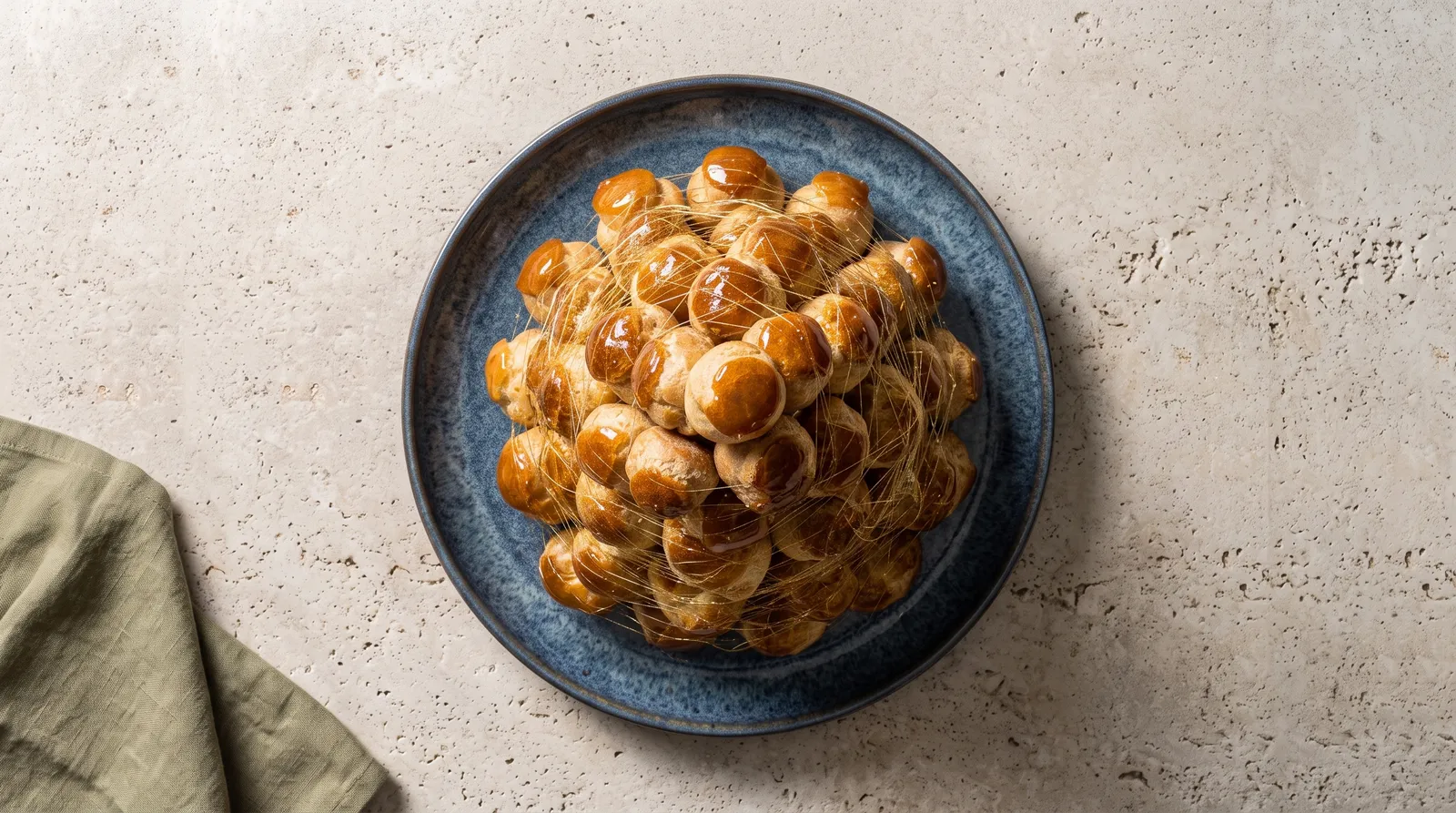
Croquembouche is a French celebration piece made by stacking filled choux puffs into a cone and bonding them with caramel. A household-scale version still demands the same three technical foundations as a larger ceremonial piece: hollow dry choux, properly cooked and rapidly chilled pastry cream, and caramel strong enough to glue the structure without requiring bare-hand contact with molten sugar.
The cream is the food-safety clock for the whole dessert. It is cooked to at least 82 °C, spread in a shallow tray, cooled rapidly and held at 4 °C or below before it touches the choux. Each of the thirty-six shells receives exactly 18 g filling. Once filled, they return to refrigeration until the brief assembly period, and the completed cone is served the same day rather than left at room temperature as a decorative display.
Caramel deserves its own safety procedure. Sugar cooked to about 170 °C sticks to skin and can cause severe burns. Keep cool water immediately available, work with long-handled tongs and a spoon, and dip only the base edge of each chou. Do not spin sugar by hand and do not test caramel with fingers. A broad 20 cm base and tight rings allow the thirty-six puffs to rise into a stable cone about 28 cm high without elaborate sugar decoration.