French National Dishes

Coq à la bière

Northern French coq à la bière made with actual rooster, amber beer, vergeoise and a long covered braise until the meat is both 74 °C safe and genuinely tender.

French National Dishes
Share
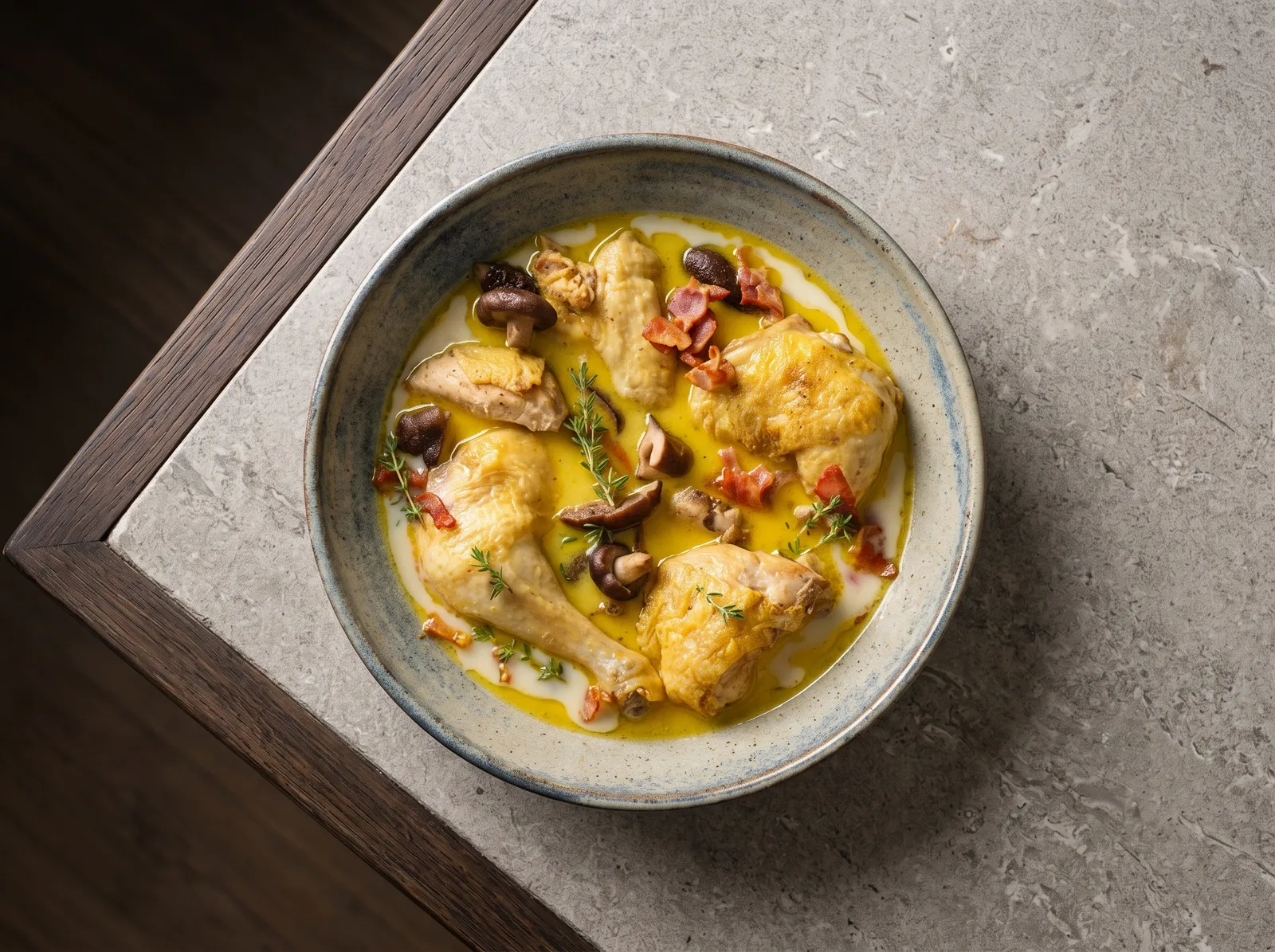
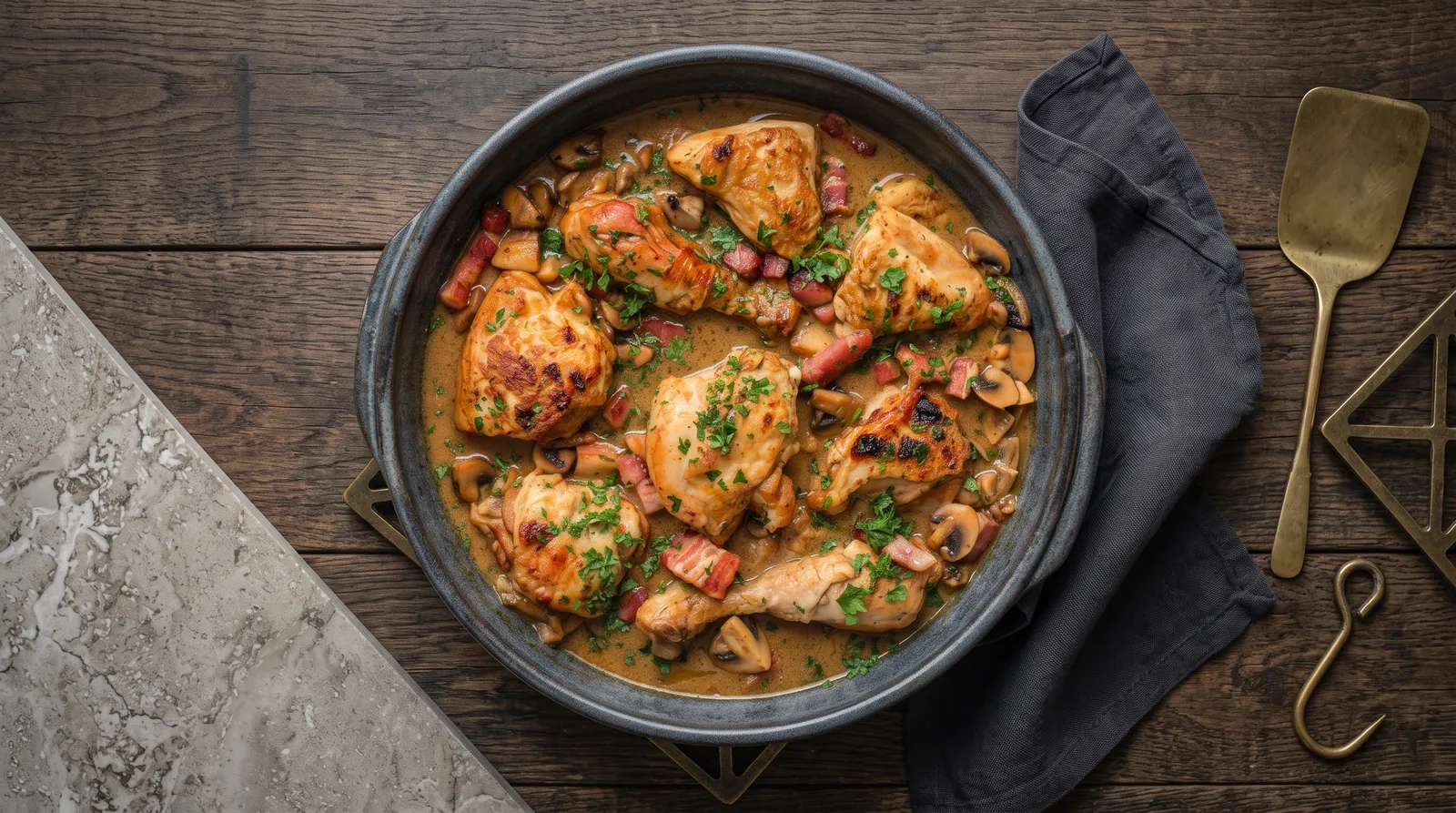
Coq à la bière — shown in a pan
Prep 25 minutes
Cook 180 minutes
Total 205 minutes
Yield 6 main-course portions
Introduction and overview

Coq à la bière — northern French rooster in amber beer

Coq à la bière belongs to the beer-braising culture of northern France, but it is not carbonade with poultry substituted for beef. The bird is a genuine rooster, and the sauce is built from amber beer, carrot, onion, butter, a little brown vergeoise and the rooster’s own cooking juices.

The choice of bird determines the clock. A mature coq needs the patient 2.5-hour covered simmer that would be excessive for many supermarket chickens. Safety is checked at 74 °C in the thickest pieces, while tenderness is checked separately by how easily the meat loosens from the bone.

Amber beer matters because malt sweetness and moderate bitterness survive reduction better than a highly hopped beer. After the rooster is tender, the meat comes out briefly so the sauce can reduce to a light coating consistency. The long cook lowers the alcohol substantially but does not justify saying that every trace has evaporated.
Success points

Success points

  • Use amber beer with malt character and moderate bitterness; a strongly hopped IPA can turn harsh after reduction.
  • Respect the long braise because actual coq has firmer connective tissue than ordinary chicken.
  • Reduce only after the bird is tender so the beer sauce can be adjusted without overcooking the meat.
Ingredients

Ingredients

  • 1800 g rooster (coq), jointed into 8–10 bone-in pieces — Nutrition assumes about 55% cooked edible meat-and-skin yield, about 990 g; bones are excluded.
  • 300 g carrots, small dice
  • 300 g yellow onions, small dice
  • 750 ml amber bière de garde or other balanced amber beer — Beer supplies barley/gluten and alcohol; avoid very bitter IPA.
  • 250 ml unsalted celery-free poultry stock
  • 30 g unsalted butter
  • 15 g brown vergeoise sugar
  • 1 bouquet garni, thyme, bay and parsley
  • 6 g fine salt
  • 2 g black pepper
Method

Method

Braise

  1. Brown the rooster. Melt the butter in a heavy cocotte and brown the rooster pieces on all sides. The rooster has an even deep golden-brown surface on several sides. Raw poultry must not be tasted.

  2. Sweat the vegetables. Add the carrot, onion and bouquet garni, lower the heat, and cook until the vegetables begin to soften. The onions are translucent at the edges and the vegetables have picked up browned juices from the pot.

  3. Add beer and begin the braise. Pour in the amber beer and stock, stir in the vergeoise, bring to a boil, cover and reduce to the faintest simmer. The liquid has reached a full boil before the heat is lowered. Alcohol does not disappear completely during cooking.

  4. Slow-braise the coq. Keep the cocotte covered at very small bubbles until the mature bird is tender. Target temperature: 74 °C. The thickest rooster pieces reach at least 74 °C without the probe touching bone. The meat is very tender and loosens from the bone with little resistance. The braising liquid tastes rounded rather than sharply alcoholic. All poultry must reach at least 74 °C.

  5. Reduce the beer sauce. Transfer the rooster to a warm dish, discard the bouquet garni, and simmer the sauce uncovered until it lightly coats a spoon. Target temperature: 74 °C. The sauce is glossy and nappant rather than watery. The rooster remains hot and safe for service at 74 °C or above. Keep the cooked poultry protected while the sauce reduces.

Practical guidance

Practical

Practical guidance

Serving: steamed potatoes or fresh noodles make neutral partners for the malty braising sauce.

Practical guidance

Make-ahead: cook the full dish a day in advance, cool safely and lift off any firm surface fat before reheating.

Practical guidance

Storage: refrigerate at 4 °C or below for up to 3 days.

Practical guidance

Reheating: warm covered until the poultry reaches 74 °C, then adjust the sauce uncovered if needed.

Practical guidance

Substitution: a younger chicken requires a shorter tenderness cook and should be named as chicken rather than silently standing in for coq.

Troubleshooting

Troubleshooting

  • Issue 1Sauce too bitter: the beer was too highly hopped or reduced too aggressively. Rooster still firm: continue the covered braise rather than increasing heat sharply.
Nutrition per serving

Nutrition per serving

  • Serving size1 of 6 portions, about 165 g cooked edible rooster plus sauce
  • Calories490 kcal
  • Carbohydrate15 g
  • Protein47 g
  • Fat20 g
  • Fibre3 g
  • Sodium720 mg
Allergens and food safety

Allergens and food safety

Allergens: Gluten and barley from beer

Cook the rooster to at least 74 °C in the thickest meat without touching bone.

Amber beer contains barley/gluten and alcohol; some alcohol may remain after the 2.5-hour braise.

Keep cooked poultry refrigerated at 4 °C or below and reheat leftovers to 74 °C.

FAQ

FAQ

Why use amber beer?

Its malt character supports a long reduction better than aggressively bitter beer.

Is the alcohol completely gone after 2.5 hours?

No. The calculation uses a low retained fraction, but it does not claim zero alcohol.

Closing

Closing

  • Result: Amber beer matters because malt sweetness and moderate bitterness survive reduction better than a highly hopped beer.
  • Decisive technique: Use amber beer with malt character and moderate bitterness; a strongly hopped IPA can turn harsh after reduction.