French National Dishes

Baba au rhum

A yeast-raised French baba baked in individual moulds, cooled completely, then saturated with warm citrus syrup finished with dark rum so the crumb is moist all the way through without losing its shape.

French National Dishes
Share
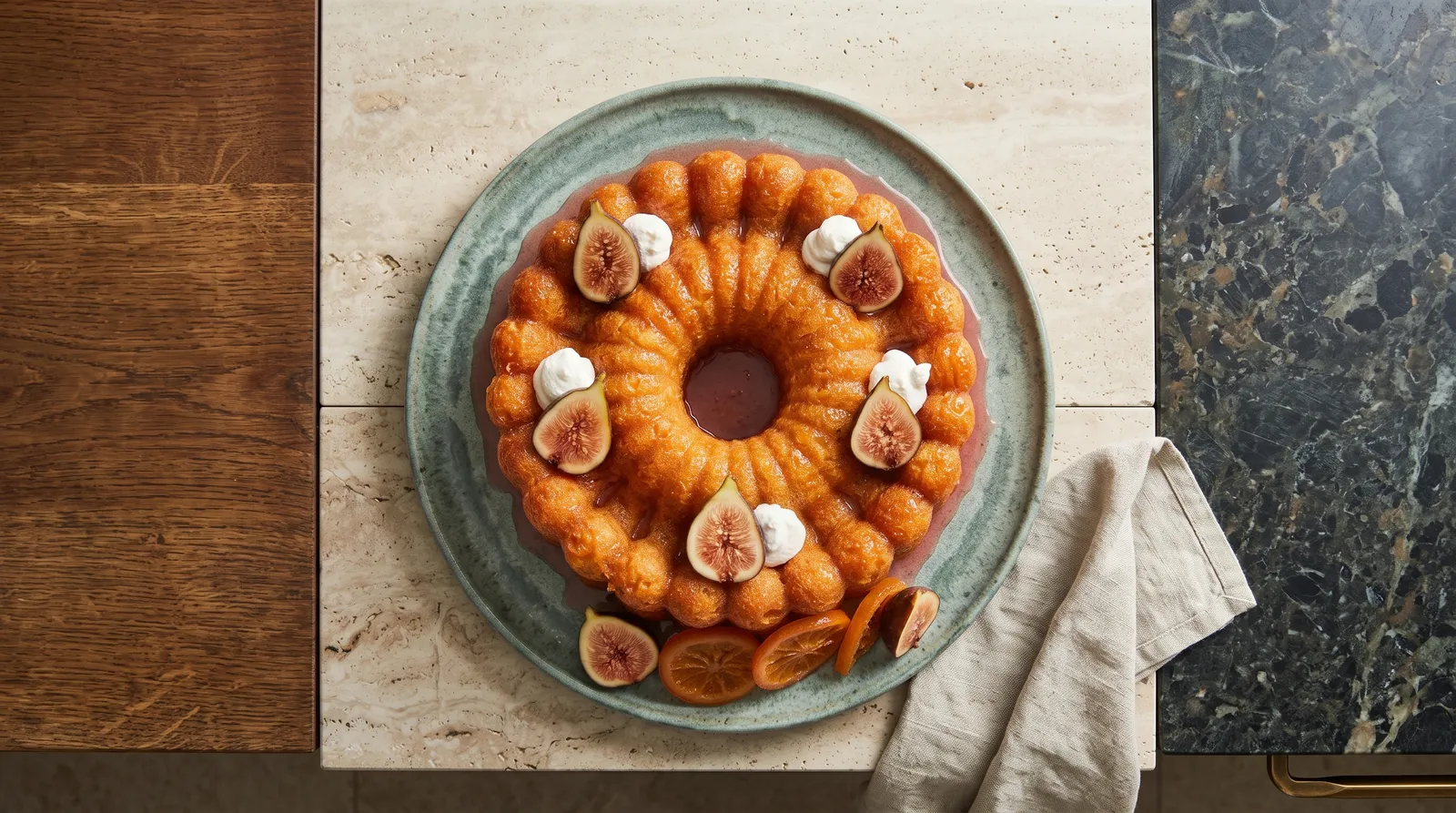
Baba au rhum — shown whole after baking
Prep 45 minutes
Cook 30 minutes
Total 290 minutes
Yield 8 individual babas
About this dish

Classic baba au rhum with dark-rum citrus syrup

Baba au rhum sits between breadmaking and pâtisserie. Its dough is richer than bread but far softer than brioche, with enough egg and butter to stay tender once soaked. The crucial structural work happens before baking: the dough must be mixed until elastic, proofed twice, and baked until the shell and crumb are strong enough to accept a large amount of liquid. A pale or under-proofed cake may look delicate, but it tends to compress or tear once it meets syrup.

The syrup is deliberately simple: water, sugar and citrus zest, with dark rum stirred in after the pan comes off the heat. That order matters because the dessert is meant to taste distinctly of rum and should not be described as alcohol-free. The cakes are cooled fully before soaking, then turned in warm syrup until moisture has reached the centre. The useful stopping point is not a clock alone: a skewer should pass through without finding a dry core, while each baba must still be firm enough to lift in one piece.

Individual 70 ml moulds give a practical home scale and make saturation easier to control than a very large ring. After soaking, a short rest on a rack lets excess syrup drain and the internal moisture equalize. Serve the baba cool rather than refrigerator-cold; a spoonful of unsweetened Chantilly is optional and works because it moderates sweetness without changing the base identity.
Success points

Success points

  • Mix long enough to develop elasticity before the first proof.
  • Do not soak until the cakes are fully baked and fully cool.
  • Add rum off heat and stop soaking when the centre is wet but the cake is still liftable.
Ingredients

Ingredients

Baba dough

  • 250 g wheat flour, bread-strength or French-style flour
  • 5 g instant dry baker’s yeast
  • 15 g caster sugar
  • 4 l arge eggs, about 200 g without shells
  • 100 g unsalted butter, soft, 20–22 °C
  • 3 g fine salt

Moulds

  • 20 g unsalted butter, soft, for greasing

Rum syrup

  • 500 ml water
  • 250 g caster sugar
  • 1 orange, zest in wide strips
  • 1 l emon, zest in wide strips
  • 100 ml dark rum, 40% ABV
Method

Method

Dough and proofing

  1. Develop the soft dough. Combine the flour, yeast and sugar, then add the eggs gradually while mixing. Add the salt, then work in the soft butter a little at a time. Mix for about 15 minutes in total. The dough is glossy, elastic and cohesive while still softer than ordinary bread dough.

  2. Give the dough its first rise. Cover the bowl and leave the dough for 60 minutes at a moderate room temperature. The dough is visibly aerated and roughly doubled in volume.

  3. Portion into the moulds. Butter eight individual baba moulds, each about 70 ml capacity. Divide the dough evenly and fill each mould about halfway. Each mould is half full and the dough surface is level enough to rise evenly.

  4. Proof to the rim. Cover loosely and leave for 45 minutes. The dough reaches close to the rim and springs back slowly after a very light touch.

Bake and cool

  1. Bake until structurally set. Bake at 190 °C for about 18 minutes. The babas are evenly deep golden, firm at the edges and release cleanly from the moulds.

  2. Cool before soaking. Unmould onto a rack and cool for 60 minutes. The babas are cool to the centre and the crumb feels dry enough to absorb syrup.

Syrup and soaking

  1. Make the rum syrup. Bring the water, sugar and citrus zest to a gentle boil, about 95 °C, and cook until the sugar is fully dissolved, about 12 minutes. The sugar is fully dissolved and the syrup is clear and fragrant, with no crystals on the base. Remove from the heat, let the bubbling subside, then stir in the dark rum.

  2. Saturate without breaking the crumb. Warm the syrup to about 55 °C if needed, then turn the cooled babas in it for about 20 minutes. A skewer meets almost no dry resistance through the centre, yet each baba can still be lifted without tearing.

  3. Let the syrup settle. Set the soaked babas on a rack over a tray for 30 minutes. The surface is moist and glossy but no longer sheds a stream of syrup when lifted.

Practical guidance

Practical

Practical guidance

Serve one baba per person at cool room temperature. If using Chantilly, keep it lightly sweetened or unsweetened so the syrup remains the main flavour. The baked cakes can be prepared earlier the same day; soak them at least 30 minutes before service so the liquid settles. Once soaked, cover and refrigerate at 4 °C or colder and use within 2 days. Bring out about 10 minutes before eating. Do not microwave or oven-reheat the soaked cakes, because heat drives syrup out and damages the delicate crumb. A non-alcoholic syrup can make a pleasant soaked yeast cake, but it should not be presented as baba au rhum because the rum is a defining element here.

Troubleshooting

Troubleshooting

  • Dense, tight crumbMixing or proofing was cut short; develop the dough until elastic and let each rise reach its visual cue.
  • Babas collapse during soakingThe cakes were under-baked or handled roughly; bake to a firm golden shell and turn them gently in syrup.
  • Dry centre after the outside is wetSyrup was too cool or soaking stopped too soon; warm it gently and continue only until the centre loses dry resistance.
Nutrition per serving

Nutrition per serving

  • Serving size1 individual baba
  • Calories415 kcal
  • Carbohydrate59 g
  • Protein7 g
  • Fat13 g
  • Fibre2 g
  • Sodium340 mg
Allergens and food safety

Allergens and food safety

Allergens: Wheat/gluten, Egg, Milk, Alcohol.

Contains alcohol added after heating; do not present it as alcohol-free.

Contains wheat, egg and milk.

Refrigerate the soaked cakes at 4 °C or colder and use within 2 days.

FAQ

FAQ

Can the rum be boiled to remove the alcohol?

That would change the preparation and still would not justify a guarantee of zero alcohol. The rum is intentionally stirred in after heating.

Why cool the cakes before soaking?

Cooling completes the crumb structure, making it far more resistant to tearing when the warm syrup penetrates.

Closing

Closing

  • Result: A light, springy baba saturated from edge to centre with citrus-rum syrup, glossy outside but still structurally intact.
  • Decisive technique: Build and bake enough gluten structure first, then soak the fully cooled cakes with warm syrup rather than forcing liquid into an under-set crumb.