French National Dishes

Baeckeoffe

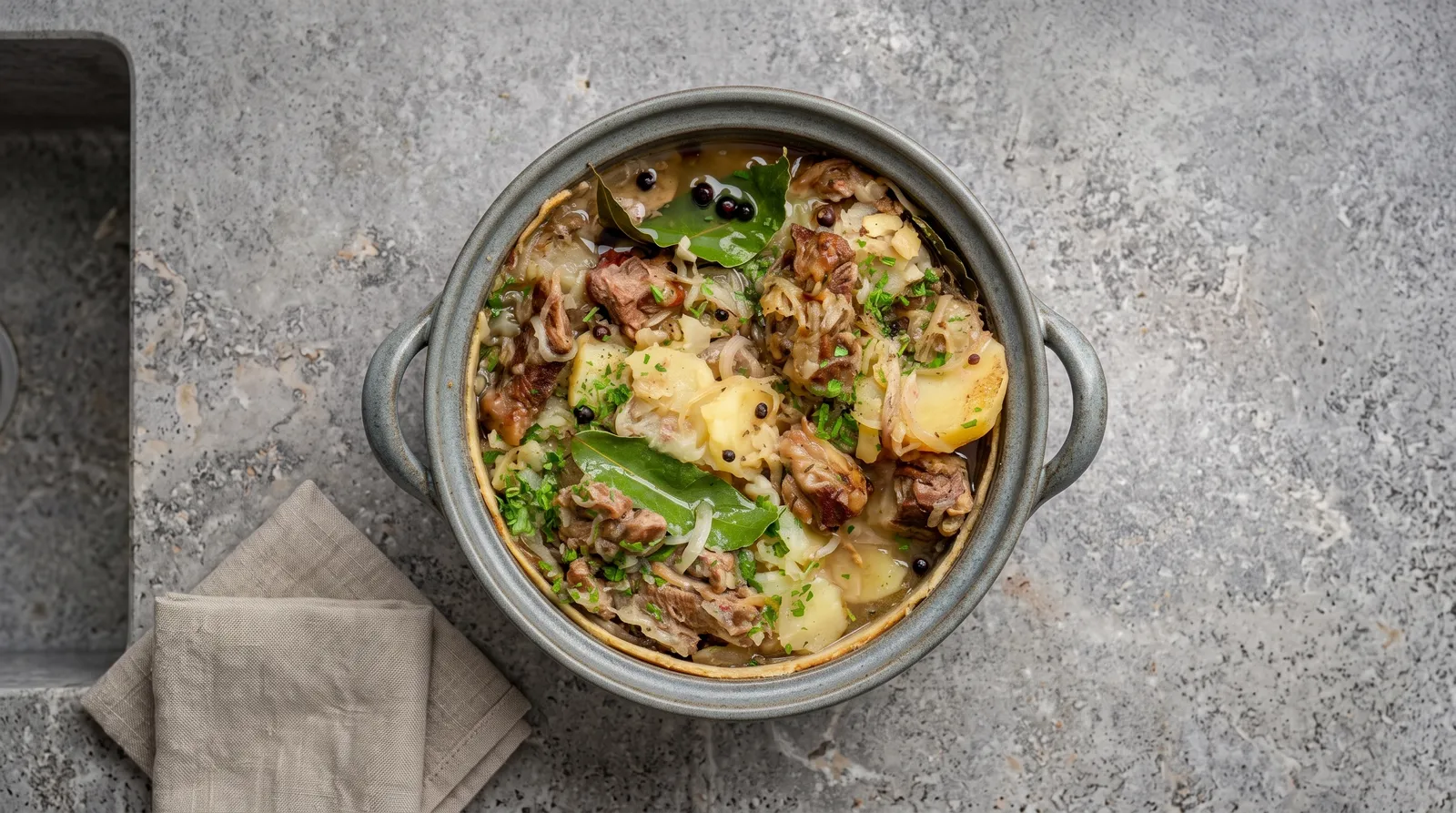
A sealed Alsatian terrine of three meats marinated for 24 hours in dry Riesling, layered with waxy potatoes, onion, leek and carrot, then baked slowly until the meat yields to a fork and the potatoes have absorbed the savoury wine-rich juices.

French National Dishes
Share
Baeckeoffe — shown in a cooking pot
Prep 50 minutes
Cook 180 minutes
Total 1670 minutes
Yield 6 generous main-course servings
About this dish

Alsatian baeckeoffe with beef, pork, lamb, potatoes and Riesling

Baeckeoffe is an Alsatian baker’s-oven dish built around time rather than browning. Beef chuck, pork shoulder and lamb shoulder are cut into similar pieces and left in a refrigerated Riesling marinade with onion, garlic and herbs for a full day. The next step is assembly, not searing: potatoes and vegetables are layered with the drained meat, the marinade is returned to the pot, and the lid is sealed so the contents cook in a humid enclosed environment.

The amount of liquid is one of the most important controls. The terrine should not become a soup; the wine-rich liquid comes only about halfway up the layers while the top potatoes remain partly above it. During three hours in a 170 °C oven, steam and meat juices circulate under the lid. The meat becomes fork-tender, while the potatoes soften and absorb the surrounding liquid. Opening the vessel repeatedly defeats that enclosed cooking environment, so judge doneness only at the end.

Traditional accounts explain the name through the baker’s oven, where a covered household terrine could cook slowly in residual heat. The modern home oven is different, but the same logic remains useful: long, gentle, sealed cooking. The preparation keeps the widely documented three-meat structure and a dry Alsace Riesling, while treating the flour-and-water rim as a functional seal rather than food to be served.
Success points

Success points

  • Marinate all three meats under refrigeration for the full 24 hours.
  • Keep potato slices near 5 mm so they cook evenly.
  • Add liquid only to about mid-height and maintain a complete lid seal.
Ingredients

Ingredients

Meat and marinade

  • 400 g beef chuck, 4 cm cubes
  • 400 g pork shoulder, 4 cm cubes
  • 400 g lamb shoulder, 4 cm cubes
  • 750 ml dry Alsace Riesling
  • 150 g yellow onion, thinly sliced
  • 15 g garlic, crushed
  • 8 g fine salt
  • 2 g black pepper, coarsely ground
  • 2 bay leaves
  • 4 g fresh thyme

Layering vegetables

  • 1200 g waxy potatoes, peeled, 5 mm slices
  • 150 g yellow onion, thinly sliced
  • 250 g leeks, washed, thinly sliced
  • 200 g carrots, thinly sliced

Seal

  • 200 g wheat flour, for lid seal only; not eaten
  • 100 ml water, for lid seal only; not eaten
Method

Method

Marinade

  1. Marinate the meats overnight. Combine the beef, pork and lamb with 150 g onion, garlic, salt, pepper, bay, thyme and 500 ml of the Riesling. Cover and refrigerate for 24 hours at 4 °C or colder. The meat is evenly coated with wine and aromatics and remains fully chilled.

Assembly

  1. Prepare the layers. Slice the potatoes to about 5 mm and prepare the remaining onion, leeks and carrots. Drain the meat, reserving every drop of marinade. Potato slices are about 5 mm thick and the meat is drained without discarding the marinade.

  2. Build the terrine in layers. Layer potatoes, half the vegetables, half the meat, then repeat, finishing with potatoes. Pour in the reserved marinade and enough of the remaining 250 ml Riesling for the liquid to reach about halfway up the terrine. The final potato layer sits above liquid that reaches roughly halfway up the terrine.

  3. Seal the lid. Mix the flour and water into a firm paste, roll it into a rope and press it around the lid joint. The dough rope forms a continuous seal around the lid with no obvious gaps.

Bake

  1. Bake low and slow. Bake the sealed terrine at 170 °C for 3 hours without opening it. The potatoes are fully tender and all three meats yield easily to a fork without resistance. The meat should pass the 63 °C whole-cut safety minimum well before the quality endpoint; tenderness, not colour, is the final cooking cue.

Practical guidance

Practical

Practical guidance

Serve directly from the terrine, spooning meat, potatoes, vegetables and enough cooking juice into each bowl or plate. A sharply dressed green salad is a practical counterpoint to the richness. Marination is already a make-ahead step, and the cooked dish can also be cooled for later service if handled safely. Divide leftovers into shallow containers within 2 hours and refrigerate at 4 °C or colder for up to 3 days. Reheat to 74 °C throughout, adding a small splash of water only if the potatoes have absorbed nearly all the juice. A different dry Alsace white wine can function, but changing wine changes flavour and should not be described as preserving a specific wine identity.

Troubleshooting

Troubleshooting

  • Top potatoes are dry and leatheryThe liquid sat too low or steam escaped through a poor seal; keep the liquid near mid-height and close the lid securely.
  • Meat is still firm after bakingThe bake ended before collagen softened; return the sealed pot to the oven and continue until the pieces yield to a fork.
  • The dish is soupyToo much wine was poured over the layers; stop at roughly half the depth of the terrine next time.
Nutrition per serving

Nutrition per serving

  • Serving size1 generous serving
  • Calories750 kcal
  • Carbohydrate58 g
  • Protein53 g
  • Fat31 g
  • Fibre7 g
  • Sodium780 mg
Allergens and food safety

Allergens and food safety

Allergens: Wheat/gluten from the discarded flour-water lid seal, Sulphites from wine.

Raw beef, pork and lamb must marinate at 4 °C or colder.

Whole cuts have a 63 °C minimum safety threshold with rest, but this covered braise is cooked far beyond that until fork-tender.

Cool leftovers promptly; refrigerate within 2 hours and reheat to 74 °C.

FAQ

FAQ

Should the meat be browned first?

No. The defining method here is marination followed by enclosed slow cooking, not searing.

Is the flour seal eaten?

It is used as a practical lid seal and is not included in the nutrition estimate.

Closing

Closing

  • Result: Fork-tender beef, pork and lamb with soft potatoes and vegetables in concentrated Riesling-scented cooking juices.
  • Decisive technique: Preserve the sealed, mid-liquid-level environment through a long 170 °C bake instead of opening, stirring or reducing the terrine like a stew.