


Turoš Paprika Cone Cheese – Croatian Bauernkäse
Turoš belongs to the family of small, cone-shaped cheeses that mark the farmhouse tables of northern Croatia, especially the Međimurje region near the Hungarian border. On traditional family farms, fresh milk stands in a warm corner until it turns pleasantly acidic, then heats for hours until curds form, are bundled in cloth, and left to drip. Only after that long,…


Krk Island Sheep Cheese “Krčki sir” – Aged Dalmatian Classic
Krk Island sits in the northern Adriatic, just off the Croatian coast, where sea wind, limestone, and sparse vegetation shape life at ground level. The same conditions that test olive trees and low shrubs shape the milk of the island’s sheep, which graze on hardy plants scented with sage, rosemary, and other Mediterranean herbs. From that milk comes Krčki sir,…

Cetina Mountain Cheese “Cetinski sir”
Cetina Mountain Cheese, known locally as Cetinski sir, carries the flavor of the Dalmatian hinterland in a compact, pale wheel. It belongs to the family of rustic farmhouse cheeses that grew out of necessity rather than luxury: families in the Cetina river valley had fresh milk, a changing climate between coastal and inland influences, and a need to preserve nourishment…

Paška Janjetina: Pag Island Herb-Roasted Lamb with Potatoes
On the island of Pag, lamb is not just another protein in the rotation; it anchors the table in a place where rock, wind, and sea set the rhythm of daily life. Paška janjetina refers to the fresh meat of suckling lambs from the local Pag breed, raised exclusively on the island and granted protected designation of origin status within…

Traditional Meso ‘z tiblice (Međimurje Pork Preserved in Lard)
Meso 'z tiblice comes from Međimurje, a small region in northern Croatia bordered by rivers, vineyards, and long winters. For generations, families there relied on careful meat preservation to carry them through the colder months, and this dish grew directly from that need. It turns pork and lard into a compact reserve of sustenance and flavor, packed into a wooden…

Hladetina – Chilled Pork Jelly (Croatian Recipe)
Hladetina belongs to the family of old-world meat jellies, shaped by winter kitchens, wood-fired stoves, and a strong habit of using the whole animal. In Croatian homes, it often appears after the annual pig slaughter, when skin-on cuts, trotters, and hocks simmer for hours, giving up flavor and natural gelatin. Once cooled and set, that broth becomes a clear, quivering…

Krvavice / Čurke – Traditional Croatian Smoky Barley Sausage
Krvavice are traditional winter delicacies from continental Croatia, produced primarily in the regions of Zagorje, Istria, Dalmatia, and Slavonija-Baranja. Čurke, the regional name used in Međimurje, refers to these same traditional sausages. These robust, deeply savory sausages represent Croatian culinary heritage at its most resourceful and satisfying. Born from the centuries-old practice of pig slaughtering known as "koline," these sausages…

Croatian Wild Mushroom Soup with Porcini and Cream
In Croatian homes, soup anchors the meal. A clear broth or a more substantial bowl almost always arrives first, especially at Sunday lunches and feast days. Mushroom soup holds a special place in that lineup, particularly versions built around porcini, which Croatian cooks prize for their woodland aroma and deep, savory character. National overviews of Croatian cuisine even single out…
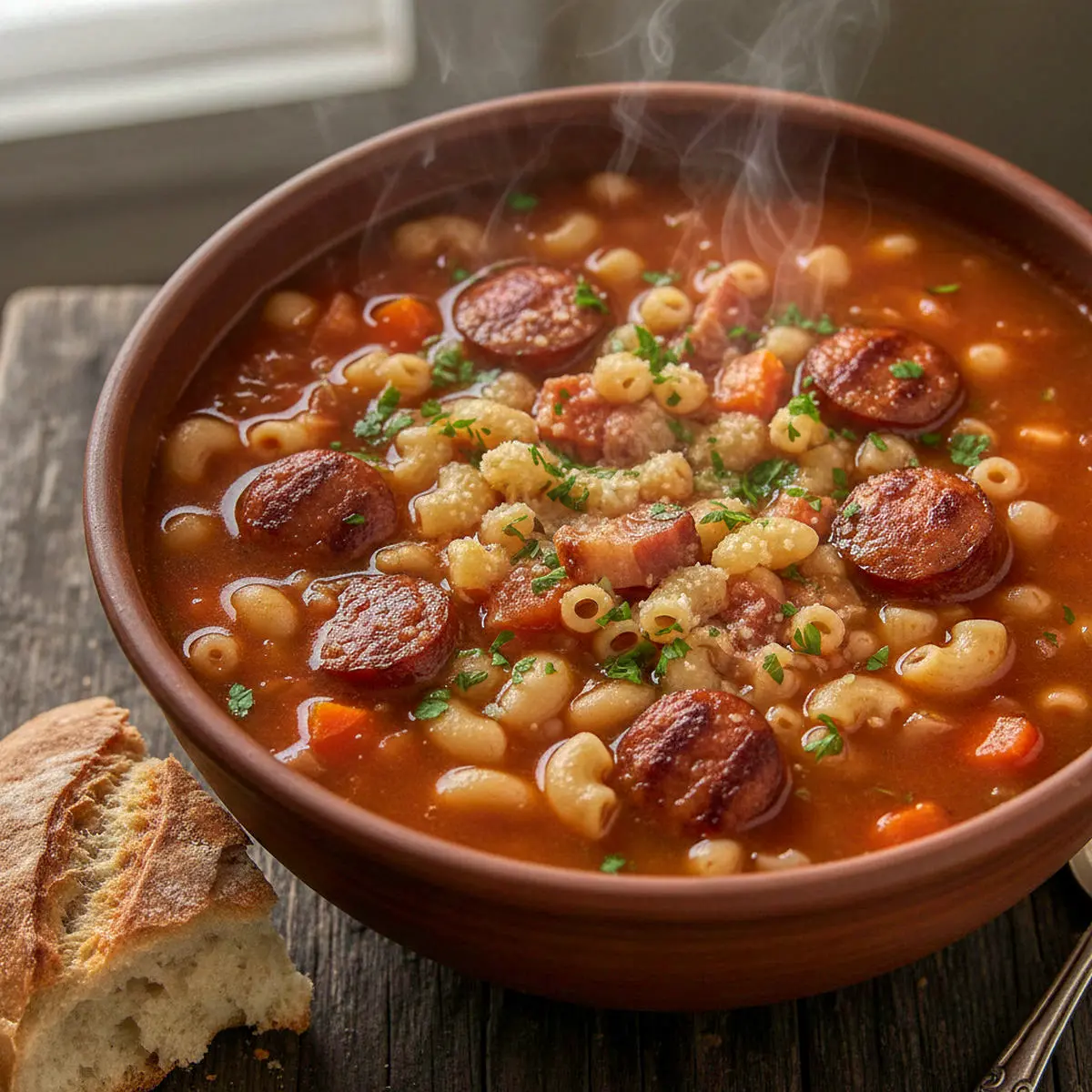
Pašta Fažol (Croatian Pasta and Bean Soup Recipe)
Pašta Fažol sits near the heart of Croatian home cooking: a dense, fragrant pot of beans, small pasta, and smoked pork that can serve as soup, stew, or full meal, depending on how long it simmers and how much liquid remains. Across the Adriatic coast and inland regions, families treat it as dependable winter fuel and everyday comfort, not a…
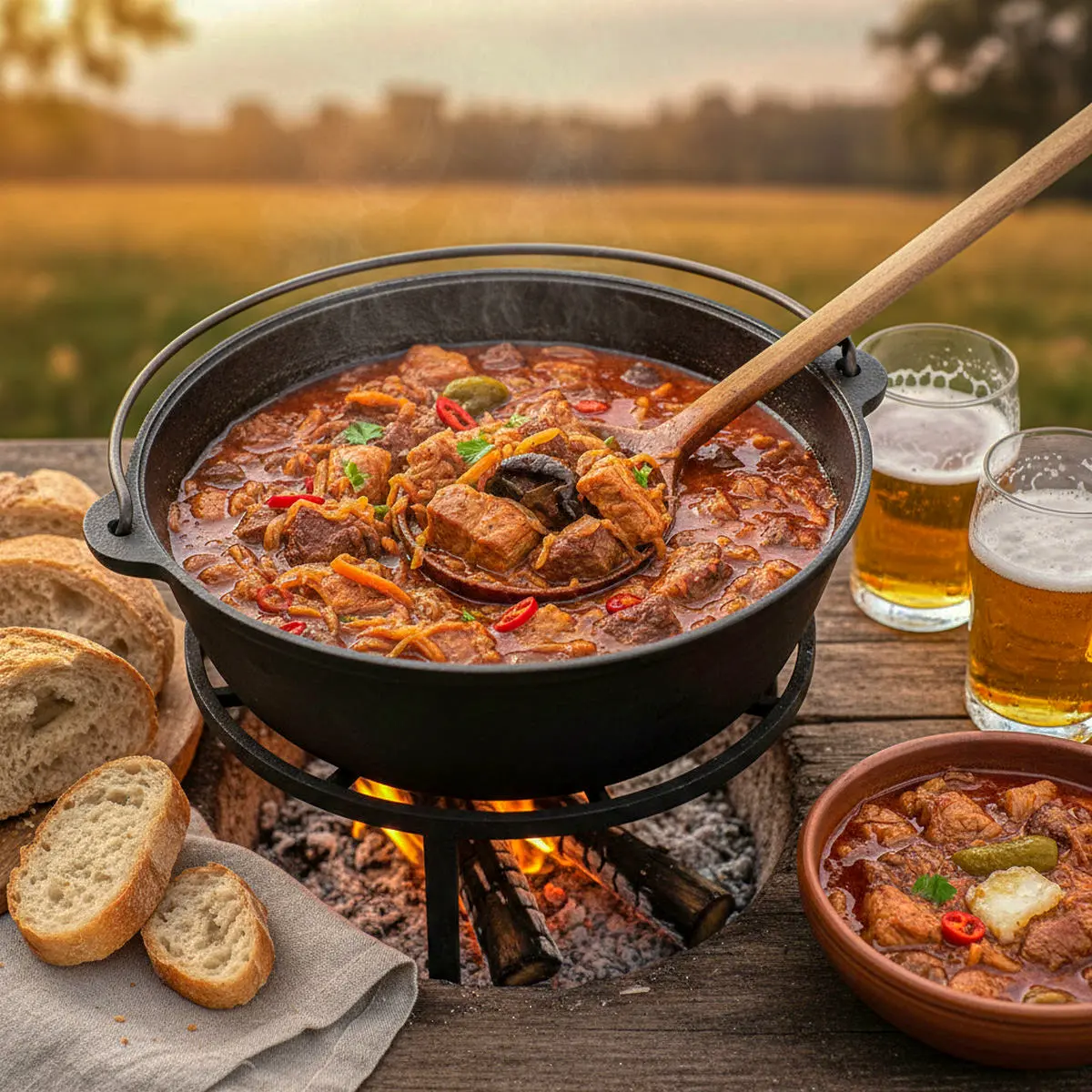
Slavonian Čobanac: Spicy Croatian Mixed-Meat Stew
In eastern Croatia, among the lowland fields and river plains of Slavonia and Baranja, Čobanac sits at the center of many gatherings. This paprika-forward mixed-meat stew began as a practical one-pot meal cooked in a large copper kettle over an open fire for shepherds and field workers who needed something substantial, warming, and rich in protein to carry them through…
