Welsh complet — northern French Cheddar-beer toast with ham and egg
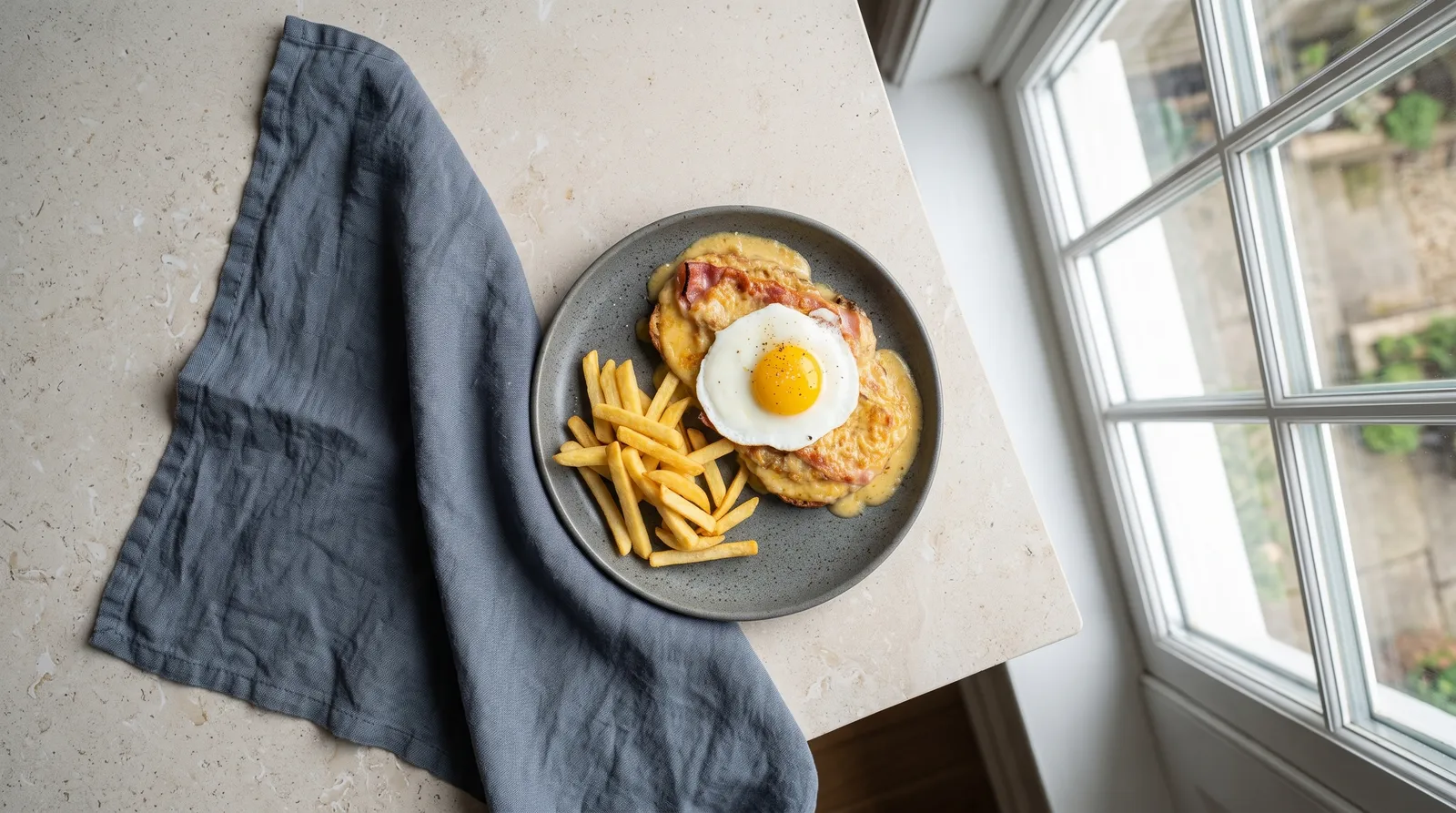
Welsh complet is part of the everyday brasserie and estaminet repertoire of northern France, particularly Nord and Pas-de-Calais. Its ancestry reaches back to British and Welsh cheese-on-toast traditions, but the northern French plate has developed a clear identity of its own: thick bread, cooked ham, Cheddar melted with beer and mustard, then an egg on top. In local usage, that egg is what marks the serving as “complet”. Removing the egg leaves a simpler welsh and changes the named form.
The central technical job is not the grill; it is the cheese sauce. Mature Cheddar must be melted gradually with a measured amount of beer over low heat. If the pan boils hard, fat can separate and the cheese can tighten into an oily, elastic mass. When the sauce is ready it should be glossy, smooth and thick enough to coat the spatula, yet loose enough to flow over the ham and toast. A short blast under the upper grill then reheats the assembled dish and gives the top a few golden spots.
Four stable individual gratin dishes suit the brasserie-style service and keep the molten cheese contained better than one large pan. The eggs are pasteurized because the selected service keeps the yolk soft while the white is fully set. If pasteurized shell eggs are not available, the safe alternative is to cook the egg centre to 71 °C, accepting a firmer yolk. The distinction is explicit so the appealing soft-yolk presentation never depends on an undercooked unpasteurized egg.
Beer is a flavouring and a liquid in the sauce, not a guarantee of an alcohol-free dish after cooking. The stovetop melt and brief grill are too short to assume complete alcohol removal. The finished welsh therefore remains an alcohol-containing dish, and the bread and beer contribute gluten while the selected Dijon mustard contributes both mustard allergen and sulphites.