French Recipes

Tarte au maroilles

A soft yeast-raised 24 cm tart topped with genuine Maroilles AOP, baked until the base is cooked and the washed-rind cheese bubbles and browns.

French Recipes
Share
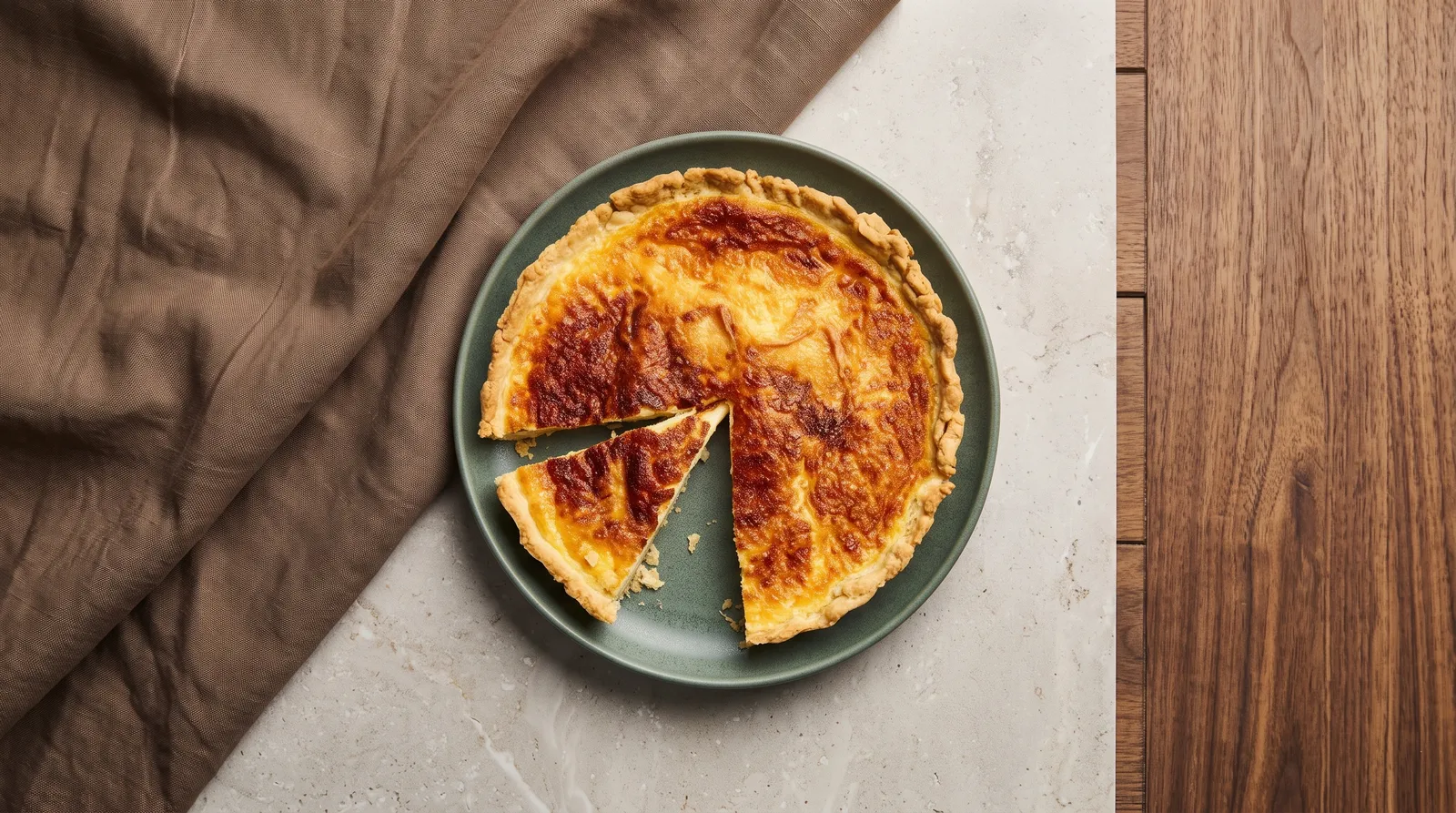
Tarte au maroilles — shown with a cut section visible
Prep 20 minutes
Cook 30 minutes
Total 125 minutes
Yield 1 × 24 cm tart, 6 slices
Introduction and overview

Tarte au maroilles — northern French raised cheese tart

Tarte au maroilles is built around the cheese rather than around an egg custard. The base is a soft yeast-raised dough, closer to a light savoury bread than to standard quiche pastry, and the topping is a single even layer of Maroilles. Keeping that construction clear stops the dish from drifting into generic cheese quiche or pizza.

Maroilles is a washed-rind cow’s-milk cheese protected by AOP status and associated with the Thiérache area spanning Nord and Aisne. The orange rind is edible and part of the cheese's character, so it is kept after a quick visual check that the surface is clean. Thin slices melt more evenly than thick chunks and reduce the chance of a greasy pool forming in the centre.

The dough is deliberately soft. It is beaten until elastic, spread directly into the tin and given a full hour to rise until visibly puffy. The clock is only a guide: the decisive sign is volume. Once topped, a 200 °C oven sets the enriched base quickly while the cheese melts, bubbles and colours. Resting for 15 minutes keeps the molten topping on the slice without losing the pleasure of serving it warm.
Keys to success

Keys to success

  • Cool the milk-butter mixture enough that it feels warm rather than hot before adding it to yeast.
  • Judge proofing by visible puffiness, not time alone.
  • Keep the Maroilles in thin, even slices with the rind intact.
Ingredients

Ingredients

Raised base

  • 150 g plain wheat flour
  • 6 g instant dry yeast
  • 5 g granulated sugar
  • 3 g fine salt
  • 150 ml whole milk
  • 40 g unsalted butter — melted in milk
  • 50 g whole egg, beaten — about 1 large egg without shell

Topping

  • 200 g Maroilles AOP, cold; clean washed rind retained — pasteurized-dairy product for this household batch
Method

Method

Directions

  1. Warm the milk and butter. Heat the milk gently with the butter only until the butter melts, then take it off the heat so it can cool slightly. The butter is melted and the milk is warm but not steaming. Warm liquid disperses the yeast dough without overheating it. Do not boil the milk.

  2. Mix the yeast dough. Combine the dry ingredients, add the egg and warm milk mixture, then beat until the soft dough becomes cohesive and elastic. The dough is smooth, sticky-soft and pulls in elastic strands rather than looking like pourable batter. Developing some gluten supports a light raised base under the cheese. Keep raw egg off work surfaces and wash hands after spills.

  3. Spread the dough in the tin. Press the soft dough evenly across the tart tin with lightly buttered fingers. The dough reaches the edge in an even layer without a thick central mound. Even thickness helps the base bake at the same rate under the cheese. Use lightly buttered fingers rather than adding extra flour.

  4. Proof until puffy. Cover the tin and let the dough rise until it is clearly aerated and roughly twice as thick. The dough is visibly puffed and roughly doubled in thickness across the centre. Proofing creates the characteristic soft raised base. Keep the covered dough away from excessive heat.

  5. Top with Maroilles. Slice the cold cheese thinly, keeping the clean edible rind, and cover the risen dough evenly. The cheese covers most of the surface in a single even layer and no large mound sits in the centre. Keeping the edible washed rind preserves the cheese character and even slicing promotes uniform melting. Use pasteurized-dairy Maroilles for this household batch and refrigerate until slicing.

  6. Bake until bubbling and browned. Bake the tart in the hot oven until the dough is cooked through and the cheese is vigorously melted with browned spots. The base is cooked through at the edge and underneath, while the Maroilles is fully melted, bubbling and browned in spots. High oven heat cooks the enriched base while melting the washed-rind cheese quickly. Use oven gloves; bubbling cheese can cause burns. Keep the oven at 200 °C.

  7. Rest before serving. Leave the tart in its tin for 15 minutes so the cheese settles and the base firms enough to slice. The cheese has stopped bubbling fiercely and the base can be cut without compressing into paste. A short rest keeps molten cheese in the slice while preserving a warm crumb. Refrigerate any leftovers within 2 hours.

Serving

Practical

Serving

Serve warm, not straight from the oven. The 15-minute rest gives a cleaner slice while leaving the Maroilles soft and aromatic.

Storage and reheating

Refrigerate within 2 hours at 4 °C or below for up to 3 days. Reheat slices in a 170 °C oven until the centre reaches 74 °C; the oven revives the base more effectively than a microwave.

Make-ahead and substitutions

The dough can be mixed earlier in the day, but the tart is best baked close to serving. Another washed-rind cow’s-milk cheese may melt similarly, yet the result should be named honestly because only genuine Maroilles supplies the protected identity and its specific salt-aroma profile.

Troubleshooting

Troubleshooting

  • Heavy, flat baseThe yeast was weakened by excess heat or the dough was baked before it visibly puffed. Keep the milk only warm and allow the full rise before topping.
  • Cheese releases excessive fatThick piles heat unevenly. Slice it more thinly and cover the dough in one layer.
Nutrition per serving

Nutrition per serving

  • Serving size1 slice, 1 of 6
  • Calories282 kcal
  • Carbohydrate21.8 g
  • Protein11.5 g
  • Fat16.3 g
  • Fibre0.9 g
  • Sodium488 mg
Allergens and food safety

Allergens and food safety

Allergens: milk, egg, gluten.

Keep milk, egg and Maroilles refrigerated until use.

Refrigerate the baked tart within 2 hours and keep at 4 °C or below.

Reheat leftovers to 74 °C.

FAQ

FAQ

Should the Maroilles rind be removed?

No. The clean washed rind is edible and retained here because it contributes aroma and colour.

Is a cream-and-egg filling necessary?

No. Some versions add cream, the restrained form here keeps the raised base and Maroilles as the main structure.

Closing

Closing

  • Result: A light, tender raised base under molten, savoury Maroilles with an orange-gold baked surface.
  • Decisive technique: Proof the soft dough until visibly puffy and spread the cheese in thin slices so base and topping finish together.