French Recipes

Pieds et paquets

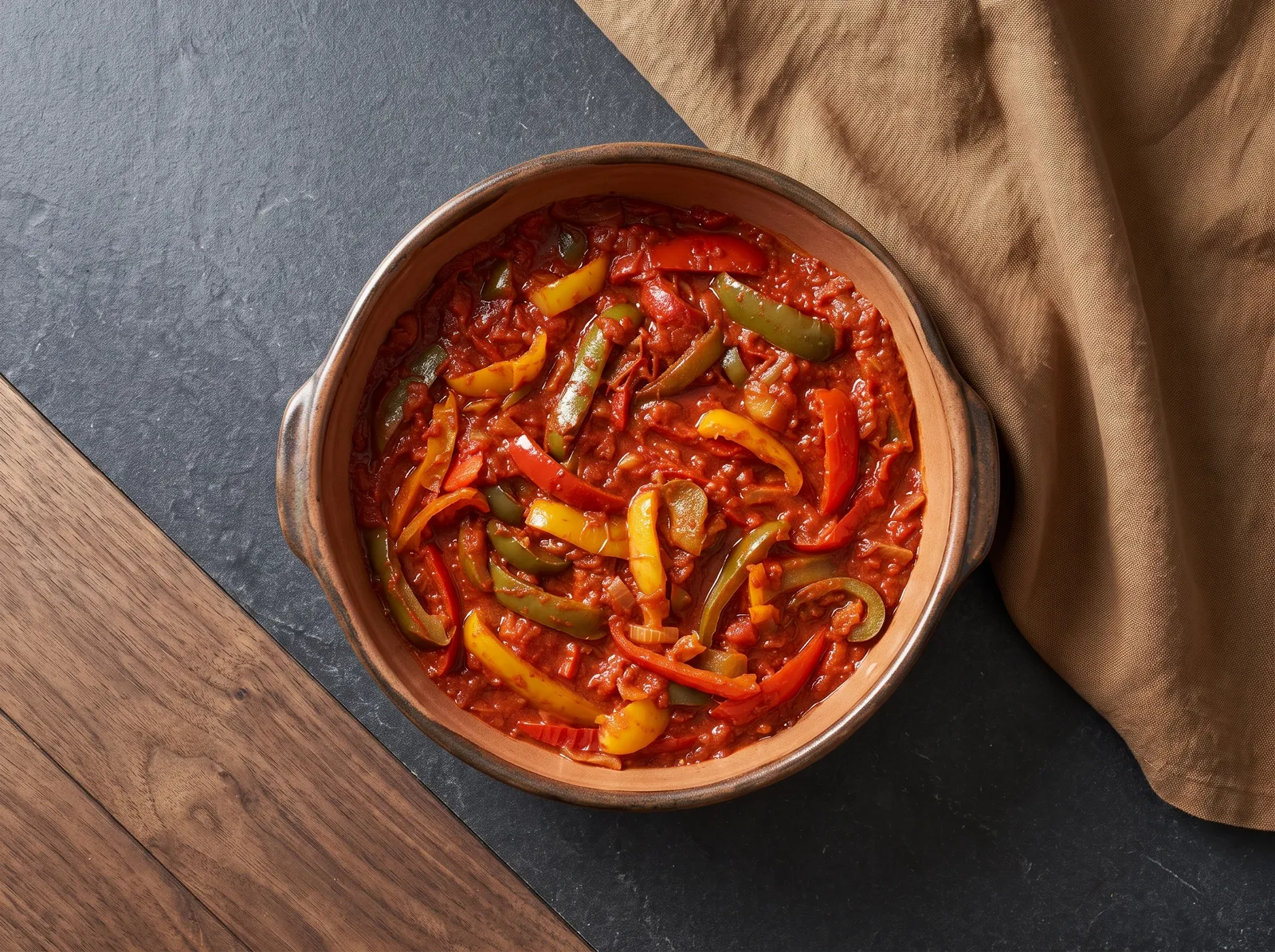
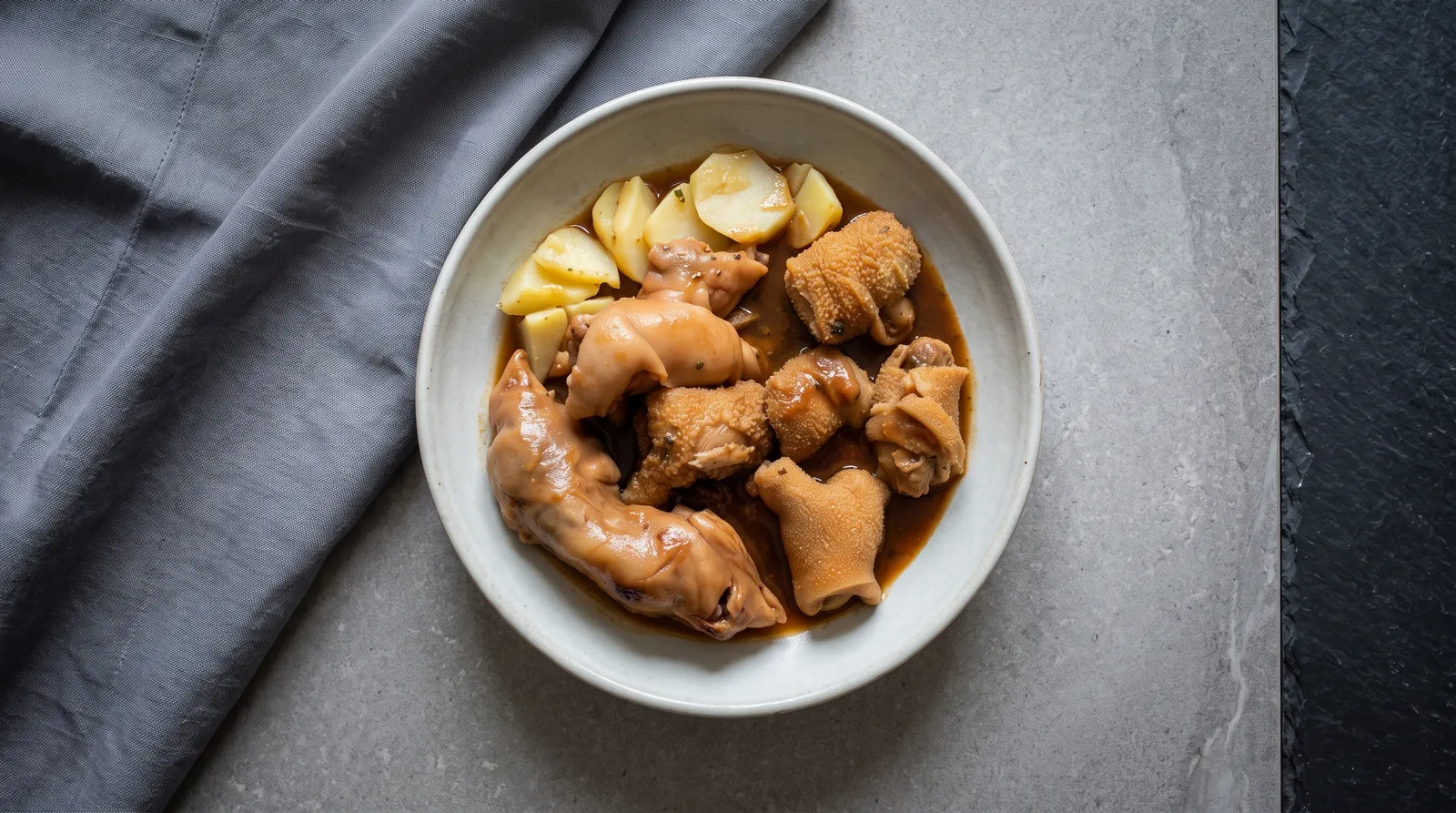
Marseille-style bundles of cleaned sheep tripe wrapped around salt pork, garlic and parsley, slowly braised with cleaned sheep feet in tomato, white wine and aromatics until gelatinous and tender.

French Recipes
Share
Pieds et paquets — served on a plate
Prep 45 minutes
Cook 455 minutes
Total 500 minutes
Yield 4 generous main-course servings
Introduction

Pieds et paquets — Marseille tripe parcels with sheep feet

Pieds et paquets is not a generic tripe stew. The Marseille structure is explicit: the paquets are individual pieces of sheep tripe wrapped around a savoury filling, and the pieds are sheep feet that share the same very long tomato-and-white-wine braise. Both parts matter, as does the patience needed to move firm offal toward a yielding, gelatin-rich texture.

The home kitchen starts with commercially scalded, cleaned tripe sheets and commercially cleaned, split sheep feet. There is no reason to reproduce slaughterhouse work at home. The tripe is kept cold, cut into regular rectangles and rolled around finely diced salt pork, garlic and parsley. String is a practical extra safeguard so twelve parcels can survive hours of gentle movement in the pot.

The braising base uses onion, carrot and celery, followed by tomato, dry white wine, stock, thyme, bay and orange zest. Once the liquid is simmering, the feet sit low in the casserole and the parcels above them. The seven-hour cook is deliberately quiet: hard boiling can unravel the bundles and reduce the sauce long before connective tissue has softened.

At the end, the feet require a final piece of careful work. All bones are removed before the edible meat and gelatin return to the sauce, and the sauce is skimmed and reduced only enough to coat. The result should be intensely savoury and glossy, with parcels that hold their shape but no longer chew like raw tripe.
Success points

Success points

  • Start with commercially prepared offal and keep it cold until the casserole is ready.
  • Tie parcels firmly; a seven-hour braise exposes weak folds quickly.
  • Keep the simmer quiet and steady, then remove every foot bone before serving.
Ingredients

Ingredients

Paquets and feet

  • 900 g commercially scalded and cleaned lamb tripe sheets — cold; cut into 12 rectangles about 9 × 11 cm; No primary cleaning instructions; purchased ready for culinary use.
  • 600 g commercially cleaned split sheep feet — 4 feet, purchased weight; Expected edible cooked meat/gelatin about 180 g; bones are discarded.
  • 150 g salt pork belly — cut into very small dice
  • 20 g garlic — finely chopped; 12 g for filling, 8 g for braise
  • 30 g flat-leaf parsley — finely chopped
  • 4 g fine salt
  • 2 g black pepper — freshly ground

Braising sauce

  • 30 ml olive oil
  • 200 g onion — finely sliced
  • 160 g carrot — 5 mm slices
  • 80 g celery stalk — 5 mm slices
  • 400 g peeled tomatoes — chopped
  • 500 ml dry white wine — Contains sulphites; alcohol may remain after cooking.
  • 800 ml unsalted chicken stock — hot
  • 3 g thyme
  • 1 bay leaf
  • 5 g orange zest — wide strips
Method

Method

Form the parcels

  1. Roll twelve parcels. Keep the commercially prepared tripe cold. Mix the 150 g salt pork with 12 g garlic, parsley, half the pepper and half the salt. Divide the filling across the 12 tripe rectangles, roll tightly and secure each parcel with kitchen string. All 12 parcels are compact, similarly sized and tied firmly enough that no filling is exposed. Uniform parcels resist opening during a long braise and cook at a similar rate. Do not perform slaughter, singeing or primary offal cleaning at home; use commercially prepared tripe and keep it refrigerated.

  2. Prepare the commercial feet for the pot. Pat the commercially cleaned split feet dry and inspect only for loose fragments left by the processor; do not undertake primary cleaning. The feet are dry on the surface and no loose bone fragment remains on the tray. Dry surfaces reduce splashing when the feet enter the hot braising base. Handle feet as raw animal protein and sanitise the tray and surrounding surfaces afterward.

Build the braise

  1. Soften the braising vegetables. Heat 30 ml olive oil in a heavy 6-litre casserole. Soften onion, carrot and celery for 10 minutes without scorching, then add the remaining 8 g garlic for the final minute. The vegetables are softened and lightly golden at the edges, with no burnt garlic. A cooked aromatic base gives the long braise sweetness without needing aggressive browning. Keep hot oil stable and add damp ingredients carefully to limit splatter.

  2. Bring the sauce to a simmer. Add tomatoes, wine, stock, thyme, bay and orange zest. Bring the liquid to a full simmer for 10 minutes, then nestle the sheep feet on the bottom and the 12 parcels above them. The sauce is simmering evenly before the raw offal is fully submerged. Moving promptly through the warming phase avoids leaving raw offal for a prolonged period in lukewarm liquid. Use separate utensils for the raw parcels until the braise is established.

Braise until gelatinous

  1. Give the braise its full time. Cover and maintain the casserole at a very gentle simmer for 420 minutes, checking periodically that the parcels remain mostly covered and turning them carefully once or twice. The tripe parcels are yielding rather than rubbery, the feet are gelatinous and the sauce has a cohesive body. Very long gentle cooking converts connective tissue without breaking the parcels apart. Keep the lid controlled to avoid steam burns and do not let the pan boil dry.

Degrease and finish

  1. Strip bones and reduce. Lift out the parcels and feet. Remove and discard all bones from the feet, retaining about 180 g edible meat and gelatin. Skim obvious surface fat, then reduce the sauce uncovered for 15 minutes before returning the edible foot meat and parcels. The sauce coats a spoon lightly and no hard bone remains in the edible foot meat. Bone removal and a short reduction give a safer, cleaner serving sauce without counting discarded bones in the yield. Check the foot meat carefully for small bones before returning it to the casserole; hot steam and sauce can burn.

Serving, storage and make-ahead

Practical

Serving

Allow three parcels per person with a modest portion of edible foot meat and sauce. Potatoes or bread are compatible accompaniments but are not counted in the nutrition shown here.

Make-ahead

A day in advance works especially well. Chill promptly after cooking; the sauce gels in the refrigerator and surface fat is easier to remove before reheating.

Storage and reheating

Refrigerate within 2 hours and use within 3 days. Reheat covered over low heat until steaming throughout, loosening with a little stock only when necessary.

Purchasing shortcut

Ready-rolled paquets from a reputable butcher can replace the parcel-assembly stage when they use the same salt-pork, garlic and parsley idea. Taste the braising sauce before adding further salt.

Why such a long braise?

Tripe and feet contain connective tissue that needs sustained gentle heat; shortening the cook leaves the parcels rubbery and the feet resistant.

Can the feet be left whole on the plate?

The safer household service is to strip the edible meat and gelatin and remove the small bones before the dish returns to the table.

Nutrition per serving

Nutrition per serving

  • Serving size3 parcels + about 45 g edible foot meat/gelatin + about 250 g sauce
  • Calories690 kcal
  • Carbohydrate22 g
  • Protein48 g
  • Fat39 g
  • Fibre4 g
  • Sodium1180 mg
Allergens and food safety

Allergens and food safety

Allergens: Celery, Sulphites. - Use only legally sourced, commercially scalded/cleaned tripe and commercially cleaned sheep feet; do not attempt slaughter or primary cleaning. - Keep offal refrigerated before cooking and separate its utensils from ready-to-eat food. - Bring the braising liquid promptly to a simmer, then maintain a gentle simmer for the full 420-minute braise. - Check edible foot meat carefully for small bones. - Dry white wine contributes sulphites, and some alcohol may remain even after long cooking. - Refrigerate leftovers within 2 hours.

Use only legally sourced, commercially scalded/cleaned tripe and commercially cleaned sheep feet; do not attempt slaughter or primary cleaning.

Keep offal refrigerated before cooking and separate its utensils from ready-to-eat food.

Bring the braising liquid promptly to a simmer, then maintain a gentle simmer for the full 420-minute braise.

Check edible foot meat carefully for small bones.

Dry white wine contributes sulphites, and some alcohol may remain even after long cooking.

Refrigerate leftovers within 2 hours.

Closing

Closing

  • Result: intact tripe parcels, gelatinous sheep-foot meat and a tomato-wine sauce with enough body to cling without becoming greasy.
  • Decisive technique: sustain a very gentle seven-hour braise, then remove every bone and skim before reducing the sauce.