French Recipes

Farçous aveyronnais

Twenty small Aveyronnais pan-fried patties built around chard greens, with parsley, onion, garlic, pork sausage, egg, flour and milk.

French Recipes
Share
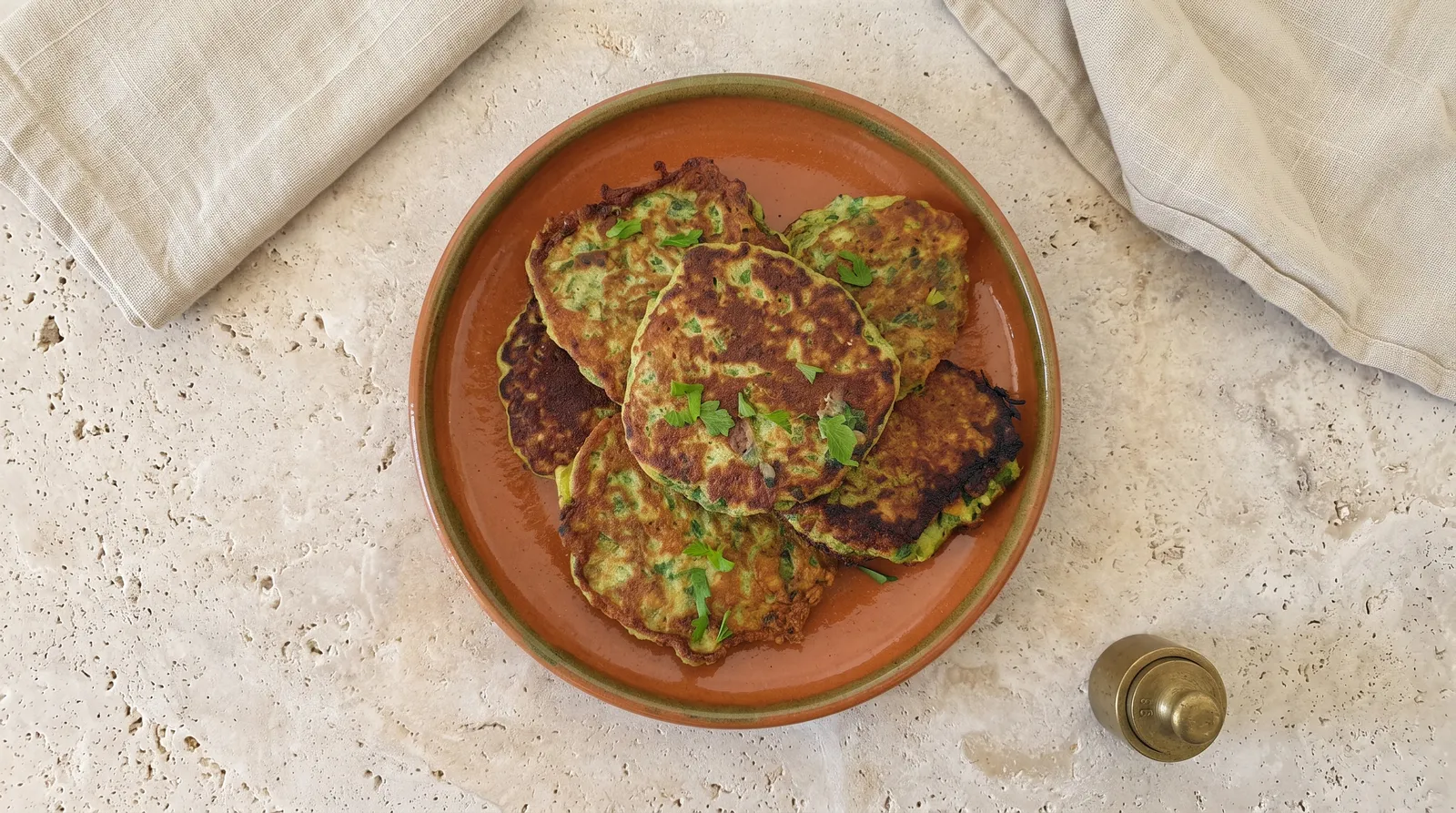
Farçous aveyronnais — served on a plate
Prep 25 minutes
Cook 32 minutes
Total 57 minutes
Yield 20 small farçous, about 7–8 cm wide
Overview

Farçous aveyronnais — chard and pork patties

Farçous are Aveyronnais green patties in which leafy chard is not a garnish but the defining vegetable. Regional household recipes vary, and some omit meat, but this preparation follows the meat-bearing line: chard greens and parsley are mixed with onion, garlic and raw pork sausage meat, then held together with an egg, flour and milk batter before pan-frying.

Moisture control is the first practical decision. Wash the chard and parsley, then dry them thoroughly before chopping. If they carry too much surface water, the batter thins, spreads and spits in the hot oil. Chop finely enough that the greens distribute through each patty, but stop before turning them into a wet purée that would weaken the structure.

The portion size is fixed at roughly 55–60 g so twenty patties come from the bowl. Flatten each to about 8 mm: thick enough to remain tender, but thin enough for the raw pork and egg centre to reach at least 71 °C while the outside develops an appetising brown crust. Fry four at a time in five batches, maintaining the oil around 170–175 °C rather than chasing colour with excessive heat.

Frying oil is treated realistically in the nutrition calculation. Sixty grams is supplied for the five batches, but only about 20 g is estimated to stay in the finished farçous; the rest remains in the pan or on the draining paper. Draining each batch for two measured minutes also keeps the surface crisp instead of greasy.

Success points

Success points

  • Dry the washed chard and parsley thoroughly; surface water thins the batter and encourages spitting in the pan.
  • Keep each scoop around 55–60 g and about 8 mm thick so the centre reaches 71 °C before the outside over-browns.
  • Measure the frying oil and account only for the estimated 20 g absorbed into the finished patties.
Ingredients

Ingredients

  • 300 g chard greens, trimmed leaf weight from about 600 g whole chard, washed and thoroughly dried — Only the green leaves enter the batter; all 300 g retained.
  • 200 g raw pork sausage meat, casings removed if present, crumbled — All 200 g retained and cooked to the egg/ground-pork safety threshold.
  • 250 g whole egg without shell, about 5 large eggs — All retained.
  • 100 g plain wheat flour — All retained.
  • 150 ml whole milk — All retained.
  • 200 g onion, peeled, roughly chopped — All retained.
  • 10 g garlic, peeled — All retained.
  • 60 g flat-leaf parsley, washed and thoroughly dried — All retained.
  • 4 g fine salt — All retained.
  • 2 g black pepper — All retained.
  • 60 g neutral frying oil, for five frying batches — About 20 g is estimated to be absorbed and eaten; roughly 40 g remains in the pan or on draining paper and is excluded from nutrition.
Method

Method

Directions

  1. Chop the greens and aromatics. Finely chop the dry chard greens, parsley, onion and garlic by hand or pulse briefly in a food processor without puréeing. Time: 10 minutes. The vegetables are finely chopped into distinct moist flecks, not reduced to a wet purée.

  2. Mix the batter. Whisk the eggs and milk, add the flour, salt and pepper and whisk smooth, then fold in the chopped vegetables and crumbled sausage meat. Time: 8 minutes. The batter is thick enough to hold a rounded 55–60 g scoop without spreading like a thin crêpe batter.

  3. Heat the pan. Add about one fifth of the 60 g oil to a wide frying pan and heat over medium heat to about 175 °C. Time: 2 minutes. Temperature: 175 °C. The oil shimmers and a tiny drop of batter sizzles promptly without smoking.

  4. Fry five batches. Portion four 55–60 g mounds into the pan, flatten each to about 8 mm thick and 7–8 cm wide, and fry all 20 patties in five batches for 30 minutes total, turning once and replenishing the measured oil as needed. Time: 30 minutes total. Temperature: 170–175 °C. Keeping the patties thin enough gives the pork-and-egg centre time to cook before the exterior burns. Do not judge safety by browning alone; verify at least 71 °C in the thickest patty. Both sides are well browned, the egg batter is fully set, and the centre of the thickest patty reaches at least 71 °C.

  5. Drain each batch. Transfer each finished batch to absorbent paper for 2 minutes before moving to a serving rack or platter; the draining happens while later batches cook. Time: 2 minutes for each batch, concurrent with later frying batches. The surface looks crisp rather than oily and no visible pool of oil collects under the patties.

Practical guidance

Practical

Practical guidance

Serve the farçous warm. Nutrition is listed per patty, while three or four patties make a more typical starter-size portion.

Practical guidance

For make-ahead, chop and dry the greens a few hours early and keep them refrigerated. Mix in raw sausage and egg only shortly before frying.

Practical guidance

Refrigerate cooked patties within 2 hours and use within 3 days. Reheat at 180 °C until the centre reaches 74 °C.

Practical guidance

A meatless farçou exists, but removing the sausage changes this preparation and its safety and nutrition calculations. Keep chard green as the defining vegetable.

Troubleshooting

Patties spread too thinly — the greens carried excess water or the batter was not mixed to a thick scoopable consistency; dry the greens and check the first scoop before frying the rest.

Troubleshooting

Outside darkens before the centre reaches 71 °C — lower the pan heat slightly and keep the patties close to 8 mm thick.

Troubleshooting

Greasy result — the pan was too cool or the patties sat in oil after cooking; maintain 170–175 °C and drain each batch for 2 minutes.

Nutrition per serving

Nutrition per serving

  • Serving size1 patty, 1/20 batch
  • Calories88 kcal
  • Carbohydrate6 g
  • Protein4 g
  • Fat5 g
  • Fibre1 g
  • Sodium214 mg
Allergens and food safety

Allergens and food safety

Allergens: Egg; Milk; Gluten (wheat)

Raw sausage meat and raw egg can contaminate hands, utensils and surfaces; wash and sanitise before they contact cooked patties.

The centre of the thickest farçou must reach at least 71 °C; colour alone is not a safety test.

Refrigerate cooked leftovers within 2 hours and reheat leftovers to 74 °C.

FAQ

FAQ

Why not count all the frying oil in nutrition?

Most of the measured oil remains in the pan or on the draining paper; only an estimated 20 g absorbed by the 20 patties is counted as eaten.

Can the patties be thicker?

Thicker patties make it harder to reach 71 °C in the pork-and-egg centre before the outside becomes too dark.

Closing

Closing

  • Result: twenty small, browned Aveyronnais patties with a green chard-speckled interior and a fully cooked pork-and-egg centre.
  • Decisive technique: control both patty thickness and pan temperature, then verify 71 °C rather than relying on crust colour.