French Recipes

Blaff de poisson

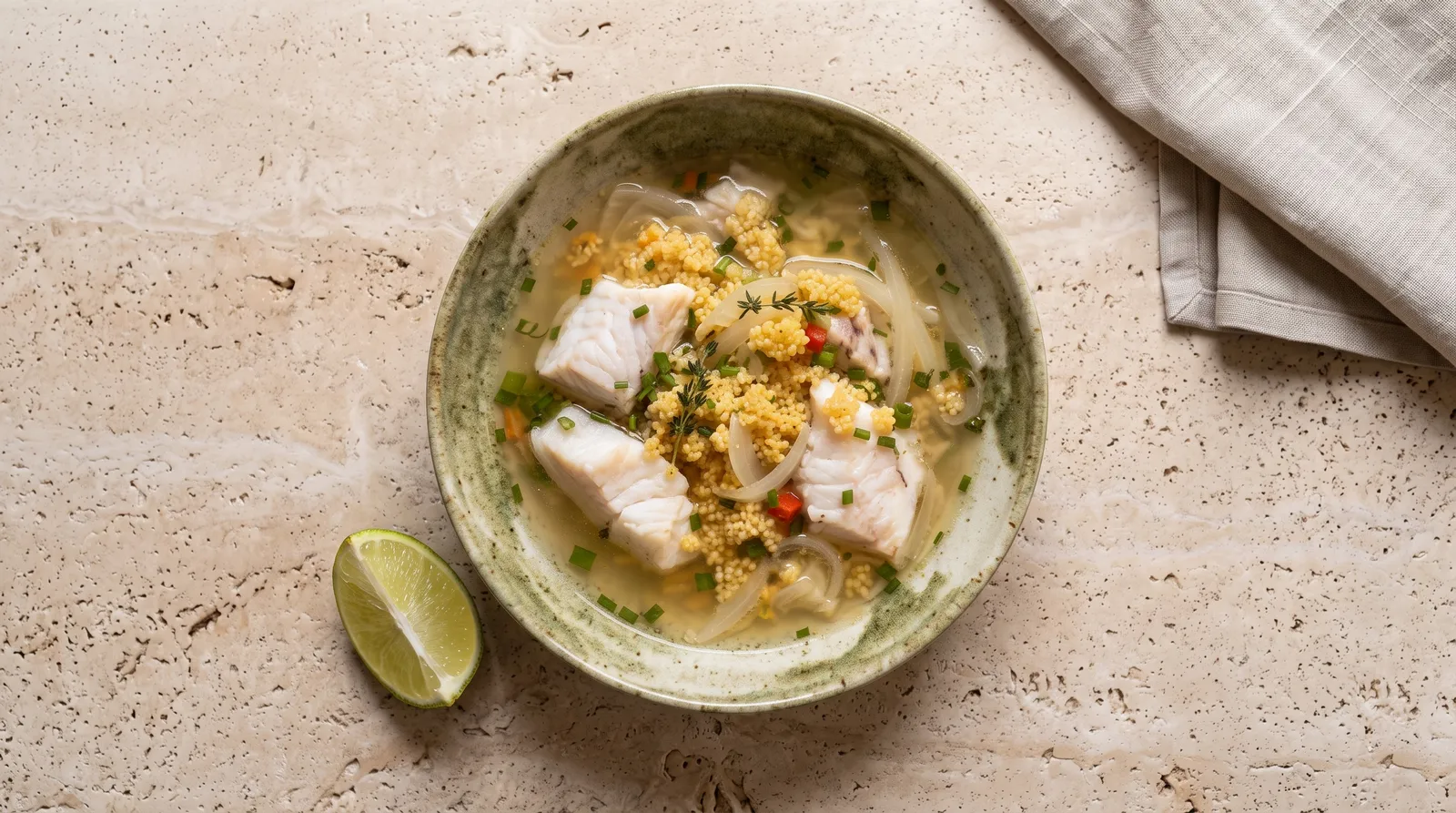
Firm snapper marinated under refrigeration with lime and garlic, then gently poached in a light French Antillean broth scented with cives, thyme, parsley, bois d’Inde and a whole chilli before a fresh lime finish.

French Recipes
Share
Blaff de poisson — served in a bowl
Prep 25 minutes
Cook 15 minutes
Total 160 minutes
Yield 4 main-course servings
About this dish

French Antillean blaff de poisson with snapper, lime and cives

Blaff de poisson belongs to the French Antillean kitchen and is defined by much more than “fish in broth.” Lime, garlic, cives, herbs, chilli and bois d’Inde build a bright aromatic environment in which the fish is marinated and then cooked briefly. The liquid stays light; there is no flour thickener, cream or browned base. That clean structure is why controlling both marination and poaching matters.

Red snapper is used here because its firm flesh tolerates a two-hour lime marinade and can be lifted from the broth in intact portions. The fish stays refrigerated for the entire marination period. Meanwhile, the poaching liquid is built separately from water, onion, cives, garlic, thyme, parsley and bois d’Inde. A whole Scotch bonnet contributes aroma with controlled heat; cutting it would make the result much hotter and less predictable.

The fish is not boiled hard. It enters a gentle simmer and is cooked only until the thickest part reaches 63 °C and the flesh separates into moist opaque flakes. Fresh lime goes in after the pot leaves the heat, restoring an aroma that long cooking would flatten. The result should taste clean and citrus-herbal, with enough broth to spoon around the fish rather than bury it.
Success points

Success points

  • Keep the full two-hour marinade at 4 °C or colder.
  • Maintain a gentle simmer, not a rolling boil.
  • Use a thermometer in the thickest fish portion and stop at 63 °C.
Ingredients

Ingredients

Fish and marinade

  • 800 g red snapper, four thick skin-on steaks or firm portions
  • 90 ml fresh lime juice
  • 10 g garlic, crushed
  • 4 g fine salt
  • 1 g black pepper
  • 1 small Scotch bonnet chilli, stemmed, left whole for controlled heat

Blaff broth

  • 1200 ml water
  • 120 g yellow onion, thinly sliced
  • 60 g cives or scallions, sliced
  • 10 g garlic, crushed
  • 2 g fresh thyme
  • 10 g flat-leaf parsley, chopped
  • 2 bois d’Inde leaves or bay leaves, whole
  • 15 ml neutral oil
  • 30 ml fresh lime juice, for finishing
Method

Method

Marinate

  1. Marinate the fish cold. Coat the snapper with 90 ml lime juice, the first 10 g garlic, salt and pepper. Add the whole chilli, cover and refrigerate for 120 minutes at 4 °C or colder. The fish remains firm and cold, with the lime and garlic coating all surfaces.

Poach

  1. Make the blaff broth. Bring the water to a gentle simmer with the onion, cives, second 10 g garlic, thyme, parsley, bois d’Inde leaves and oil. Cook about 8 minutes at roughly 95 °C. The onion softens and the broth smells clearly of cives, thyme, parsley and bois d’Inde without a hard rolling boil.

  2. Poach just to doneness. Lift the fish from the raw marinade and lower it into the simmering broth. Cook gently for about 7 minutes, adjusting for thickness. The thickest part of the fish reaches 63 °C and flakes into moist opaque sections without becoming dry.

  3. Finish with lime. Remove the pot from the heat, stir in the remaining 30 ml lime juice and return the fish only long enough to coat it. The broth tastes bright and aromatic, and the fish remains intact rather than shredding into the liquid.

Practical guidance

Practical

Practical guidance

Serve immediately with plain rice, yam, breadfruit or another simple starch that can take up the aromatic broth. Aromatics can be chopped earlier in the day, but the fish should not sit in the lime marinade beyond the planned period. Cooked blaff should be refrigerated within 2 hours at 4 °C or colder and used within 2 days for the best fish texture. Reheat only until the fish and broth reach 74 °C; prolonged boiling makes snapper dry and can break the portions. Another firm white fish can work if portions are of similar thickness, but different species will change both flavour and cooking time.

Troubleshooting

Troubleshooting

  • Fish breaks into small piecesThe broth boiled hard or the pieces were too thin; use a gentle simmer and sturdy portions.
  • Fish is dry and chalkyIt remained in hot broth after reaching 63 °C; lift or serve it promptly.
  • Broth is aggressively sourToo much raw marinade was carried into the pot; build the broth separately and use fresh lime at the finish.
Nutrition per serving

Nutrition per serving

  • Serving size1 fish portion with broth
  • Calories285 kcal
  • Carbohydrate8 g
  • Protein42 g
  • Fat9 g
  • Fibre2 g
  • Sodium820 mg
Allergens and food safety

Allergens and food safety

Allergens: Fish.

Keep raw fish at 4 °C or colder during the full marinade.

Cook fish to 63 °C in the thickest part.

Refrigerate leftovers within 2 hours and reheat to 74 °C.

FAQ

FAQ

Why leave the chilli whole?

It perfumes the broth with much less unpredictable heat than a cut or pierced Scotch bonnet.

Can colour tell when fish is safe?

No. Use the 63 °C thickest-part temperature as the safety control and the moist flake as a quality cue.

Closing

Closing

  • Result: Moist, intact snapper in a clear lime-bright broth scented with cives, herbs, bois d’Inde and restrained chilli.
  • Decisive technique: Keep both stages controlled—cold marination first, then a short 95 °C poach stopped at a 63 °C fish centre.